
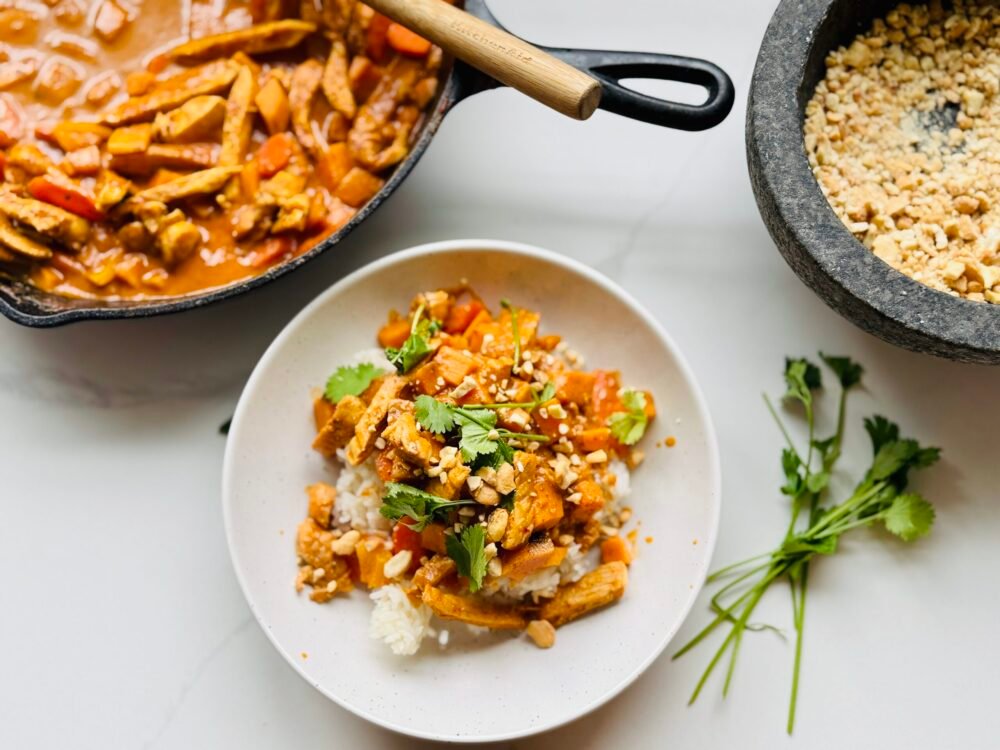
Some of the best meals come together when you’re not trying to make something perfect.
This Weeknight Panang Curry is one of those dishes.
I made it with my daughter on a busy evening, and from start to finish it took us about 30–35 minutes. Nothing fancy. No long prep list. Just the two of us moving around the kitchen, chopping vegetables, stirring a pan, and letting the smell of coconut milk and curry paste fill the house.
At some point during cooking, I realized we didn’t actually have everything needed to make a truly traditional Panang curry. No kaffir lime leaves. No palm sugar. A few classic ingredients were missing.
And honestly? That’s exactly why this dish matters to me.
Because one of the strongest beliefs I hold in cooking is this:
you don’t need every ingredient to make something deeply delicious.
There are always a few non-negotiables in a recipe — and those matter — but beyond that, cooking is far more flexible than we give it credit for. Most nights, great food is about understanding technique, trusting your palate, and using what you already have.
That’s what this curry represents.
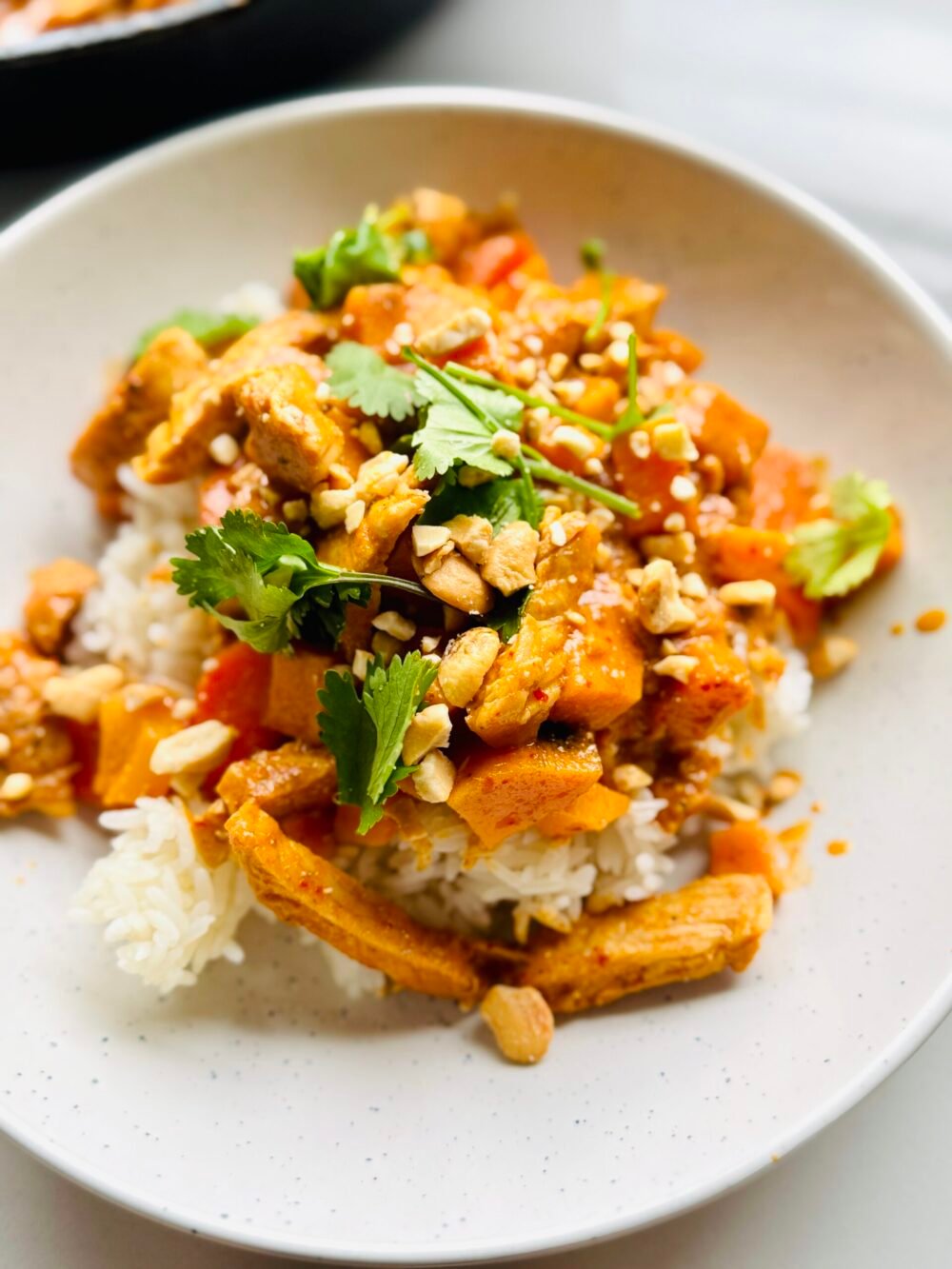
A Curry That Works With Real Life
This isn’t a “perfectly authentic” Panang curry — and it’s not trying to be.
It’s a rich, creamy, deeply flavored curry inspired by Panang, built for real life kitchens and real schedules. The kind of dish you can make after work without overthinking it, and still feel proud to serve if someone unexpectedly joins you for dinner.
That actually happened the night we made this — a friend stopped by, and instead of scrambling or apologizing for a “simple meal,” we sat down together and shared a bowl of something warm, comforting, and generous.
That’s always the goal for me: food that leaves room for people.
What Actually Makes This Curry Special
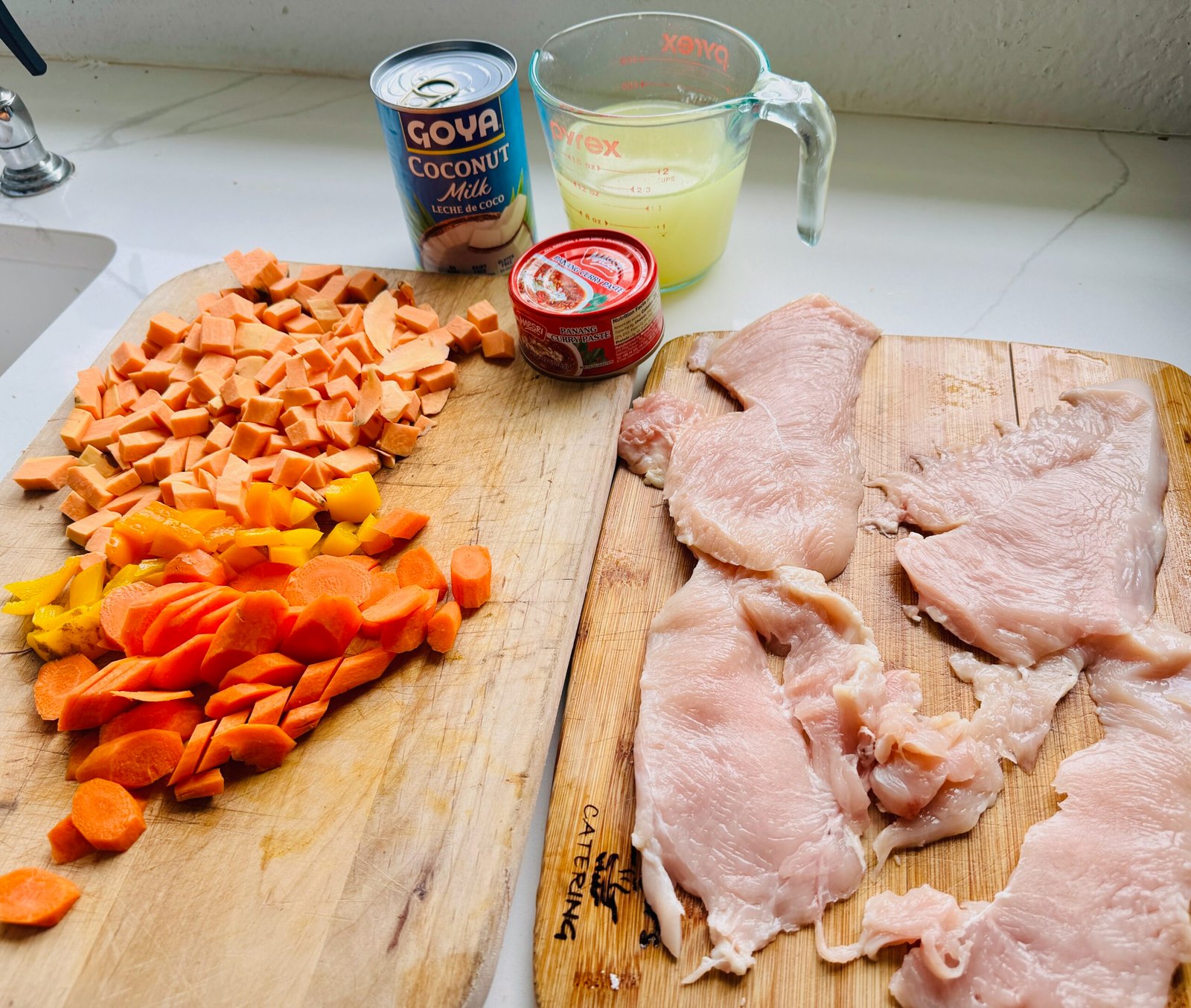
This recipe only uses seven core ingredients, but the flavor is anything but basic. The depth comes from how the curry is built, not how many things go into it.
There are two things you truly can’t shortcut here:
1. A great-quality Panang curry paste
This is where most of the flavor lives. A well-made paste already contains layers of spices, aromatics, and heat. I always recommend investing in a good one — it makes all the difference.
This is the Panang curry paste I use and recommend
2. Cooking the coconut milk properly
Panang curry is not meant to be thin or soupy. The sauce should be thick, rich, and almost velvety. That texture comes from reducing the coconut milk first, allowing it to concentrate and release its natural oils before anything else goes into the pan.
That single step is what takes this from “fine” to “wow.”
How This Curry Comes Together
We start by cooking the chicken first.
I season it lightly and cook it just until done, then remove it from the pan. This keeps the chicken tender and prevents it from overcooking later while the sauce develops.
Next comes the most important step.
In the same pan, I add about ¾ cup of coconut milk and cook it over medium-high heat until it thickens and turns creamy. You’ll notice it change texture and deepen slightly in color — that’s exactly what you want.
Once reduced, I lower the heat and stir in the Panang curry paste. This step is often skipped, but it shouldn’t be. Cooking the paste directly in the coconut milk allows the spices to bloom and the flavors to fully open up. After a few minutes, you’ll see the coconut oil begin to separate from the paste, and the aroma becomes incredible.
If the paste starts sticking to the pan, a small splash of the remaining coconut milk loosens everything right up.
Only then do the vegetables go in.
Sweet potato, carrots, and bell pepper are what we had on hand that night, and they work beautifully here. They soak up the curry base before any additional liquid is added, which builds even more flavor.
From there, I add the remaining coconut milk and chicken stock, bring everything to a gentle simmer, and let it cook until the vegetables are tender and the sauce thickens naturally.
At the end, a little brown sugar balances the spice, and a splash of fish sauce (optional, but recommended) adds depth and savoriness. The chicken goes back in just long enough to warm through.
That’s it.
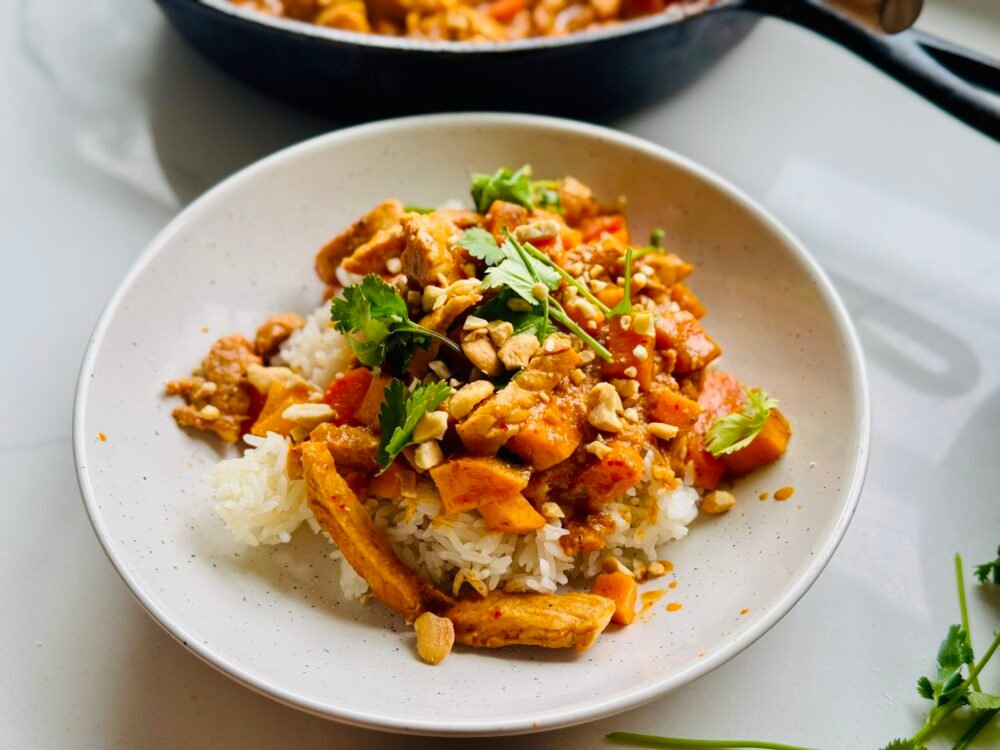
Cooking Without Overthinking It
What I love most about this recipe is how forgiving it is. You can swap proteins, change the vegetables, or adjust the heat and sweetness to your taste.
The only thing I really encourage you not to compromise on is the curry paste itself and the technique of reducing the coconut milk. Those are the non-negotiables here.
Everything else? Use what you have.
That night in our kitchen was a reminder of something I come back to often: cooking doesn’t have to be rigid to be meaningful. In fact, it’s often the meals made with a little improvisation that become the ones we remember most.
A Meal That Welcomes Others In
This curry is just as comfortable on a quiet weeknight as it is shared with a few people around the table.
If friends come over, it’s easy to double. Make a little more rice, set everything out family-style, and let everyone serve themselves. It’s low effort, deeply satisfying, and somehow always feels like more than the sum of its parts.
That’s the kind of food I want to cook — and the kind I want to share here.
Hosting-Friendly & Make-Ahead Tips
- This curry tastes even better the next day.
- Make it ahead and reheat gently for guests.
- Serve with jasmine rice, brown rice, or even naan.
- Keep it casual—family-style bowls invite seconds and conversation.
- if you are looking for sides to go along with this meal try our Brussels sprouts recipe
FAQs
Can I make this vegetarian?
Absolutely. Swap chicken for tofu or chickpeas and use vegetable stock.
Is Panang curry spicy?
It’s warm and aromatic rather than hot. Heat depends on the paste brand.
Can I freeze it?
Yes. Freeze up to 2 months. Thaw and reheat gently.
Why is my sauce thin?
Most likely the coconut milk wasn’t reduced enough at the start.
Final Thoughts
This Weeknight Panang Curry isn’t about perfection or strict authenticity. It’s about understanding flavor, trusting technique, and giving yourself permission to cook well even when you don’t have everything.
It’s rich, comforting, and so good I honestly could eat it every day.
I hope you try it — and I hope it becomes one of those recipes you make your own.
Affiliate Disclosure:
Some of the links below are affiliate links, which means I may earn a small commission at no extra cost to you. Thanks for supporting the blog!
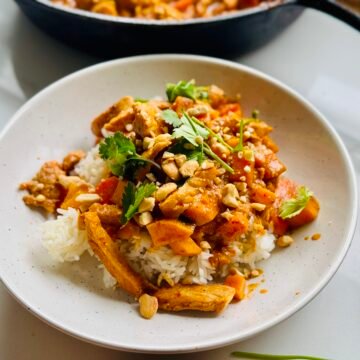
Weeknight Panang Curry

Equipment
- Large sauté pan or wok
- Wooden spoon or spatula
- Sharp knife
- Cutting board
- Measuring cups
Ingredients
- 1 lb chicken breast sliced (or protein of choice)
- 1 sweet potato peeled and cubed
- 1 bell pepper sliced
- 2 carrots sliced
- 1 13.5 oz can full-fat coconut milk, divided
- 1 4 oz can high-quality Panang curry paste
- 1½ cups chicken stock
- 1 –2 teaspoon brown sugar to taste
- 1 –2 teaspoon fish sauce optional but recommended
Instructions
- Cook the chicken first. Season the sliced chicken lightly with salt. Heat a sauté pan or wok over medium-high heat with a little oil. Cook chicken until just cooked through. Remove from pan and set aside.
- Reduce the coconut milk. Add ¾ cup coconut milk to the same pan over medium-high heat. Cook, stirring often, until thickened and creamy.
- Bloom the curry paste. Lower heat to medium-low. Stir in the Panang curry paste and cook for several minutes, stirring constantly, until fragrant and coconut oil begins to separate. If the paste sticks, deglaze with a splash of remaining coconut milk.
- Add vegetables. Stir in sweet potato, carrots, and bell pepper. Cook for 3–4 minutes to coat in the curry base.
- Simmer. Add remaining coconut milk and chicken stock. Bring to a gentle simmer and cook until vegetables are tender and sauce thickens, about 8–10 minutes.
- Finish the curry. Stir in brown sugar and fish sauce (if using). Return chicken to the pan and simmer 2–3 minutes more.
- Serve. Taste and adjust seasoning. Serve over rice.
Notes
Use a great Panang curry paste—this is the one ingredient you can’t cheat on.
Store leftovers up to 4 days refrigerated.
Curry thickens even more overnight, making it excellent for make-ahead meals.

Rufus Dewanou says
The Colorful Pantry