
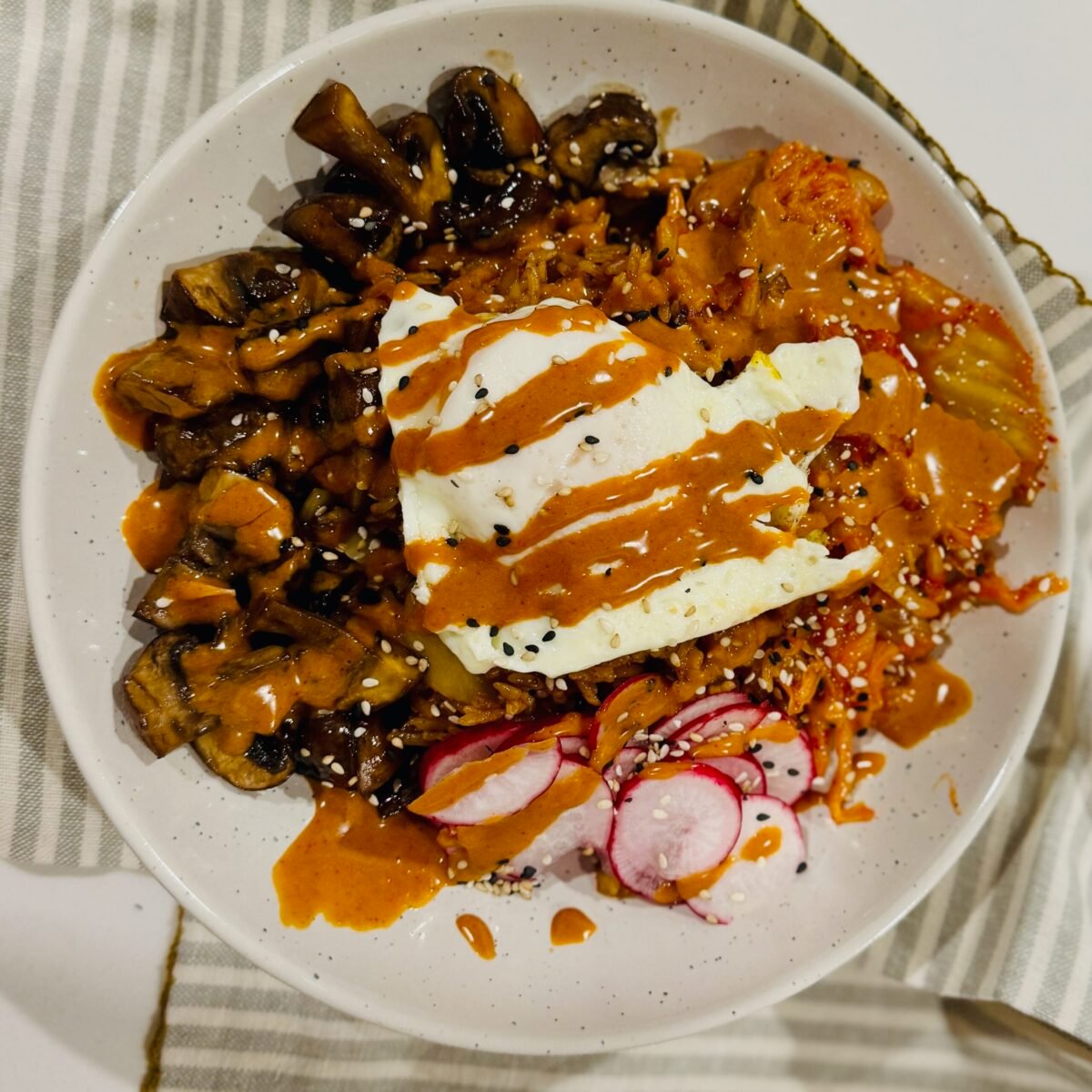
I have been making kimchi fried rice for many years now, and it has quietly become one of the staples in our household. It is one of those dinners that comes together very quickly and somehow always tastes amazing, even on nights when energy is low and the fridge feels empty.
Over the years, I have perfected this recipe, and one of the biggest upgrades came when I started finishing it with my killer sesame ginger gochujang sauce. This sauce is like yum yum sauce times one hundred. It adds depth, creaminess, and a little heat that takes the whole bowl to another level.
This is also one of those meals where you truly do not miss meat at all. Between the savory kimchi, crispy mushrooms, rich egg, and bold sauce, every bite feels complete and satisfying.
What I love most about this dish is how perfectly it fits into the Pantry-First Method. I start by choosing the sauce first, in this case the sesame ginger gochujang sauce, then I build the meal around a stir fry format using a grain, vegetables, and protein. The grain here is rice. The vegetables are mushrooms, kimchi, and scallions or radishes. The protein is the egg, supported by the sauce itself.
This approach is the same one I share in my Five Sauces framework and the Pantry-First Method, and it is exactly how I keep weeknight cooking flexible without feeling repetitive.
Why This Kimchi Fried Rice Works
The key to great fried rice is texture and balance. Day-old rice gives you separation instead of mush. High heat creates toasty edges. Kimchi brings acidity and funk. Gochujang adds depth. Mushrooms provide umami and chew, and the egg ties everything together with richness.
The glazed mushrooms deserve special attention. Cooking them hard in a hot pan concentrates their flavor and gives them a meaty texture that makes this dish feel hearty without any actual meat.
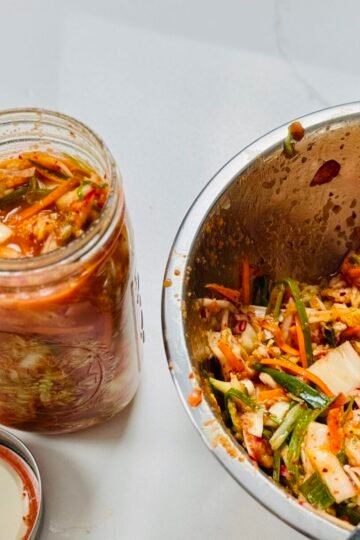
Try my Traditional Napa Cabbage Kimchi recipe
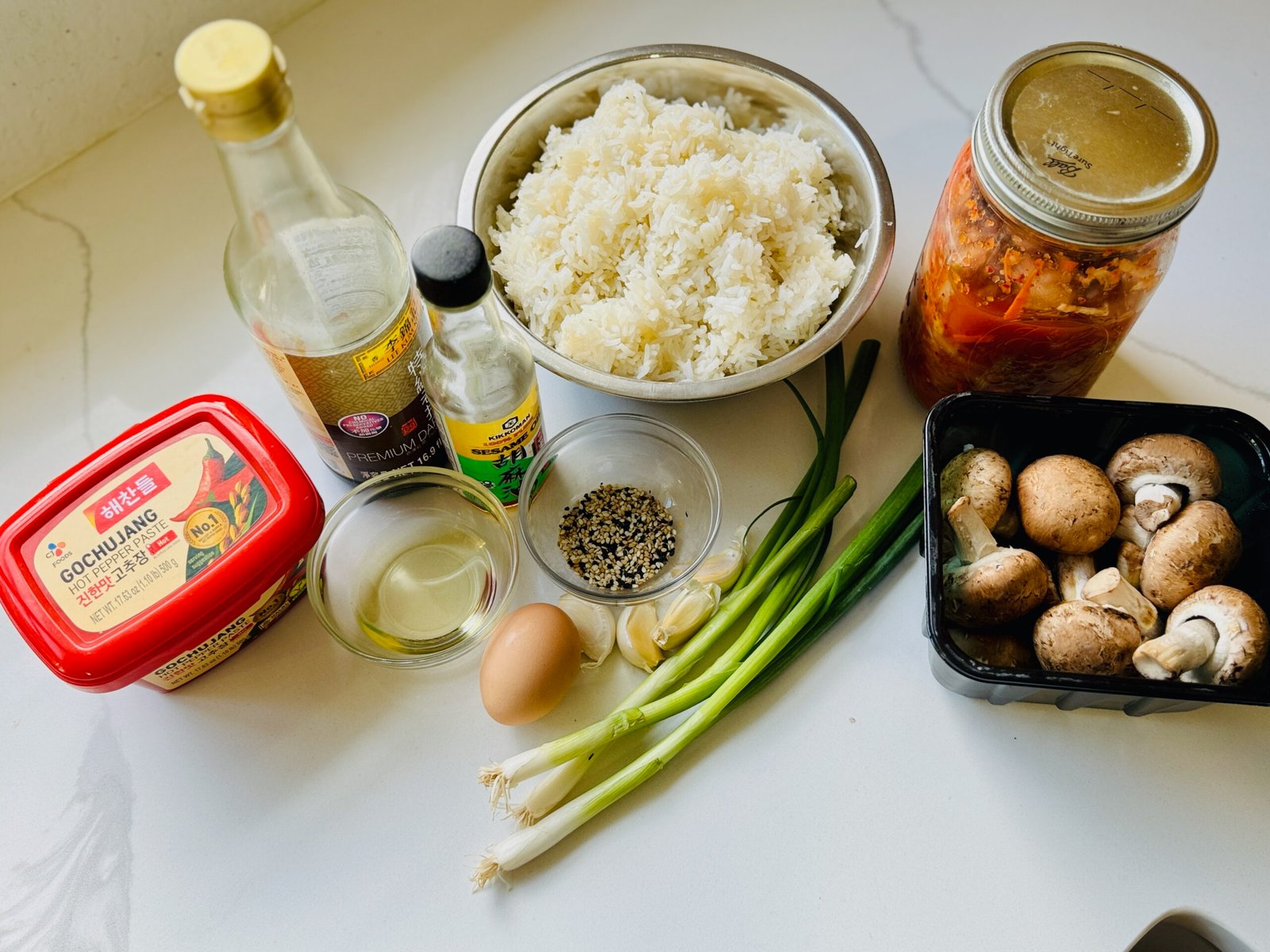
Ingredient Tips and Substitutions
Day-old rice is ideal, but if you only have fresh rice, spreading it on a sheet pan and chilling it works well. A rimmed baking sheet is a useful tool here and one I use constantly.
Kimchi choice matters. Look for a well-fermented kimchi with good acidity. The juice is just as important as the cabbage.
Mushrooms can be cremini, baby bella, or even shiitake. Use what you have.
If you are gluten free, tamari works perfectly.
Honey can be swapped for maple syrup if needed.
Step by Step Cooking Notes
When browning the mushrooms, resist the urge to stir too soon. Letting them sit builds color and flavor.
When adding the rice, use a spatula to break up clumps gently. Do not mash it.
Taste as you go. Kimchi varies in salt and acidity, so adjust kimchi juice, soy sauce, or gochujang to suit your palate.
A nonstick skillet makes frying eggs easy, especially if you like a runny yolk.
Serving Ideas
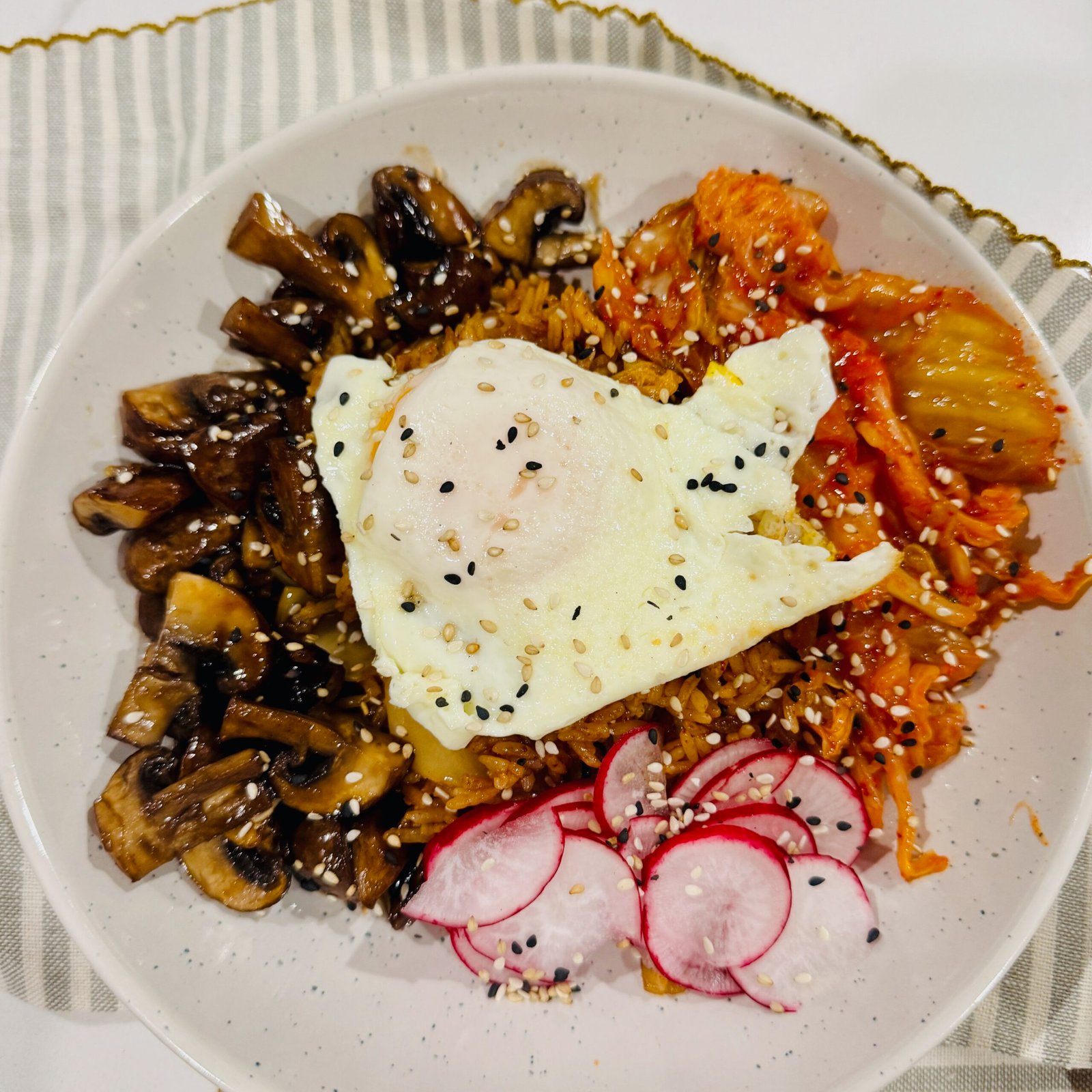
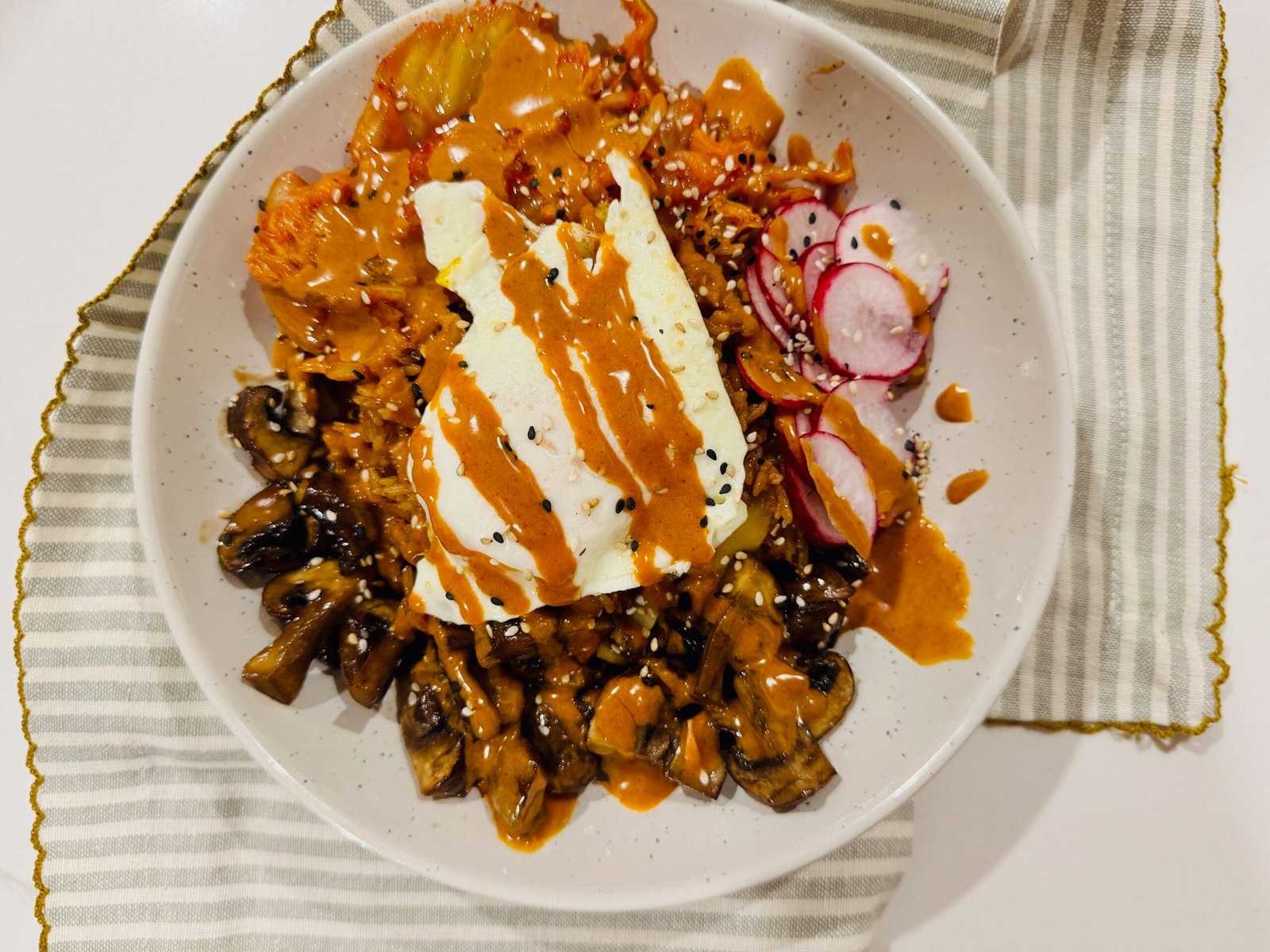
Serve this in wide bowls so you can mix everything together. Finish with sesame seeds and a generous drizzle of sesame ginger gochujang sauce.
This dish pairs beautifully with simple cucumber salad or steamed greens.
Storage and Make Ahead Tips
Store leftovers in an airtight container up to three days. Reheat in a skillet for best texture.
The mushroom glaze and sauce can be prepped ahead of time and stored in glass jars.
FAQs
Can I make this vegan
Yes. Skip the egg and use maple syrup instead of honey.
Is this spicy
It has gentle heat. Adjust gochujang to taste.
Can I add protein
Tofu or edamame work well.
Can I freeze it
Fresh is best, but it freezes reasonably well without the egg.
Final Thoughts
This kimchi fried rice is one of those meals I come back to again and again. It is fast, deeply flavorful, and built exactly the way I love to cook. Sauce first, then build from there.
If you try it, I would love to hear how you customize it.
Some of the links below are affiliate links, which means I may earn a small commission at no extra cost to you. Thanks for supporting the blog!
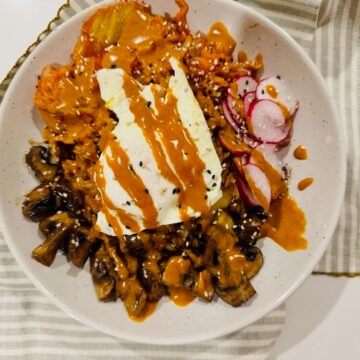
Kimchi Fried Rice (Bokkeumbap) with Mushrooms and Fried Egg

Equipment
- Large skillet or wok
- Nonstick skillet for eggs
- Mixing bowl
- Whisk
- Chef’s knife
- Cutting board
Ingredients
For the kimchi fried rice
- 3 cups cooked day-old rice cold and dried
- 1 to 2 tablespoons avocado oil or neutral oil
- ½ cup diced onion
- 1 tablespoon grated ginger
- 3 to 4 garlic cloves minced or grated
- 1 cup kimchi chopped
- 2 to 4 tablespoons kimchi juice
- 3 tablespoons soy sauce or tamari
- 2 tablespoons gochujang
- 2 scallions sliced
For the glazed mushrooms
- 12 to 16 ounces mushrooms quartered
- 1 to 2 tablespoons avocado oil
- 3 tablespoons rice vinegar
- 4 tablespoons soy sauce or tamari
- 1 tablespoon toasted sesame oil
- 1 tablespoon honey or maple syrup
- 1 teaspoon grated ginger
- 1 teaspoon grated garlic
For serving
- 2-4 fried eggs
- Sesame seeds
- Sliced scallions and or sliced radishes
- Extra kimchi
- Sesame Ginger Gochujang Sauce
Instructions
- If using fresh rice, spread it on a sheet pan and refrigerate 20 to 30 minutes to dry it out. If you do have time for that....I get it
- Heat a large skillet over high heat. Add oil and mushrooms in a single layer. Cook undisturbed 3 to 4 minutes, then stir and cook 5 to 7 minutes more until deeply browned.
- Whisk rice vinegar, soy sauce, sesame oil, honey, ginger, and garlic. Pour into the mushrooms and cook 1 to 3 minutes until glossy. Remove from heat.
- Heat oil in a wok or large skillet over medium-high heat. Add onion and cook 2 to 3 minutes.
- Add ginger and garlic and cook 30 to 60 seconds until fragrant.
- Add rice and stir fry 3 to 5 minutes until hot and lightly toasted.
- Stir in soy sauce, kimchi, kimchi juice, and gochujang. Cook 2 to 3 minutes until evenly coated.
- Fry eggs to your preference.
- Assemble bowls with rice, mushrooms, egg, sesame seeds, and a drizzle of sesame ginger gochujang sauce.
Notes
This meal is naturally meatless and deeply satisfying.
Swap mushrooms for tofu or tempeh if desired.
Store leftovers refrigerated up to 3 days.



Rufus Dewanou says
The Colorful Pantry