
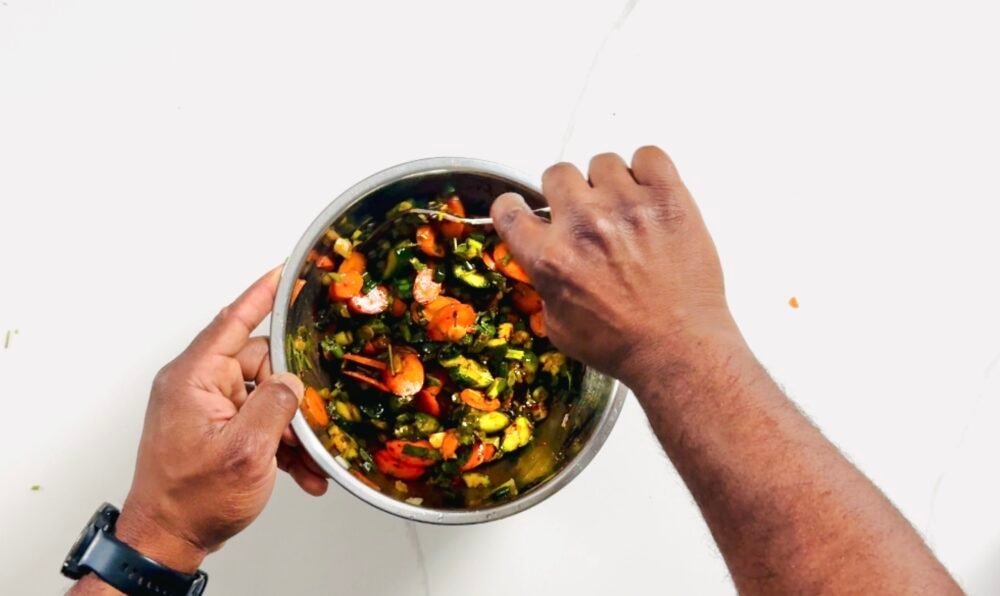
Cooking great meals is absolutely about technique, but even more than that, it’s about understanding frameworks. Once you understand why flavors work together and which components actually matter, recipes stop feeling rigid and start feeling flexible. That way of thinking is the foundation of how I cook and the reason I created the Pantry First Method. It gives you a structure to lean on while still giving you the freedom to adapt, swap, and experiment based on what you have on hand.
I bring that up here because this smashed cucumber carrot salad with gochujang chili dressing is a perfect example of that philosophy in action.
I’ve made versions of this salad countless times over the years. The details change, but the framework stays the same. I always start with cucumbers. There’s always some form of vinegar for acidity, toasted sesame oil for depth, a touch of sweetness (usually honey), fresh garlic, and a source of umami like fish sauce or miso. Green onions almost always make an appearance. From there, everything else is flexible.
Sometimes I add carrots and cilantro like I do here. Other times I’ll throw in grated ginger, swap gochujang for chili crisp, or adjust the heat depending on what I’m serving it with. The point isn’t to lock this into one exact version, but to show you how a simple, repeatable framework can create endless variations without ever getting boring.
This smashed cucumber carrot salad with gochujang chili dressing does not miss. It’s crunchy, bright, savory, and just spicy enough. Think classic Korean cucumber salad energy, but layered with extra texture and freshness. It’s the kind of side dish that quietly steals the show and somehow works with almost any Asian-inspired meal.
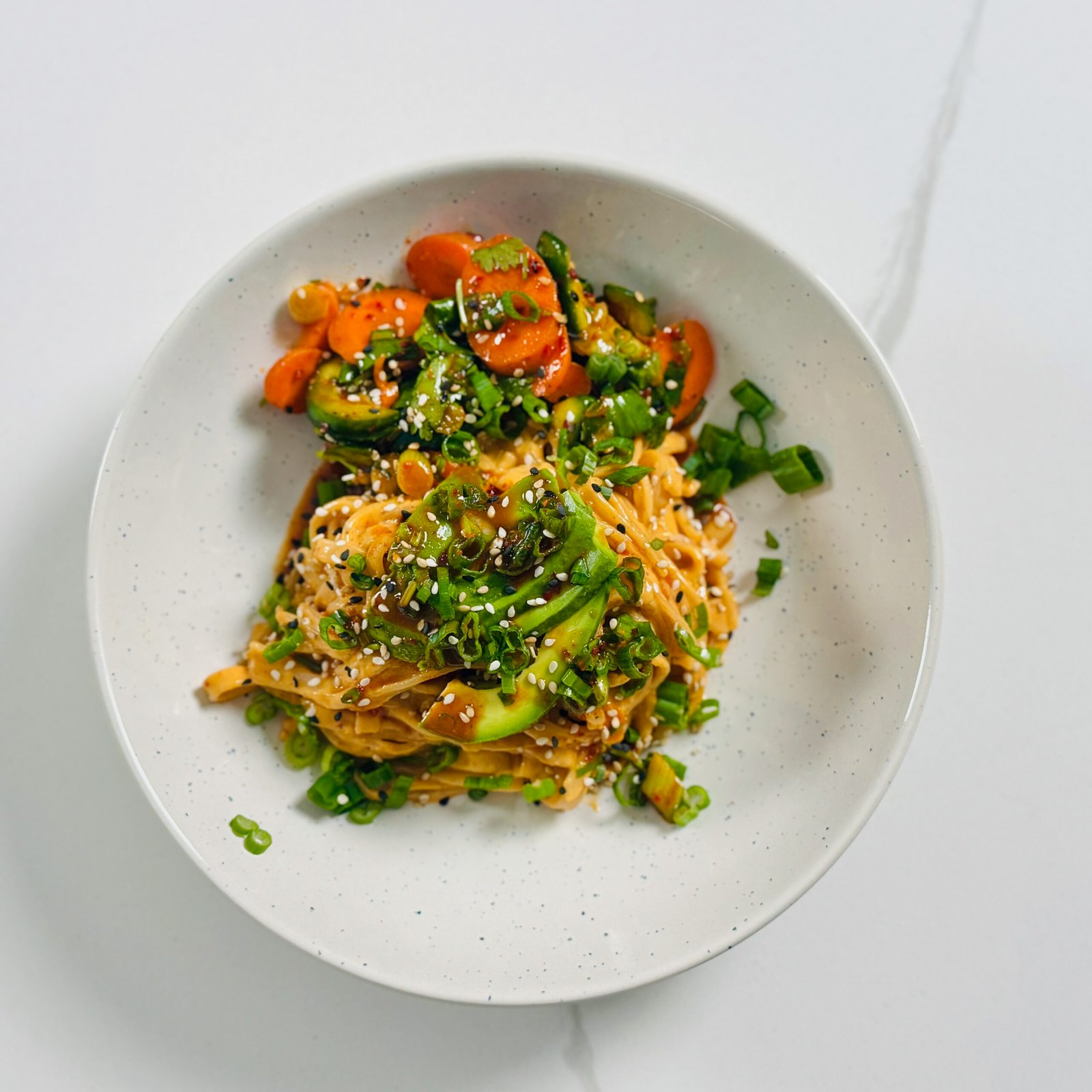
I most often serve this salad as part of a larger Pantry First meal, usually alongside my creamy sesame peanut noodle bowl. It’s also just as good next to fried rice, grilled chicken, salmon, or tucked into a simple rice bowl for lunch the next day.
Why smashing cucumbers actually matters
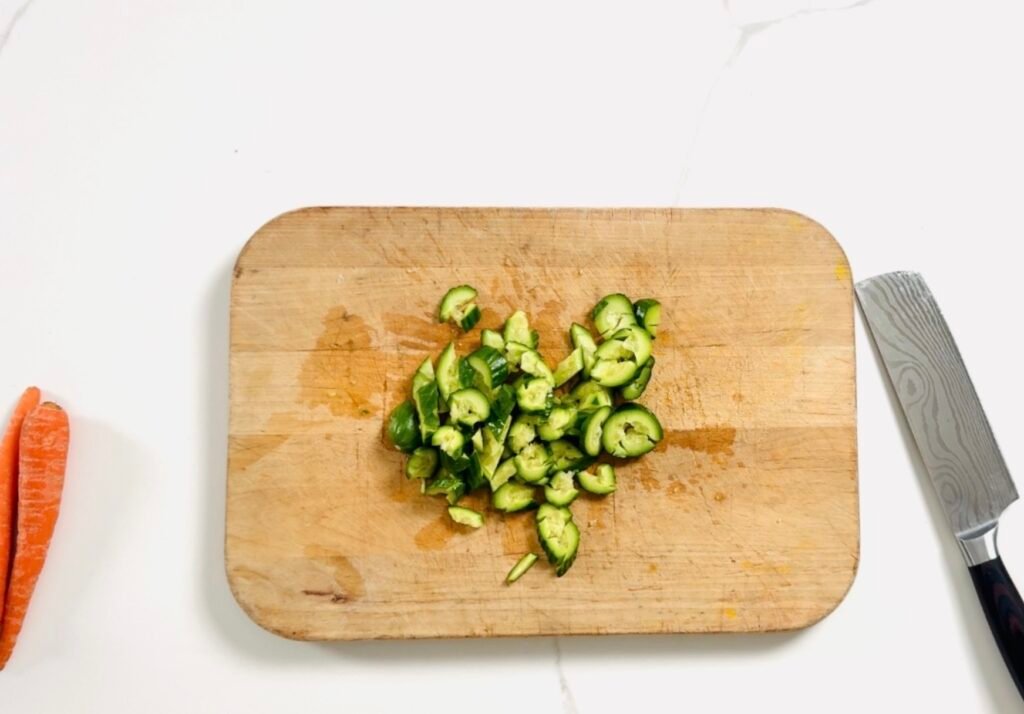
Smashing cucumbers isn’t just a fun trick. It’s a technique that completely changes the texture of the salad and how it absorbs flavor. When you smash them, you create uneven edges and cracks that grab onto dressing instead of letting it slide off. That means more flavor in every bite.
Salting the cucumbers after smashing is just as important. Cucumbers hold a lot of water, and if you skip this step, your salad can end up diluted. Salting draws out excess moisture, concentrates the cucumber flavor, and keeps the final salad crisp instead of watery.
You don’t need any special equipment here. A heavy chef’s knife, the bottom of a skillet, or a rolling pin all work well. Let the weight do the work.
The flavor framework behind the dressing
The dressing for this salad is built on balance. It hits all the key flavor notes that make Asian-inspired salads so satisfying.
Acidity comes from rice wine vinegar, which brightens everything and cuts through richness. Honey adds just enough sweetness to balance the heat without overpowering the salad. Gochujang and Korean chili flakes bring warmth and depth rather than sharp spice. Fish sauce adds savory umami, and toasted sesame oil rounds everything out with nuttiness. Fresh garlic ties it all together.
Once you understand this framework, you can adjust confidently. If you want less heat, reduce the gochujang or chili flakes. If you want more punch, add a splash more vinegar or an extra clove of garlic. For a deeper fermented flavor, swap some of the fish sauce for white miso.
This same logic shows up again and again in my cooking and is something I break down more fully in my Five House Sauces post.
Ingredient notes and substitutions
Cucumbers are the star here, so choose good ones. Persian or English cucumbers work best because they have thinner skins and fewer seeds.
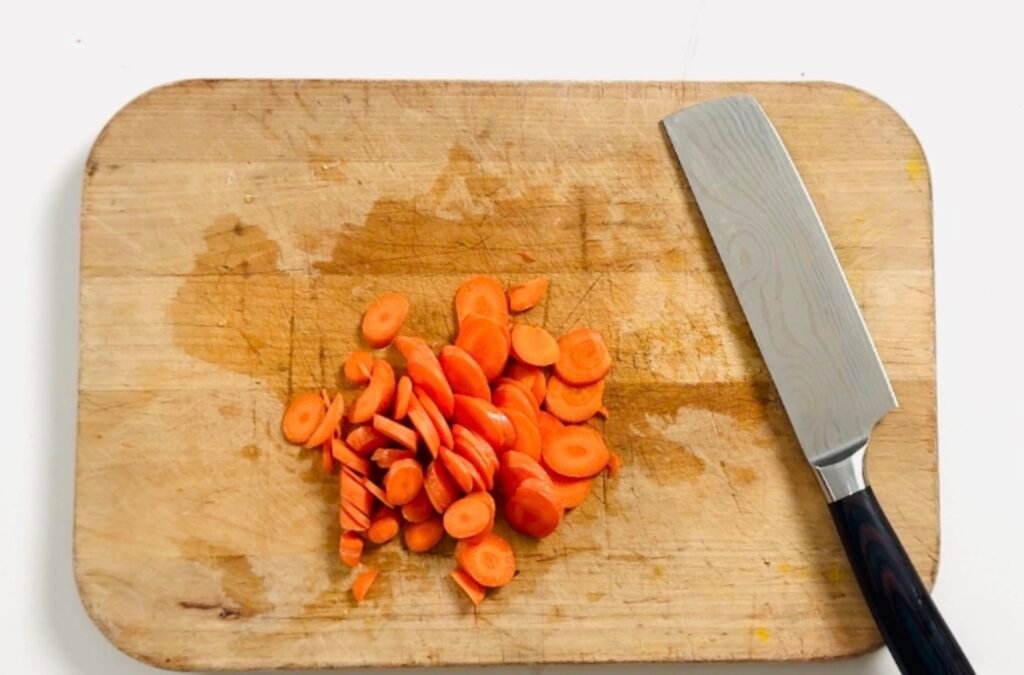
Carrots add sweetness, color, and crunch. I like to julienne them by hand, but a julienne peeler makes quick work of it.
Cilantro adds freshness and a light herbal note. If cilantro isn’t your thing, Thai basil or mint are great alternatives.
Green onions add mild bite and freshness without overpowering the salad. They’re one of the constants I almost never skip.
How this salad fits the Pantry First Method
This smashed cucumber carrot salad is a perfect Pantry First side dish. It relies on inexpensive produce, pantry staples, and a repeatable flavor framework that works across multiple meals.
If you haven’t yet, the Pantry First Method guide explains how I build meals around components like sauces, vegetables, grains, and proteins instead of rigid meal plans. This salad is a great example of how that approach keeps cooking flexible, intuitive, and stress-free.
Tips for best results
Don’t over-smash the cucumbers. You want cracks and splits, not cucumber paste.
Salt generously and squeeze well. Removing moisture is key to keeping the salad punchy instead of watery.
Whisk the dressing thoroughly before adding the vegetables so the gochujang and honey dissolve evenly.
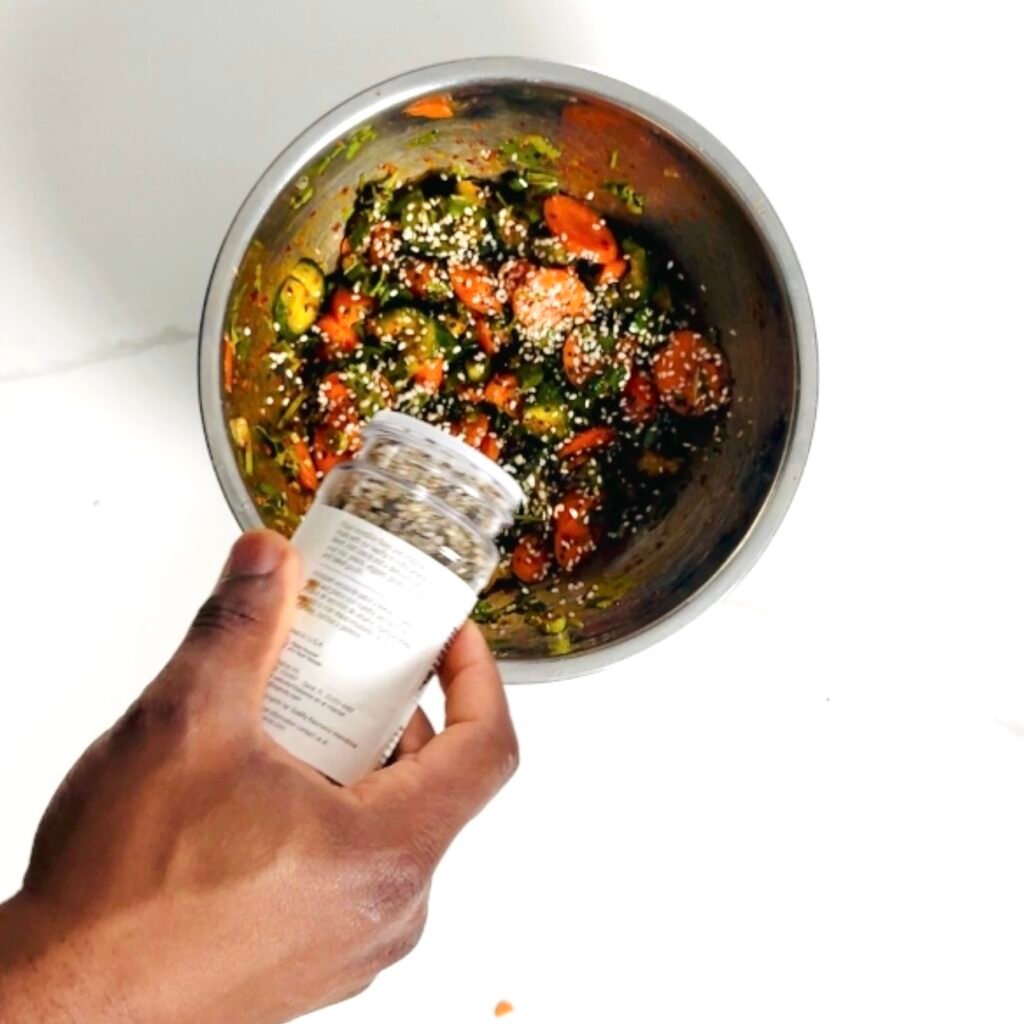
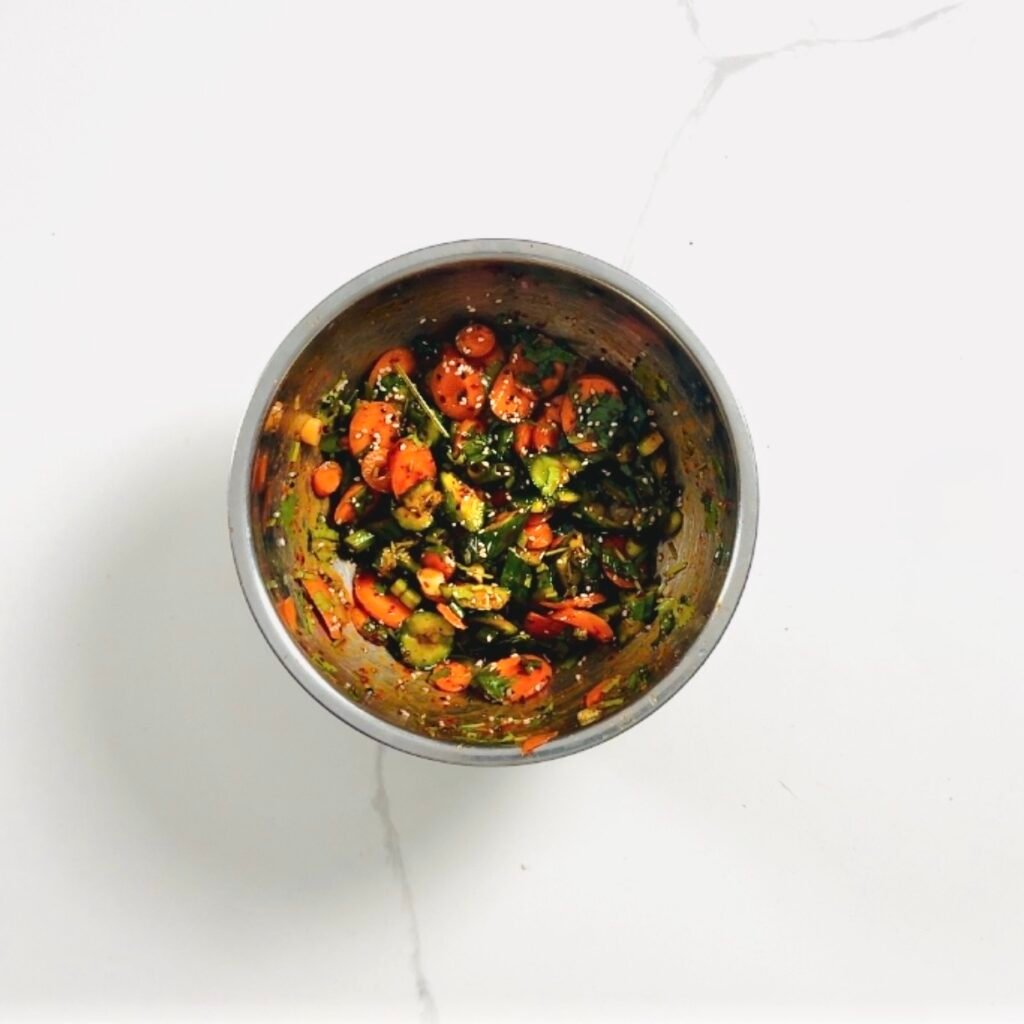
Let the salad rest for five to ten minutes before serving. That short rest makes a big difference in how the flavors come together.
Variations to keep it interesting
This is where the framework really shines.
Add freshly grated ginger for warmth and complexity. Swap gochujang for chili crisp or sambal for a different kind of heat. Use soy sauce or miso instead of fish sauce to make it vegetarian or vegan. Add thinly sliced radishes, shredded cabbage, or even a handful of crushed peanuts for extra crunch.
I’ve made many versions of this salad over the years, and it’s honestly one of those dishes you never get tired of because it adapts so easily.
What to serve with smashed cucumber carrot salad
This salad pairs especially well with creamy noodle bowls, fried rice, or grilled proteins like chicken, salmon, or shrimp. It also works beautifully in tofu or tempeh bowls and adds freshness to lettuce wraps or simple rice bowls.
It’s the kind of side dish that brings balance to richer meals, which is why it shows up on my table so often.
Storage and make-ahead tips
This salad is best eaten the day it’s made, but leftovers can be stored in an airtight container for up to 24 hours. The cucumbers will soften slightly, but the flavor actually improves as it sits.
If you want to prep ahead, smash and salt the cucumbers and make the dressing separately. Toss everything together just before serving for the best texture.
Frequently Asked Questions
Can I make this salad less spicy?
Yes. Use half the gochujang and keep the chili flakes closer to one teaspoon.
Can I make it vegetarian or vegan?
Absolutely. Swap the fish sauce for soy sauce, tamari, or white miso.
Do I really need to smash the cucumbers?
You don’t have to, but it significantly improves texture and flavor absorption.
Can I add protein directly to the salad?
Yes. Chilled shrimp, shredded chicken, or crispy tofu all work well.
Does this salad work for meal prep?
It’s best fresh, but it holds up well for a day in the fridge.
Final thoughts
One of my goals with this blog is not just to share recipes, but to share how I think about cooking. You’ve probably heard the phrase that cooking isn’t about recipes, it’s about technique. I’d add one more thing to that: it’s also about frameworks.
This smashed cucumber carrot salad with gochujang chili dressing is proof that once you understand a simple flavor structure, you can make something delicious again and again without ever feeling boxed in. Learn the framework, trust your taste, and make it your own.
Smashed Cucumber Carrot Salad with Gochujang Chili Dressing

Equipment
- Cutting board
- Chef’s knife
- Mixing bowl
- Whisk
- Microplane or fine grater
- Colander or clean kitchen towel
Ingredients
Salad
- 2 small cucumbers
- Salt for draining
- 2 small carrots peeled and julienned
- 2 green onions thinly sliced
- 1 packed cup fresh cilantro roughly chopped
Gochujang Chili Dressing
- 3 tablespoons rice wine vinegar
- 1 tablespoon honey
- 1 teaspoon to 1 tablespoon Korean chili flakes gochugaru, to taste
- 1 tablespoon gochujang
- 1 teaspoon fish sauce
- 1 teaspoon toasted sesame oil
- 1 clove garlic finely grated
Instructions
Smash and salt the cucumbers
- Place cucumbers on a cutting board and lightly smash using the flat side of a knife or a rolling pin. Cut into bite-size pieces. Sprinkle generously with salt and let sit for 10–15 minutes to draw out excess moisture. Squeeze firmly to remove liquid and set aside.
Make the dressing
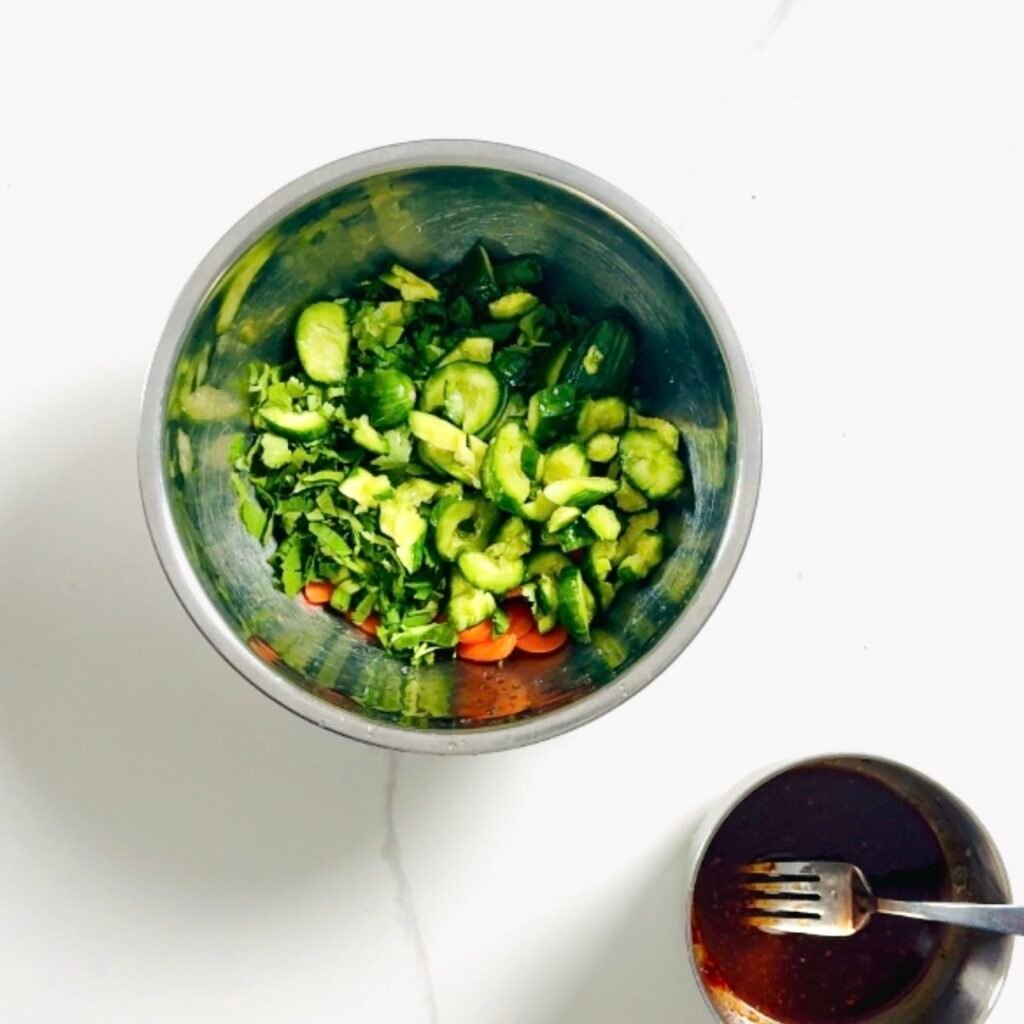
- In a large bowl, whisk together rice wine vinegar, honey, Korean chili flakes, gochujang, fish sauce, sesame oil, and grated garlic until smooth.
Prep the remaining vegetables
- Julienne the carrots, slice the green onions, and roughly chop the cilantro.
Assemble the salad
- Add the drained cucumbers, carrots, green onions, and cilantro to the bowl with the dressing. Toss well until evenly coated.
Rest and serve
- Let the salad sit for 5–10 minutes to allow flavors to meld. Taste and adjust seasoning if needed.
Notes
- For less heat, reduce gochujang by half and keep chili flakes at 1 teaspoon.
- Add freshly grated ginger for extra depth.
- This salad improves after resting but is best eaten within 24 hours.
- Serve alongside noodle bowls, fried rice, or grilled proteins.

Rufus Dewanou says
The Colorful Pantry