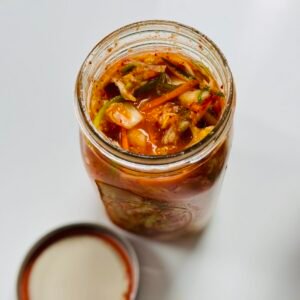
Traditional Napa Cabbage Kimchi

A traditional homemade napa cabbage kimchi made with rice paste, Korean pear, onion, garlic, ginger, fish sauce, fermented shrimp, gochugaru, radish, carrot, and green onion. It is bright, savory, spicy, and deeply flavorful after fermentation.
Equipment
- Large mixing bowl
- Mixing spoon
- Gloves
- Clean glass jars or fermentation container
Ingredients
For the cabbage
- 2 large napa cabbages about 4 to 5 pounds total, about 1815 to 2268 g
- ½ cup kosher salt or Korean coarse sea salt about 120 g
- Water as needed
For the rice flour paste
- 2 cups water 480 ml
- 2 tablespoons sweet rice flour or regular rice flour about 16 g
For the kimchi paste base
- 1 Korean pear peeled and chopped, about 200 g
- ½ medium onion about 75 g
- 6 garlic cloves about 18 g
- 1 tablespoon fresh ginger about 15 g
- ¼ cup fish sauce 60 ml
- 2 tablespoons salted fermented shrimp about 30 g
For the seasoning
- ¾ to 1 cup Korean chili flakes about 45 to 60 g
- 1 tablespoon sugar optional, about 12 g
For the vegetables
- 1 cup julienned carrot about 120 g
- 4 green onions cut into 2 inch pieces, about 60 g
- 2 cups julienned radish about 240 g
Instructions
- Cut the napa cabbage lengthwise into quarters, then cut each quarter into bite sized pieces. Place the cabbage in a large bowl.
- Sprinkle the salt between the cabbage layers. Add enough water to lightly cover the cabbage. Let sit for 2 hours, turning every 30 minutes, until the cabbage is softened but still has some structure.
- Rinse the cabbage 2 to 3 times under cold water to remove excess salt. Drain very well in a colander.
- In a small saucepan, whisk together the water and rice flour. Cook over medium heat for 3 to 5 minutes, stirring often, until slightly thickened into a loose paste. Let cool completely.
- In a blender, combine the Korean pear, onion, garlic, and ginger. Blend until very smooth.
- In a large bowl, combine the cooled rice paste, blended pear mixture, fish sauce, fermented shrimp, gochugaru, and optional sugar. Stir until a thick red paste forms.
- Add the julienned radish, carrot, and green onion to the paste. Toss until evenly coated.
- Add the drained cabbage to the bowl. Wear gloves and gently massage the paste into the cabbage until every piece is evenly coated.
- Pack the kimchi tightly into clean jars or a fermentation container. Press down firmly so the vegetables are submerged in their juices. Leave about 1 inch of space at the top.
- Leave the jars at room temperature for 1 to 3 days, depending on how quickly you want it to ferment. Burp the jars once or twice daily and press the kimchi down if needed.
- Taste the kimchi daily. Once it reaches your preferred level of tanginess, transfer it to the refrigerator.
- Refrigerate for at least a few more days for deeper flavor, or enjoy right away for a fresher crunchier kimchi.
Notes
Chef tips
Use gloves when mixing because gochugaru can irritate skin.
Make sure the cabbage is well drained so the paste clings properly.
Taste after fermentation begins because the flavor develops quickly.
Press the kimchi down in the jar so the vegetables stay under the liquid. Substitutions Use an apple instead of Korean pear.
Use extra fish sauce or a mix of soy sauce and miso if you do not have fermented shrimp.
Use red radishes, watermelon radish, turnips, or kohlrabi instead of daikon. Variations For a milder kimchi, use ¾ cup gochugaru.
For a spicier kimchi, use the full 1 cup gochugaru.
Add more radish for extra crunch.
Use more green onion for a sharper onion note. Storage and reheating Store kimchi in the refrigerator for several weeks to months.
Do not reheat fresh kimchi unless using it in another cooked recipe like fried rice or stew.
Older kimchi is excellent in cooked dishes.
Make ahead guidance
Kimchi is ideal for make ahead cooking because the flavor improves over time.
Make it several days before serving if you want a deeper sour tang. Serving ideas Serve with rice bowls, grilled meats, eggs, noodle dishes, soups, or dumplings.
Use it in kimchi fried rice, pancakes, or stews.
It also fits beautifully into pantry first meals built around bold prepared components.
Make sure the cabbage is well drained so the paste clings properly.
Taste after fermentation begins because the flavor develops quickly.
Press the kimchi down in the jar so the vegetables stay under the liquid. Substitutions Use an apple instead of Korean pear.
Use extra fish sauce or a mix of soy sauce and miso if you do not have fermented shrimp.
Use red radishes, watermelon radish, turnips, or kohlrabi instead of daikon. Variations For a milder kimchi, use ¾ cup gochugaru.
For a spicier kimchi, use the full 1 cup gochugaru.
Add more radish for extra crunch.
Use more green onion for a sharper onion note. Storage and reheating Store kimchi in the refrigerator for several weeks to months.
Do not reheat fresh kimchi unless using it in another cooked recipe like fried rice or stew.
Older kimchi is excellent in cooked dishes.
Make ahead guidance
Kimchi is ideal for make ahead cooking because the flavor improves over time.
Make it several days before serving if you want a deeper sour tang. Serving ideas Serve with rice bowls, grilled meats, eggs, noodle dishes, soups, or dumplings.
Use it in kimchi fried rice, pancakes, or stews.
It also fits beautifully into pantry first meals built around bold prepared components.
Nutrition
Serving: 140gCalories: 60kcalCarbohydrates: 10gProtein: 2gFat: 1gSaturated Fat: 0.2gPolyunsaturated Fat: 0.2gMonounsaturated Fat: 0.1gCholesterol: 5mgSodium: 980mgPotassium: 310mgFiber: 2gSugar: 5gVitamin A: 2800IUVitamin C: 32mgCalcium: 70mgIron: 1.3mg
Tried this recipe?Let us know how it was!