
There are different levels of hosting, and I think that matters when you are planning a gathering.
Sometimes hosting is simple and everyday. You have another family over on a weeknight, make one good dish, put out something easy to snack on, and enjoy a relaxed evening together. Other times hosting becomes a little more intentional. Maybe you make a nicer meal, serve a few courses, light candles, and stretch dinner into something that feels just a bit more special.
And then there are nights like this.
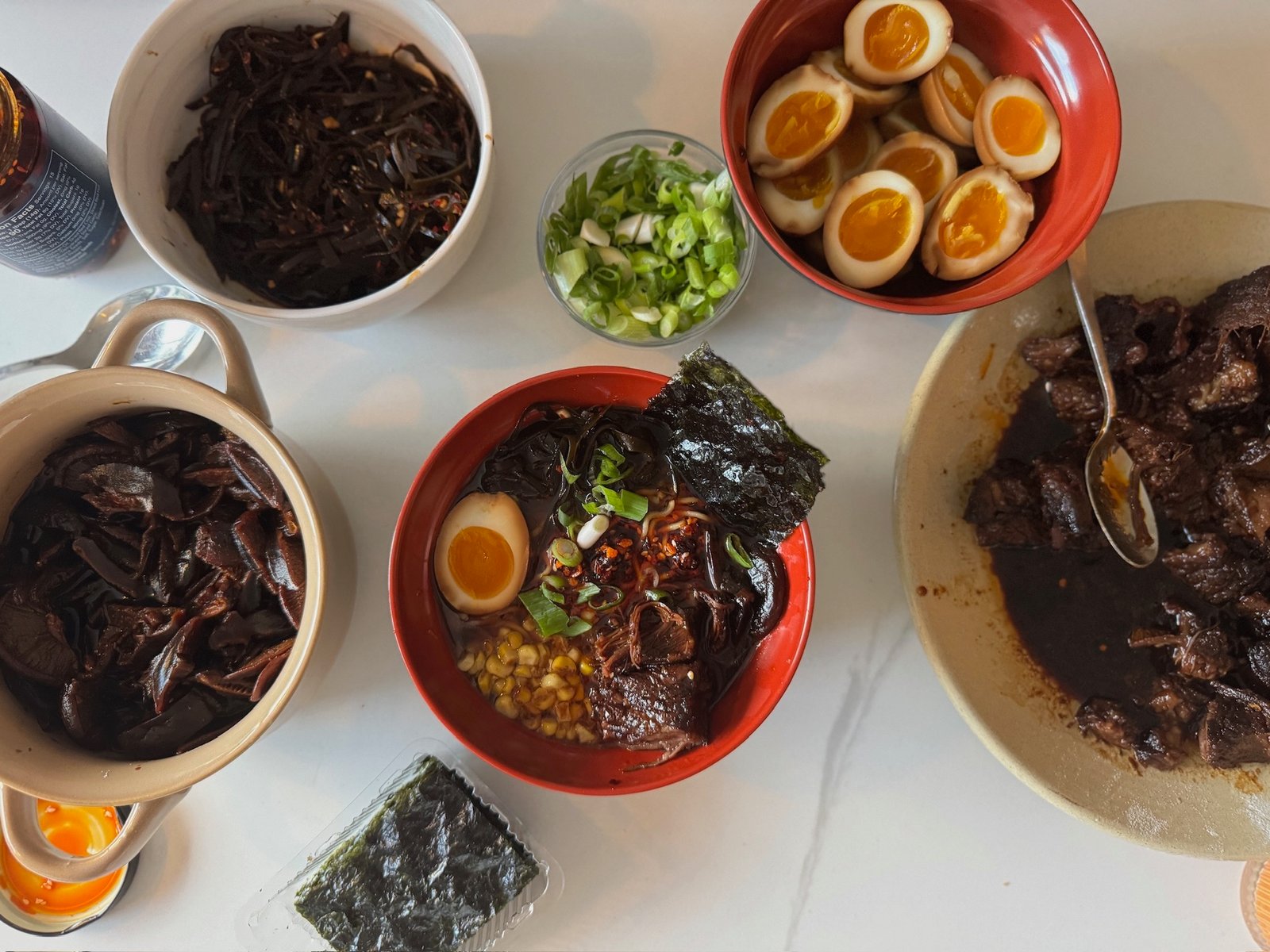
This dinner pulled inspiration from several distinct cuisines and food traditions rather than trying to represent “Asian food” as one uniform cuisine. The menu included Thai tea, Japanese-style ramen, kimchi, gochujang, dumplings, bao buns, matcha, and miso-based dessert elements. The title now names the actual menu more directly, and throughout this post I am being more specific about what was actually served.
This was on the fancier end of hosting for us, but it still fit completely within our philosophy around gathering people. Good hosting is not about showing off. It is about creating space for people to slow down, enjoy themselves, and feel cared for. A night like this is a chance to splurge a little, cook things you do not make every day, linger at the table, and create memories people often do not forget. These dinners are truly an event, and they are so worth the effort.
This one lasted more than four hours, not because anything felt slow or disorganized, but because the night had layers. We had appetizers, a themed drink, hands on dumpling making, bao buns, homemade ramen with all the toppings, two desserts, and even a game. People took their time. They talked. They laughed. They stayed engaged. The meal unfolded instead of rushing by.
That is really what this post is about. Not just look at what we did, but here is how and why you might want to create something like this in your own home.
Why a multi-cuisine dinner party works so well for entertaining
A dinner that intentionally combines dishes from several cuisines can offer rich food, bright food, interactive food, and deeply comforting food in the same evening. The important part is to name those influences rather than flattening them into one cuisine. It also gives you a chance to build the menu around components, which is one of the best ways to host without being stuck cooking all day.
That is a big part of how I think through my Pantry First Method. When you prep components like sauces, broths, toppings, condiments, fillings, and garnishes ahead of time, hosting becomes much more manageable. Instead of trying to cook every dish from start to finish while guests are arriving, you are mostly assembling, finishing, and serving.
The menu for our Asian dinner party
Every part of this menu had a purpose. I wanted the evening to feel immersive and generous, with enough variety that each course felt distinct.
Menu and serving order at a glance
- Arrival: Crab rangoon dip with fried wonton wrappers and Thai tea
- Interactive appetizer: Veggie dumplings folded with guests
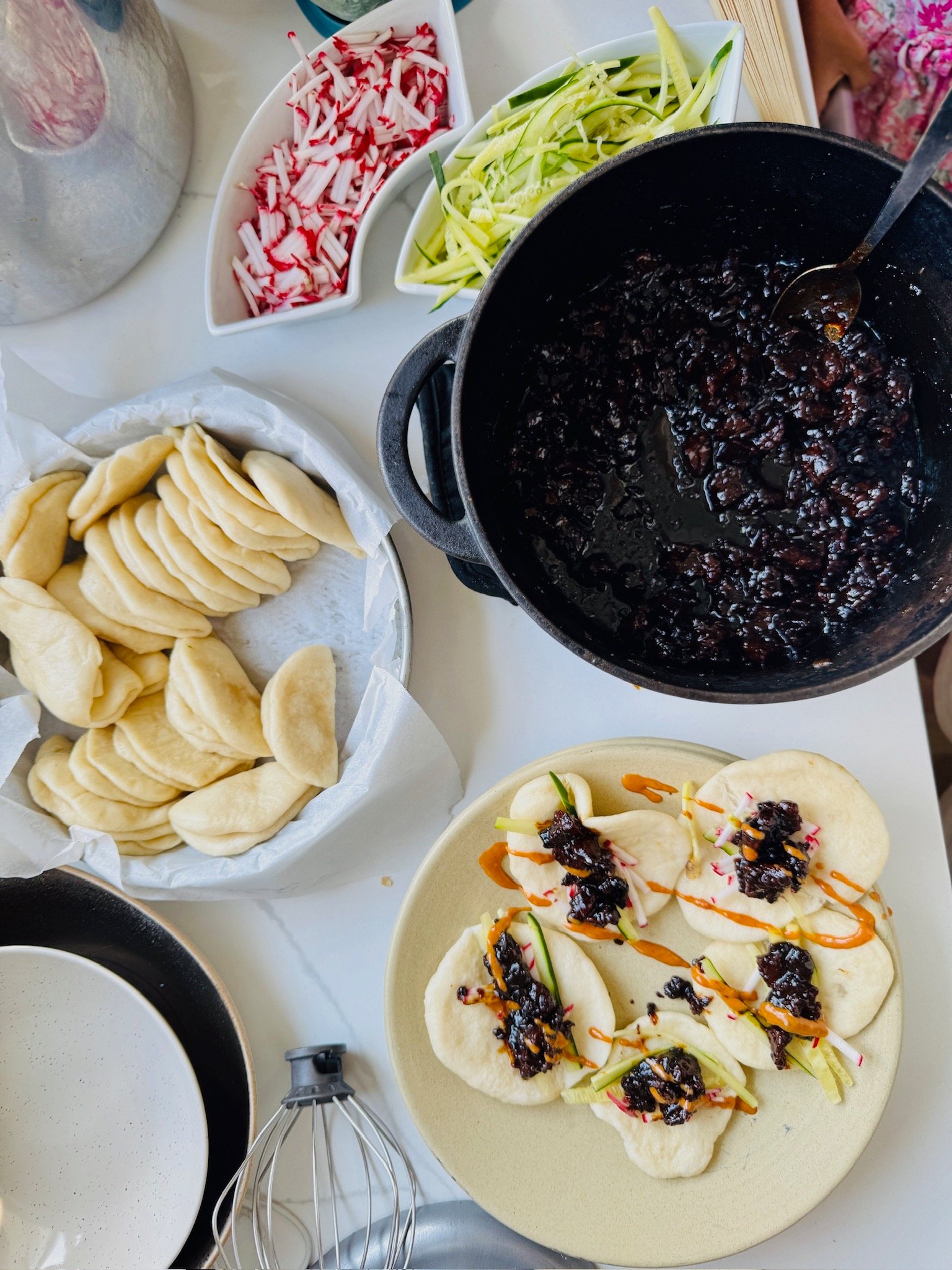
- Next course: Pork belly bao buns with sesame ginger gochujang sauce
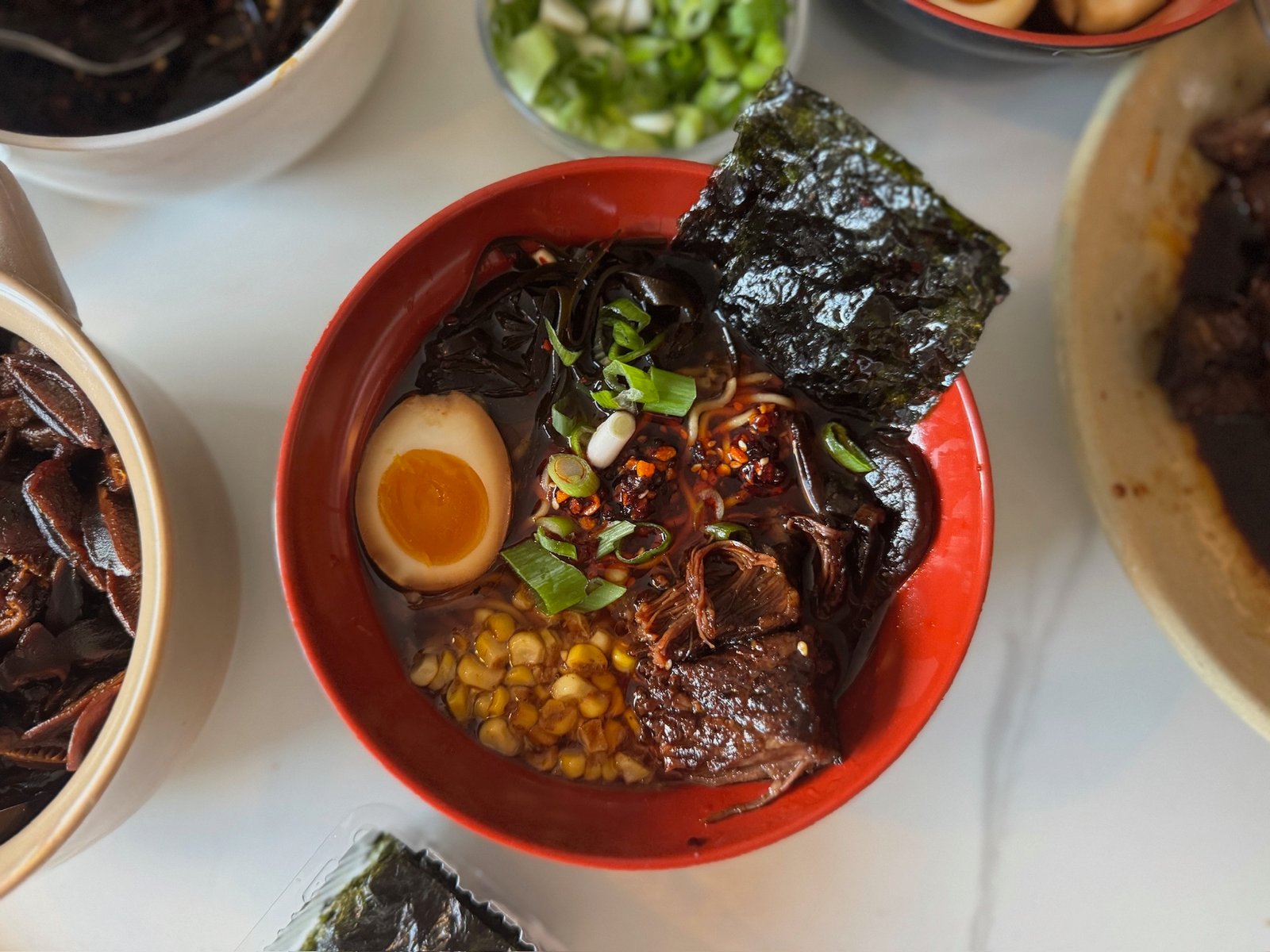
- Main course: Japanese-style ramen with long-cooked broth, brown butter corn, short rib, marinated mushrooms, ramen eggs, marinated kombu, seaweed, chili crisp, and green onions
- Desserts: Matcha tiramisu and miso honey crème brûlée
- Take-home gift: Napa cabbage kimchi
The exact quantities for this gathering were not recorded in the original notes, so I am not giving you invented per-person amounts here. What the post can give you accurately is the menu, serving flow, and prep sequence we actually used.
Appetizers
We started with crab rangoon dip, which was the perfect opener while people arrived and settled in. It had all the creamy, savory appeal of classic crab rangoon, but in a format that was easier to share with a group. One of my favorite parts was that we fried our own wonton wrappers for dipping, and they were absolutely perfect. Crisp, light, and much better than relying on store bought chips. A small deep skillet is especially useful when you want to fry things like wonton wrappers in small batches without making a huge production out of it.
We also served veggie dumplings, but these were more than just an appetizer. They became one of the evening’s first activities. We prepped the filling ahead of time, then gathered everyone around the kitchen table to fold dumplings together. It is such a simple thing, but it changes the whole energy of the room. Instead of everyone staying in separate corners making small talk, people immediately have something to do together. A bamboo steamer is one of those tools that makes this kind of hosting easier and also feels right for the meal.

Then we moved into pork belly bao buns, which were rich, soft, and absolutely delicious. These felt like one of the more indulgent bites of the night. I used my sesame ginger gochujang sauce on the bao buns, and it took them to the next level. That sauce brought sweetness, heat, acid, and depth all at once, which is exactly what a rich bite like pork belly needs. Its is part of my five sauces we use to plan meals.
Always have a special drink
One rule I keep coming back to when hosting is this: always have some sort of special drink.
It does not have to be alcoholic. In fact, it often does not need to be. A themed drink instantly tells guests that the evening is intentional. It sets the tone from the moment they walk in. It gives people something to hold, something to talk about, and something that ties the menu together before the first course ever lands.
For this dinner party, I made Thai tea (I used Number One Thai Tea Mix for my tea leaves), and it was the perfect fit. It felt on theme, comforting, and a little playful at the same time. It also paired well with the richness and spice throughout the menu. For themed dinners especially, I think a drink is one of the easiest ways to make the whole evening feel cohesive without adding a lot of stress. A glass pitcher is one of those simple hosting pieces that comes in handy again and again for signature drinks like this.
The main event: homemade ramen
For the main meal, we served Japanese style ramen, and this was really the centerpiece of the night.
I made my own broth from scratch, letting it cook for over 13 hours in a more traditional style inspired by Momofuku ramen. A meal like this absolutely benefits from ambition, but only if it is paired with good planning. The broth was never something I wanted to leave for the day of. It needed time, and that is part of what made it special.
The ramen had a full spread of toppings, which made it feel even more thoughtful and restaurant worthy.
There was brown butter corn, which added sweetness and richness.
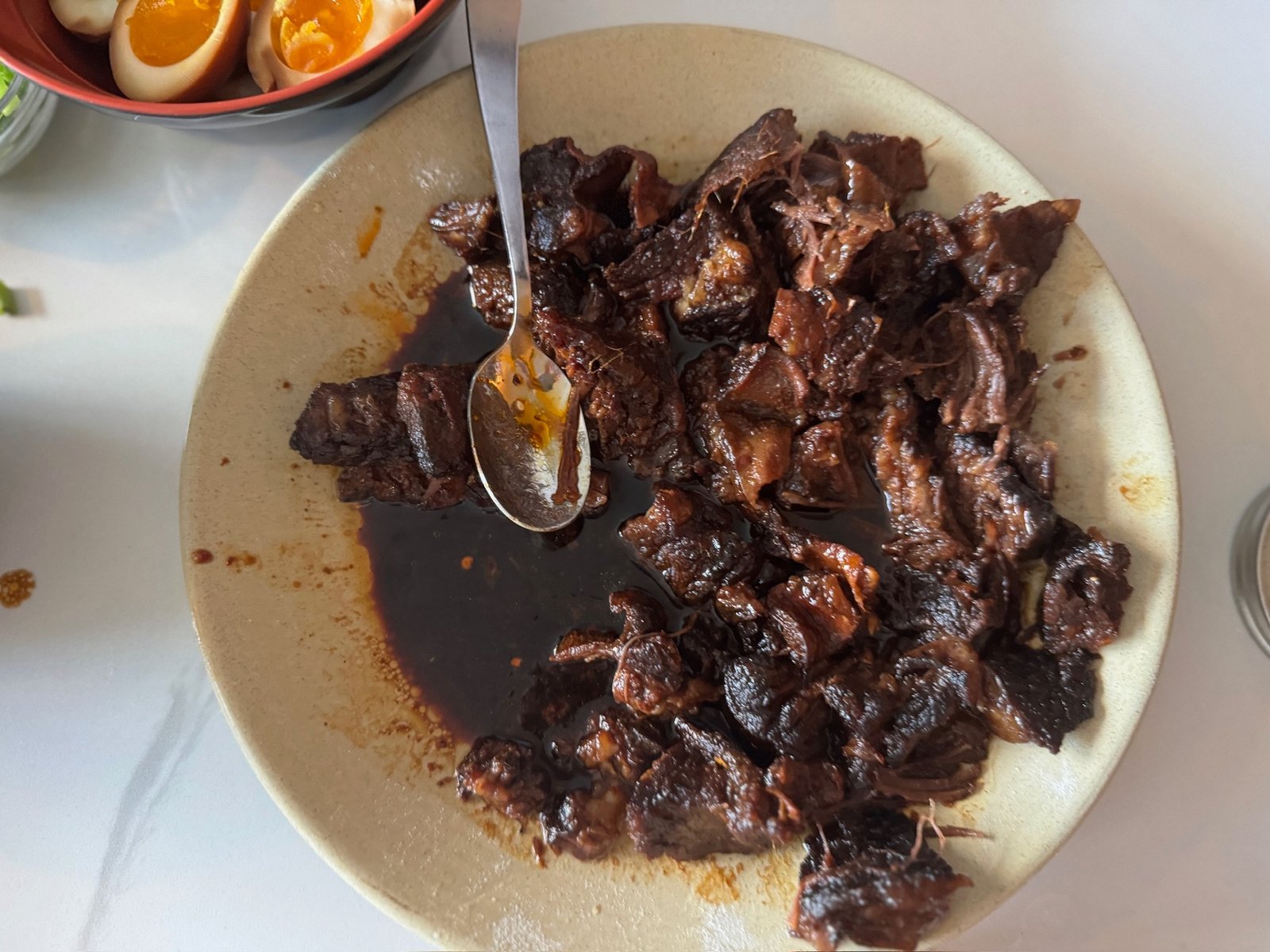
There was Asian style short rib, which brought deep savory flavor and made the bowls feel substantial enough for a dinner party centerpiece.
There were marinated mushrooms, which added earthiness and balance.
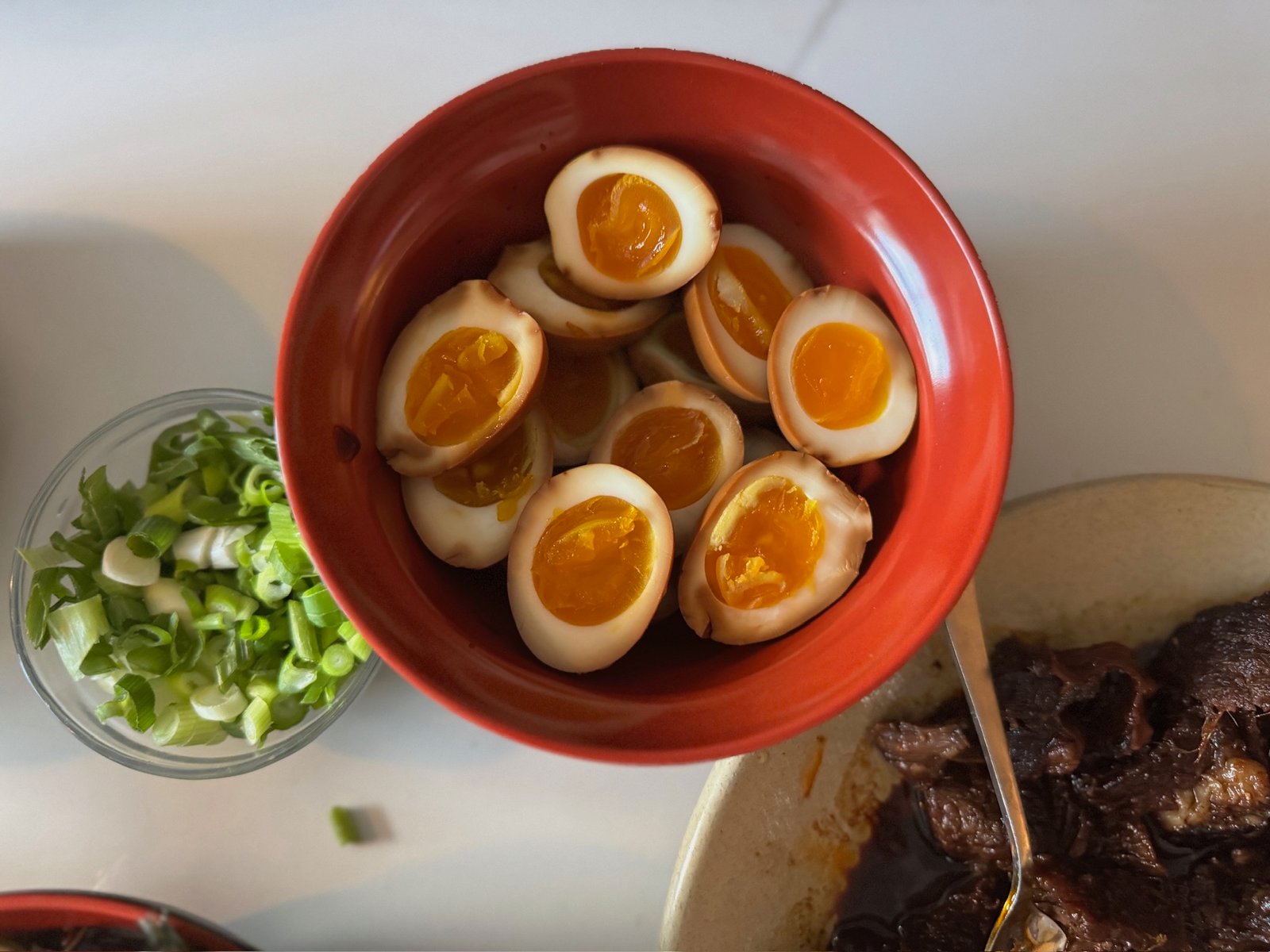
I also made ramen eggs several days in advance by cooking the eggs and marinating them so they could fully absorb flavor before the event.
And one detail I especially loved was using the cooked kombu, slicing it, and creating a marinade for it as well. That kind of thoughtful reuse is one of my favorite kitchen moves. It layers flavor, reduces waste, and gives the final bowl even more character.
To finish the ramen, I topped everything with seaweed, chili crisp, and green onions. Those little finishing touches matter. They bring texture, freshness, and one more layer of flavor that makes the bowl feel complete. We used Japanese ramen bowl setwhich are a wonderful upgrade if you host dinners like this often because presentation matters more with a dish like ramen.
Dessert should still feel exciting
For dessert, we made two.
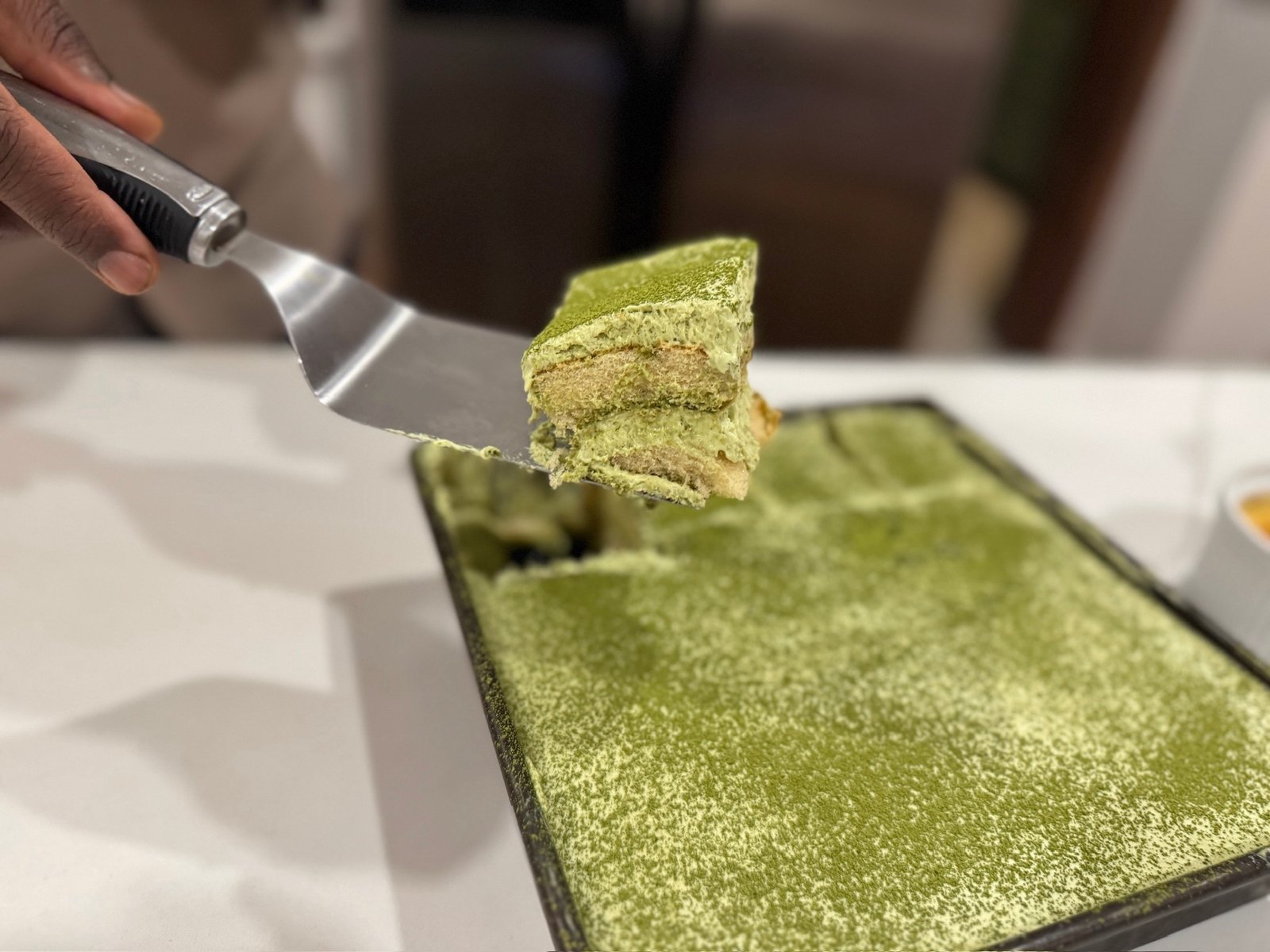
First was matcha tiramisu, which was out of this world. It had the creamy comfort of classic tiramisu but with the earthy depth of matcha, which made it feel completely at home in the menu.
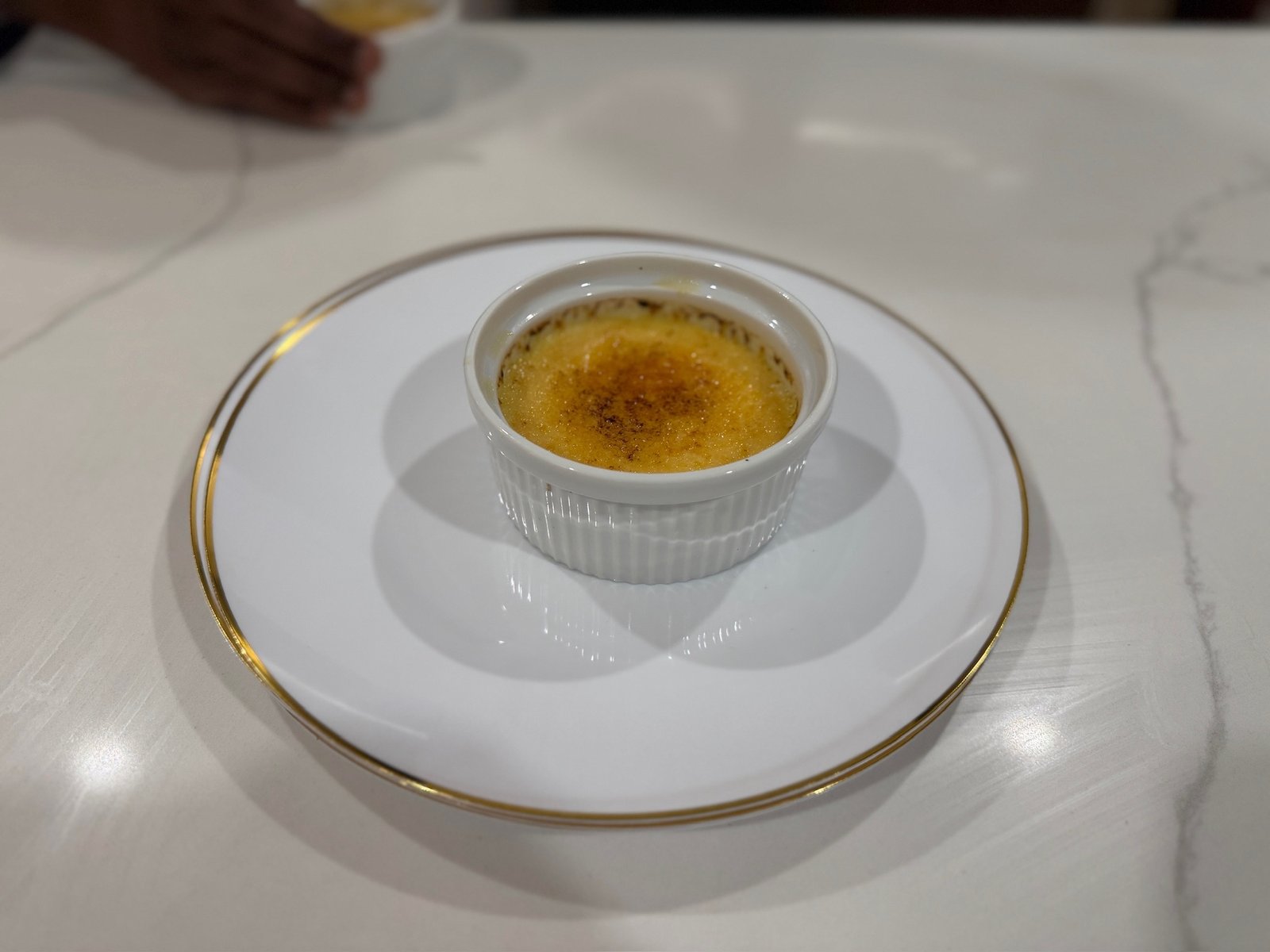
The second dessert was miso honey crème brûlée, which was also outstanding. It was rich and silky, with just enough savory depth from the miso to make people pause and ask what exactly made it so good.
When I host a dinner party on the fancier side, I like dessert to feel like a real part of the experience, not an afterthought. By the time people reach dessert, they should still feel surprised in a good way.
The interactive moments made the night memorable
There were a few things beyond the menu that made this dinner party stand out.
The first was the dumpling folding activity. I really believe that when people participate in the making of the meal, the evening becomes more memorable. It is no longer just dinner. It becomes shared experience.
The second was the chopstick game. We had a competition where guests had to transfer as many beans as possible (using chopsticks) from one side to the other while being timed. The fastest person won a prize. It was simple, funny, and exactly the kind of small moment that gives a dinner party personality.
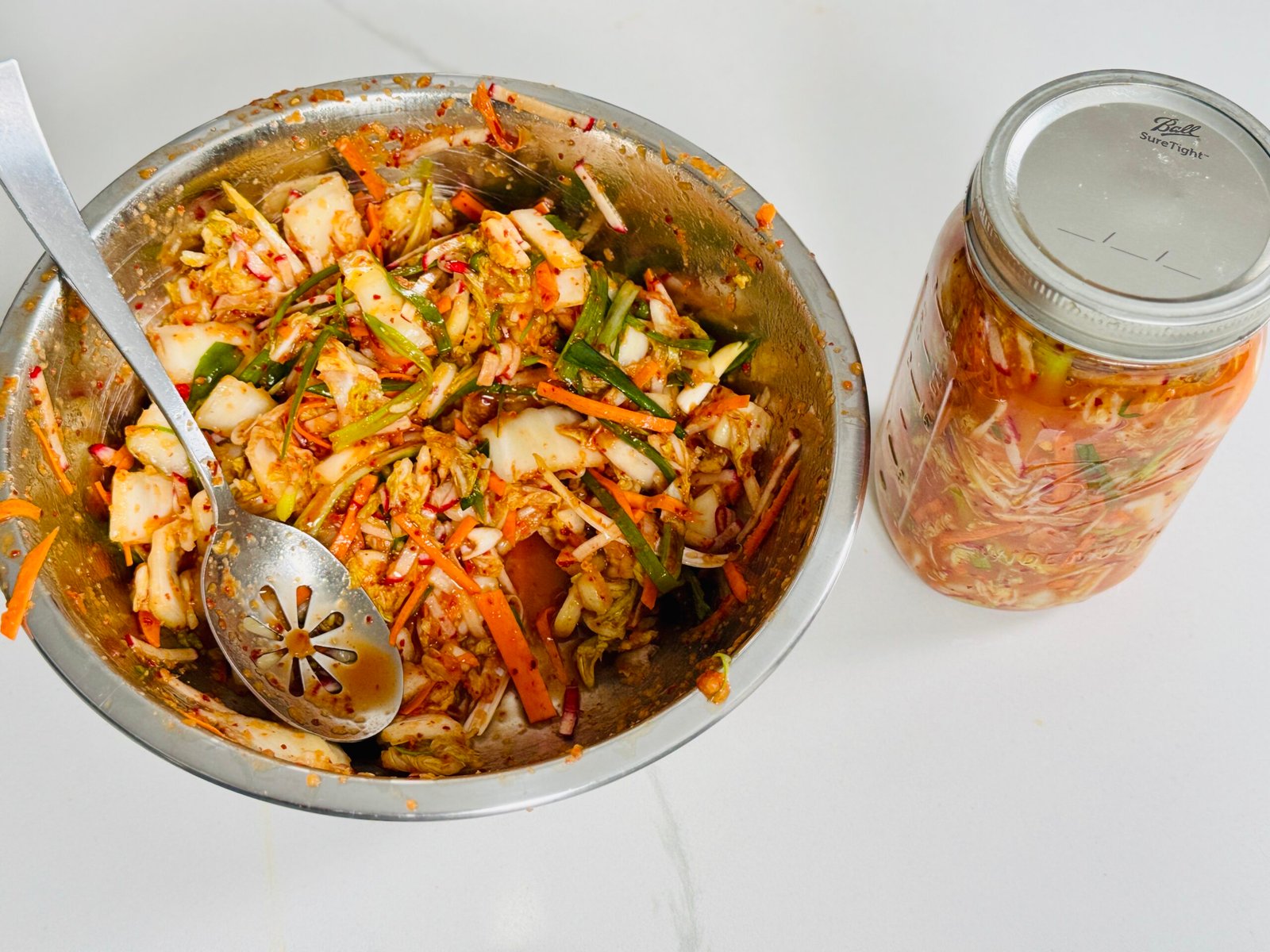
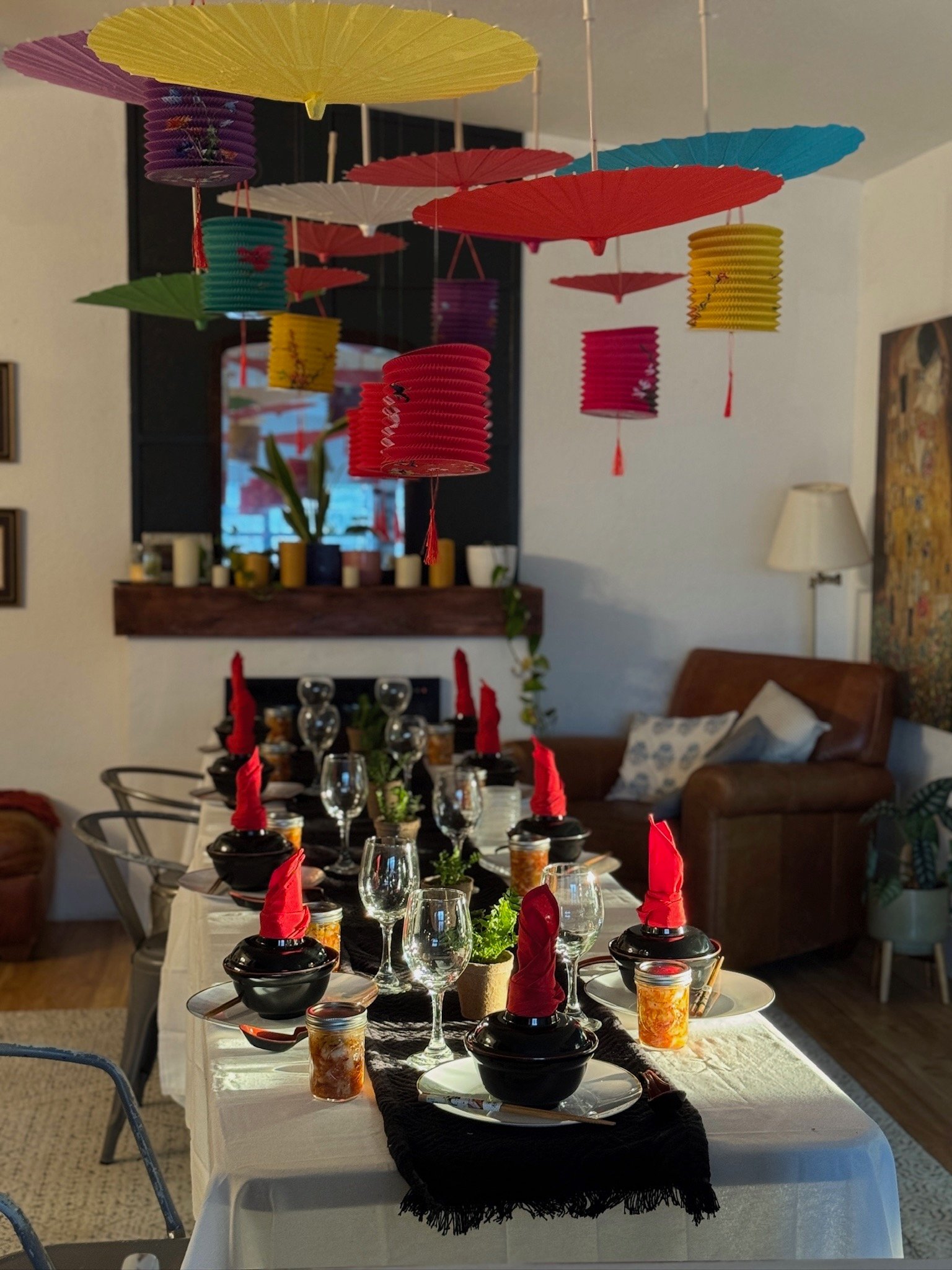
The third was the take home gift. I made large batches of kimchi and packed them into small mason jars so every guest could leave with a jar to remember the evening by. That is something my wife and I love doing when we host more elaborate dinners. It makes the night feel even more thoughtful. If you want to make your own, you can check out my Traditional Napa Cabbage Kimchi recipe. Small mason jars at are perfect for little take home gifts like this.
Decorations matter more than people think
We also made the space feel different.
We removed our couches, opened up the living area, and hung lanterns and umbrellas to create a more transportive atmosphere. One of our guests even showed up dressed for the dinner party, which immediately made us think that leaning into that kind of participation could be even more fun at future themed dinners.
This is another good reminder that hosting is about more than food. The goal is not perfection. It is atmosphere. A few thoughtful visual choices can make a dinner feel far more memorable. Decorative lanterns are an easy way to create that kind of mood without doing anything too complicated.

What I prepped ahead and why it mattered
If there is one lesson I would want someone to take from this post, it is this: dinners like this work because of prep.
The more ambitious the menu, the more important it is to move work out of the day of the event.
Three to five days before
I made the kimchi several days ahead so it had time to ferment properly and develop flavor. This also meant the jars were ready to go for guests to take home.
I made the ramen eggs about three days before so they had enough time to marinate.
The broth also started ahead of time because something that cooks for over 13 hours has no business being a last minute decision.
One to two days before
The short rib could absolutely be made ahead and gently rewarmed. In fact, that is often the better move.
The mushrooms were marinated ahead.
The crab rangoon dip was prepared so that the day of was mostly about serving and frying the wonton wrappers.
Desserts were also either made ahead or largely completed in advance.
Day of
The day of should be about assembling, steaming, finishing, and hosting.
That looked like folding dumplings with guests, steaming them as we went, assembling bao buns, warming toppings, building ramen bowls, serving desserts, and staying present.
That is the real goal. Not to prove you can do everything at once, but to set yourself up so the evening feels relaxed and generous.
Why a dinner like this is worth the effort
Not every gathering needs to be this elaborate. Sometimes simple is best. Sometimes a roast chicken and a good salad are enough.
But there is something beautiful about occasionally creating a night that feels bigger than ordinary life.
A dinner like this tells people they are worth your time and effort. It gives everyone permission to slow down, relax, eat in courses, talk longer than usual, and enjoy things you might not make on a regular Tuesday. It becomes part meal, part experience, part memory.
And that, to me, is the deeper point of hosting.
It is not only to feed people. It is to create a setting where connection can happen.
If you want to host an Asian dinner party like this
Start with a few principles.
Choose a menu with layers and variety.
Include one interactive element.
Have a drink that fits the theme.
Prep components ahead instead of saving everything for the day of.
Add one thoughtful touch people will remember, whether that is a game, a takeaway gift, or a transformed space.
And if you are building a menu like this, make sure to include a few strong prepared components that can carry multiple dishes. My Pantry First Method is built around that exact idea, and it is also why something like kimchi fried rice becomes such a smart next-day meal after a dinner party like this. Even the sauces matter. A bold component like my sesame ginger gochujang sauce can take something as simple as a bao bun and make it feel restaurant-worthy. For the broader planning framework, see my guide to hosting at home.
This dinner party was on the fancier side, yes. But it was still rooted in the same belief we bring to every gathering. Thoughtful food, generous spirit, and an environment that helps people feel both delighted and at ease.
Those are the nights people remember.
As an Amazon Associate, I earn from qualifying purchases.

Comments
No Comments