
A fresh vegetarian dinner built from a sheet pan and the pantry first method
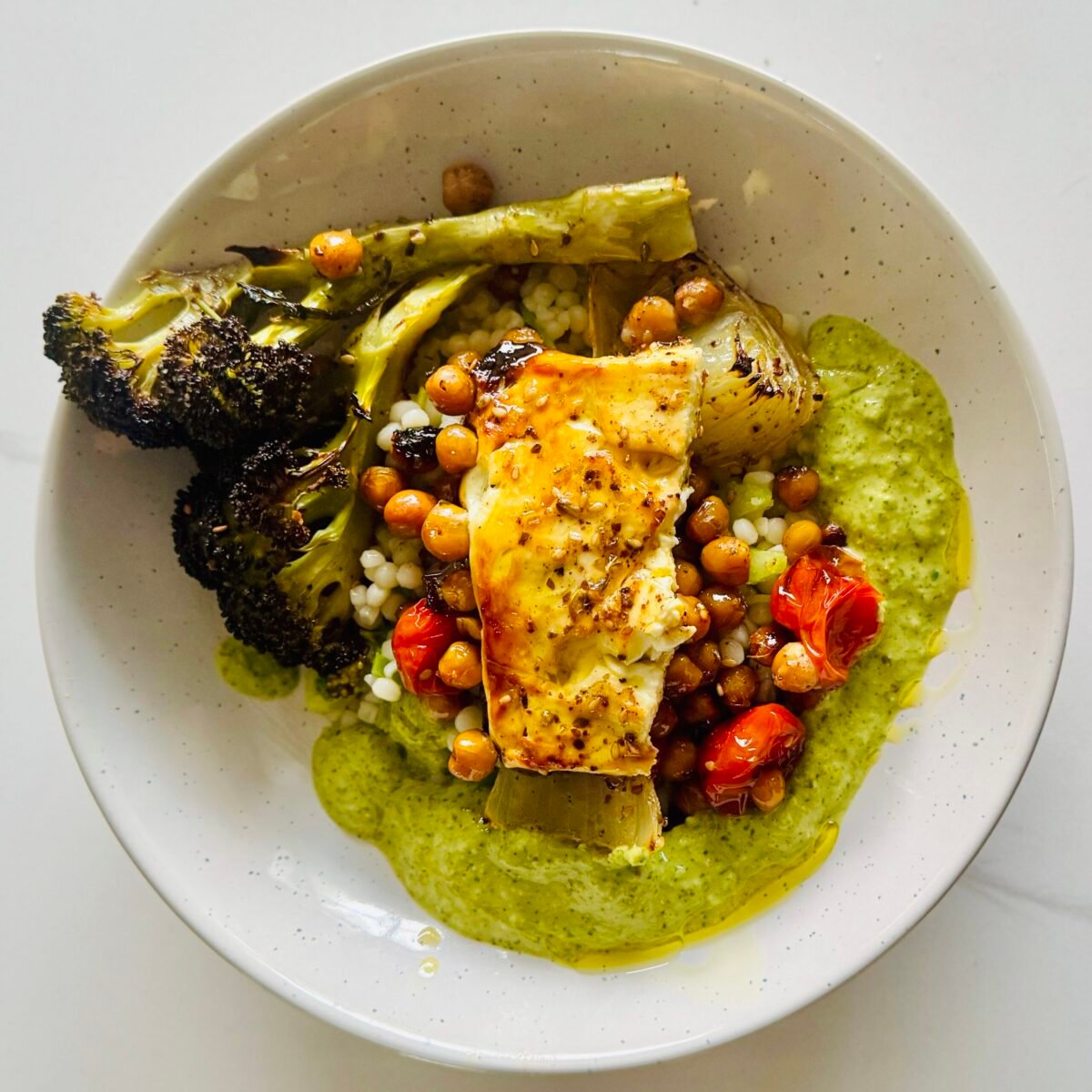
A lot of the time, a recipe starts with a picture. I will see something online that looks so good I immediately think, I need to make that. That is exactly what happened here. I saw a baked feta dish that looked beautiful and instantly started imagining how I would make it my own.
As good as the original idea looked, I knew I wanted to build in more flavor and make it fit the way I like to cook at home. So I gave it a Pantry First twist. I added za’atar to the sheet pan for more depth and warmth, paired it with a bright lime herb couscous, and finished it with green sauce to bring everything to life. The end result is a bowl that feels fresh, hearty, and full of contrast in the best way.
This recipe is also a really good example of how the Pantry First Method works in real life. The green sauce is the sauce component. The sheet pan approach is the meal style. The pearl couscous is the grain. The chickpeas are the protein. And the vegetables bring color, texture, and balance. Once you start thinking about meals in those simple building blocks, it becomes so much easier to create dinners that feel exciting without making things complicated.
Why you will love this baked feta bowl
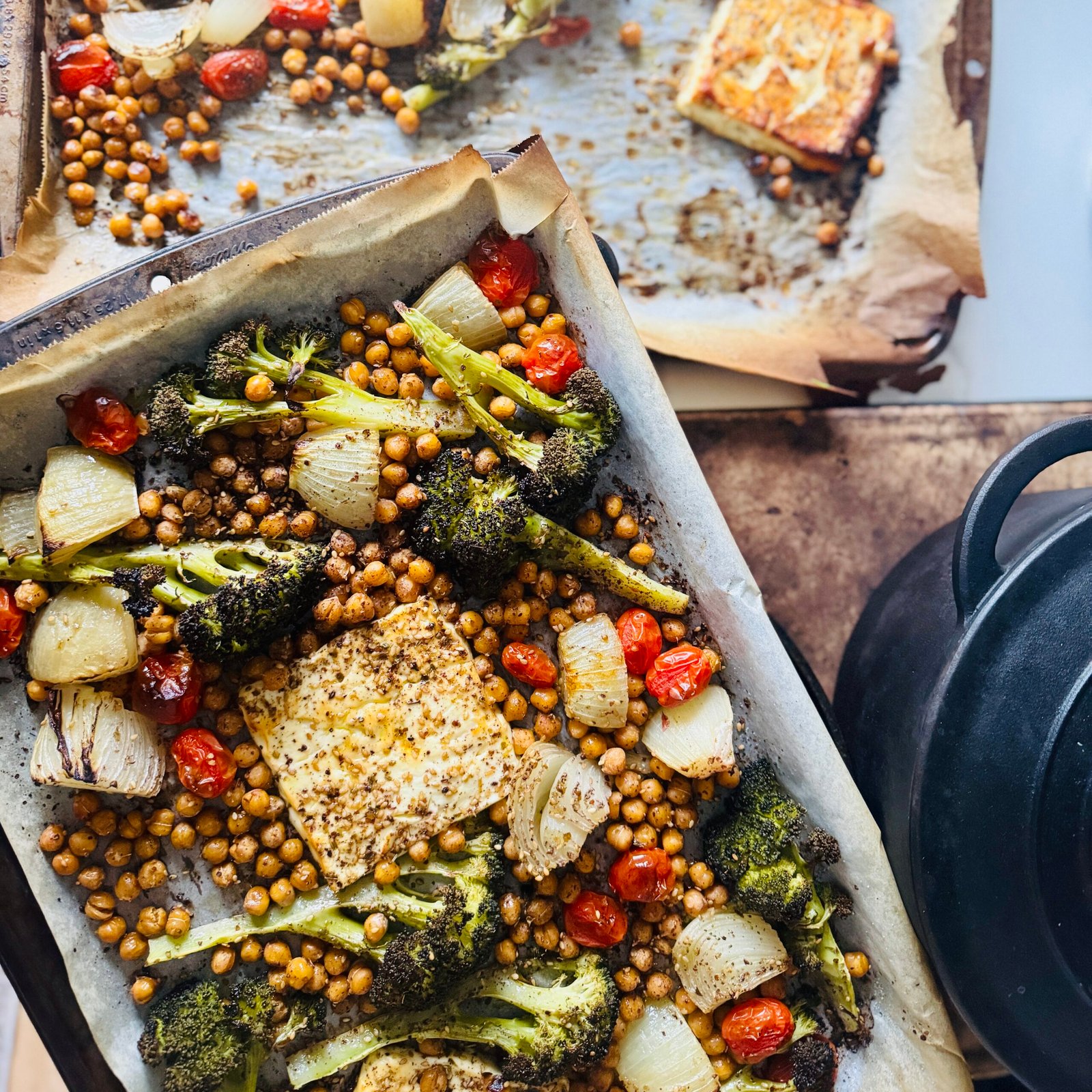
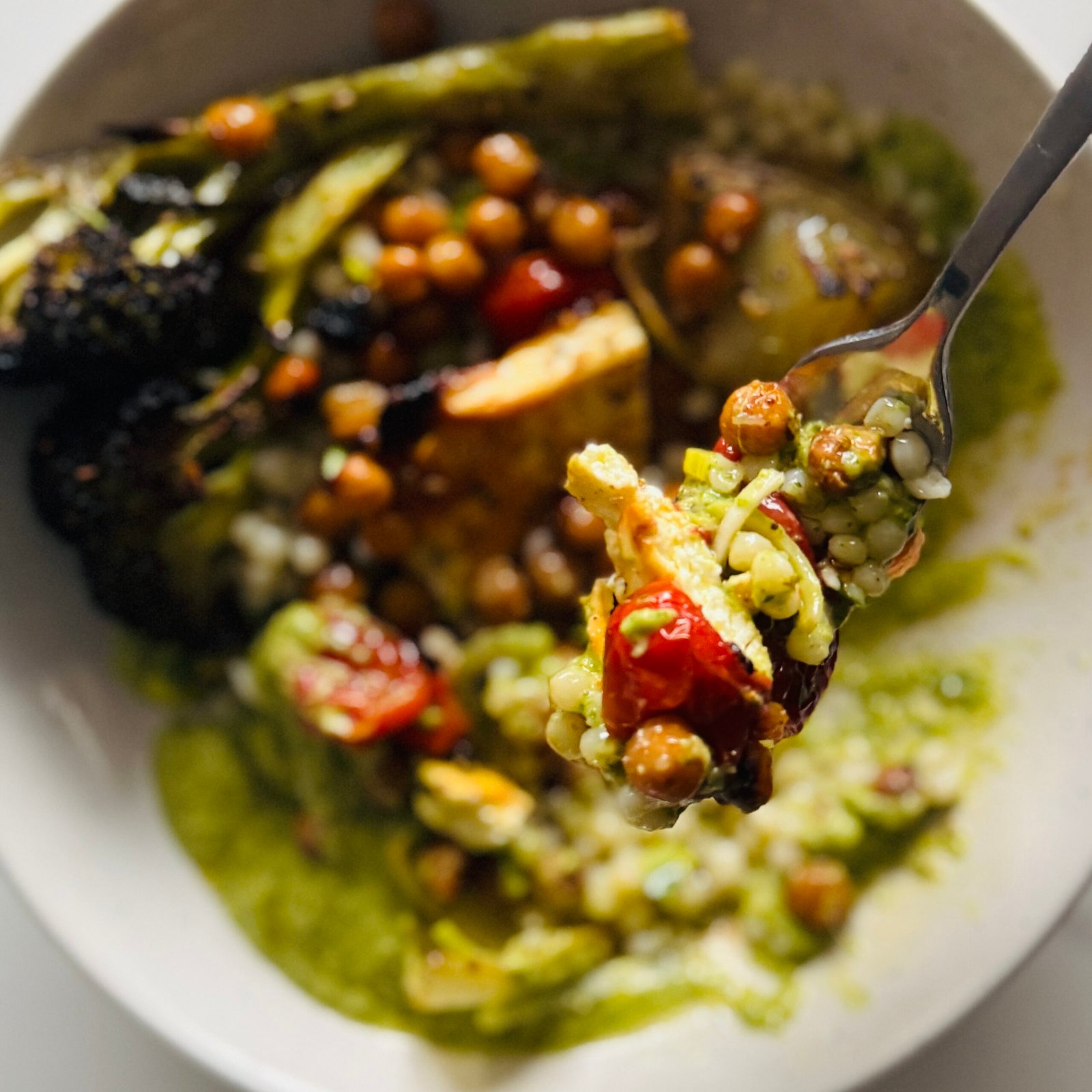
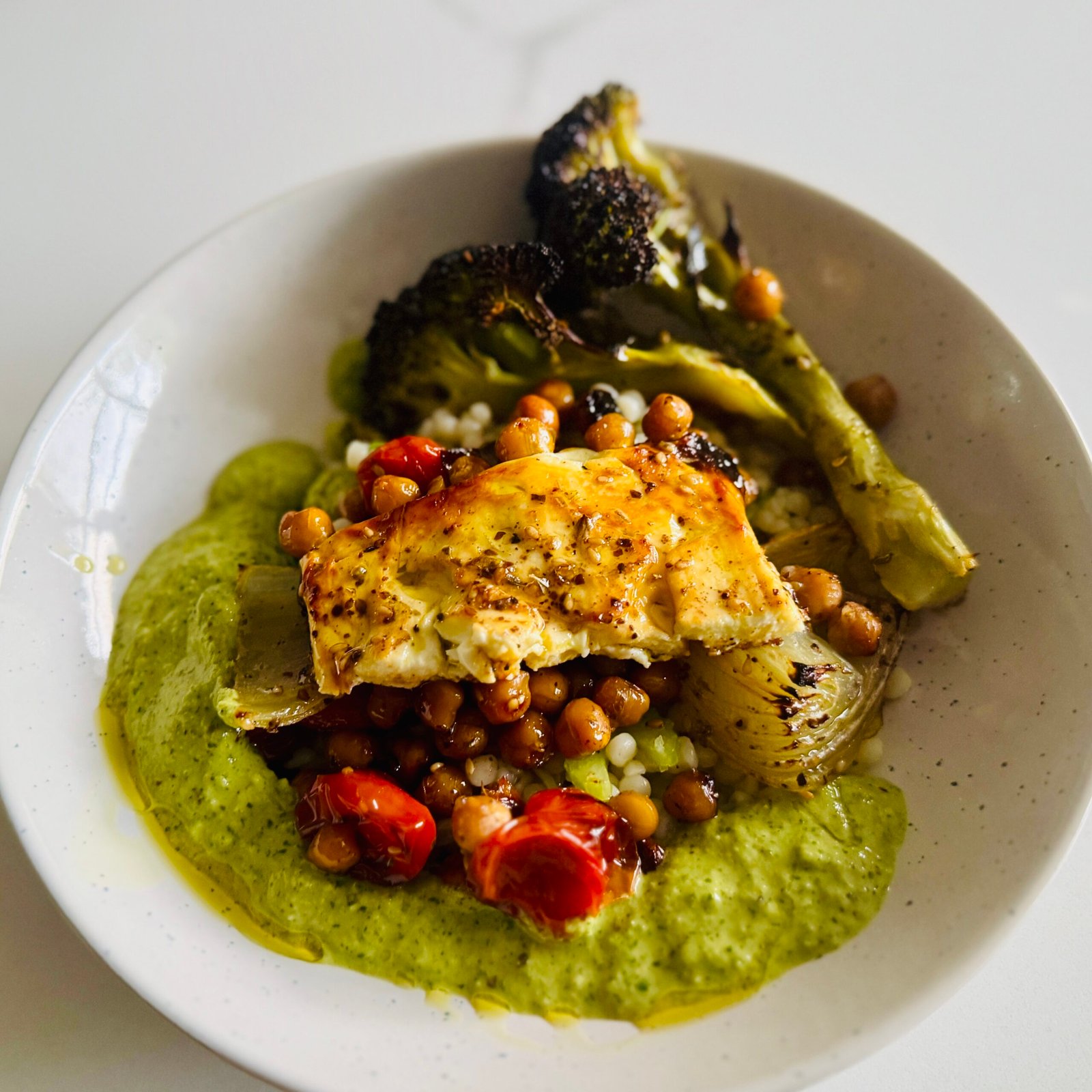
This bowl hits a lot of notes at once. The feta turns soft and warm in the oven. The tomatoes blister and become juicy. The broccoli gets a little char around the edges. The chickpeas pick up the za’atar and olive oil and become nutty and savory. Then everything gets layered over lime herb couscous that feels bright and fresh, and the green sauce ties the whole thing together.
It is hearty but still fresh. It is simple enough for a weeknight but pretty enough to serve to friends. In fact, this is exactly the kind of meal I love for casual entertaining because it looks impressive without creating a lot of stress. If you love that style of cooking, this would fit beautifully alongside the ideas in my hosting guide post.
The key ingredients and why they matter
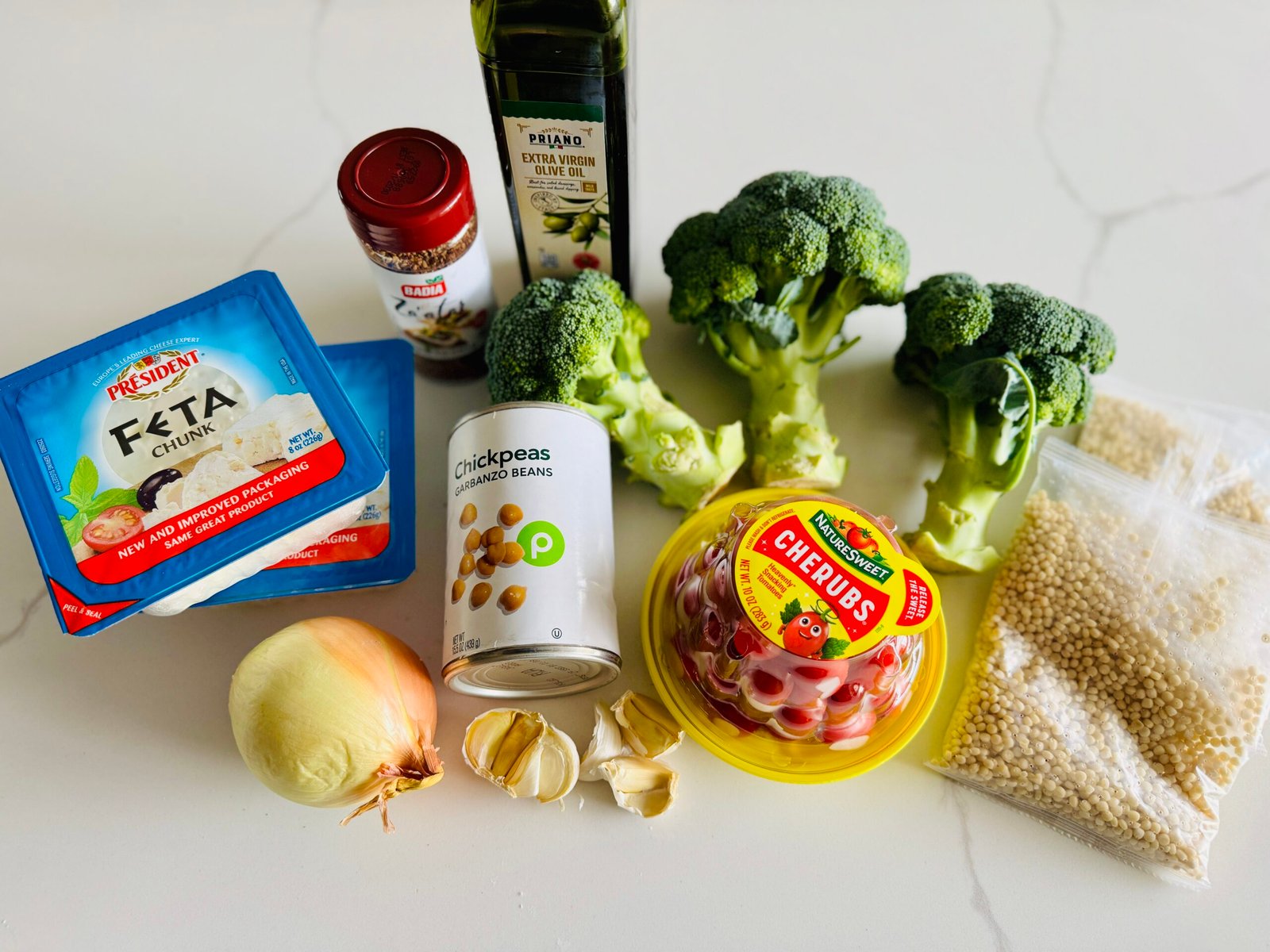
Feta
Feta is the heart of this recipe. When baked, it softens and becomes creamy while still holding its shape. It gives the bowl saltiness, richness, and that unmistakable tangy bite.
Chickpeas
Chickpeas make this bowl feel substantial. They add protein and texture, and they roast beautifully with olive oil and za’atar.
Broccoli
Broccoli brings body and a slightly bitter roasted edge that balances the richness of the feta.
Cherry tomatoes and onion
These soften and sweeten in the oven, creating little pockets of juicy flavor throughout the bowl.
Za’atar
Za’atar is one of the most important additions here. It brings earthiness, herbal notes, and a little tang that makes the roasted components more interesting. A fresh jar of za’atar can make a real difference here, especially if it is something you reach for often in your kitchen.
Pearl couscous
The pearl couscous gives the bowl a satisfying base. It is tender and a little chewy, which works especially well with the softer feta and vegetables.
Green sauce
This Green Sauce is what wakes the whole dish up. If you already have a batch, dinner comes together even faster. The bright herbs and acid cut through the richness and give every bite contrast.
You could also change the feel of the bowl with a spoonful of my Creamy Greek Sauce if that is what you have on hand. It makes a delicious topping and gives the bowl a cooler, creamier finish.
How to make this baked feta bowl
The beauty of this recipe is that it feels composed and thoughtful, but the actual process is very simple.
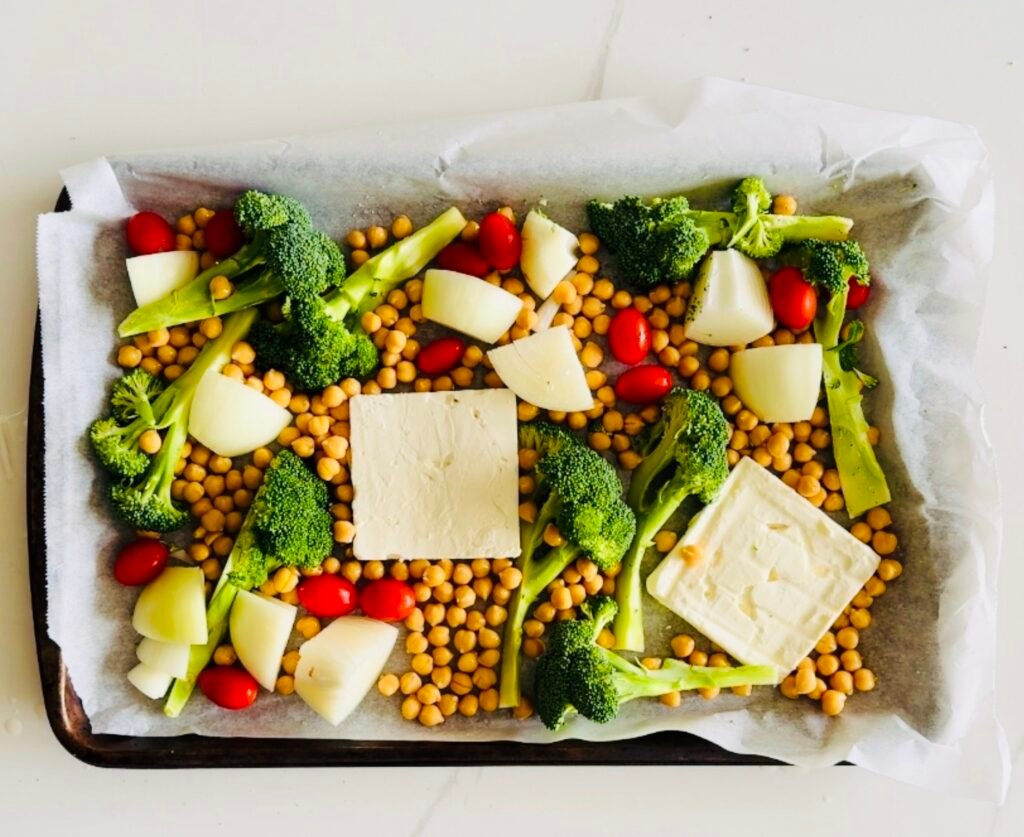
Start by heating the oven and lining a large sheet pan with parchment paper. I like using a sturdy sheet pan for this kind of dinner because it helps the vegetables roast instead of steam. Add the chickpeas, broccoli, cherry tomatoes, and onion to the pan. Drizzle everything with olive oil, season with za’atar, salt, and black pepper, and toss until well coated.
Then nestle the blocks of feta right onto the pan. A little extra olive oil on top helps them warm and color nicely in the oven. As everything bakes, the vegetables become tender and slightly charred, the tomatoes blister, and the feta softens into something creamy and rich.
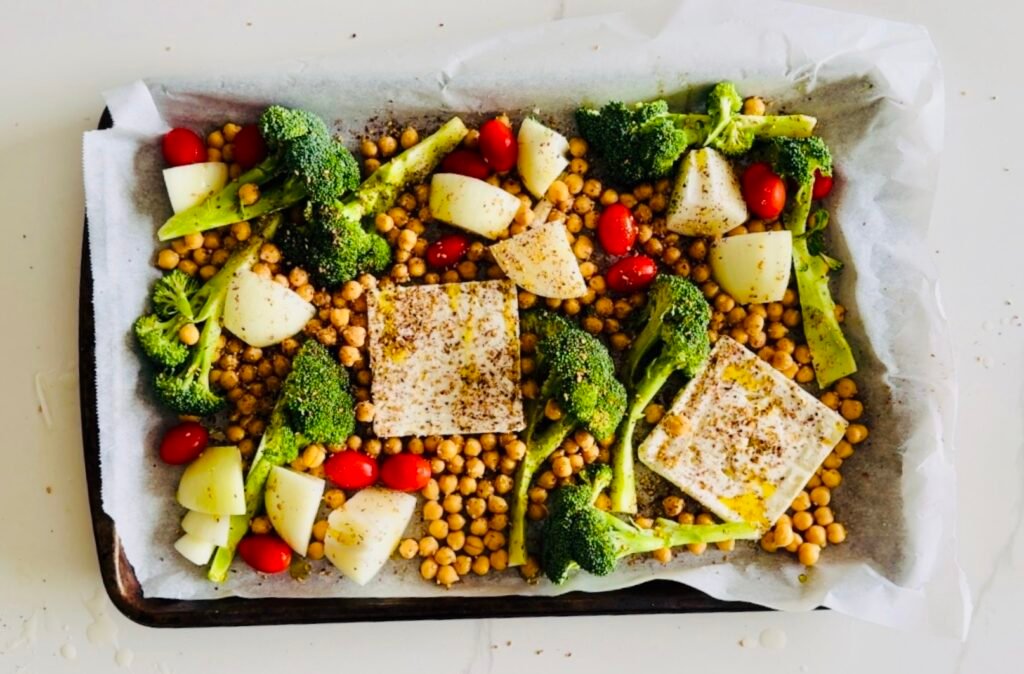
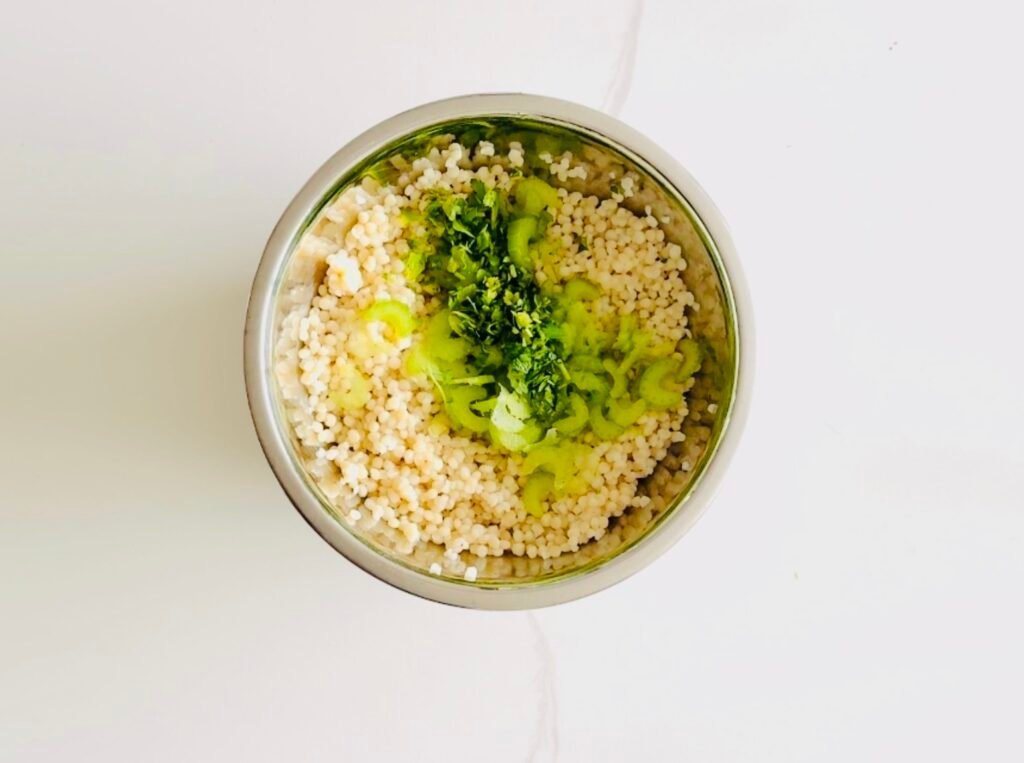
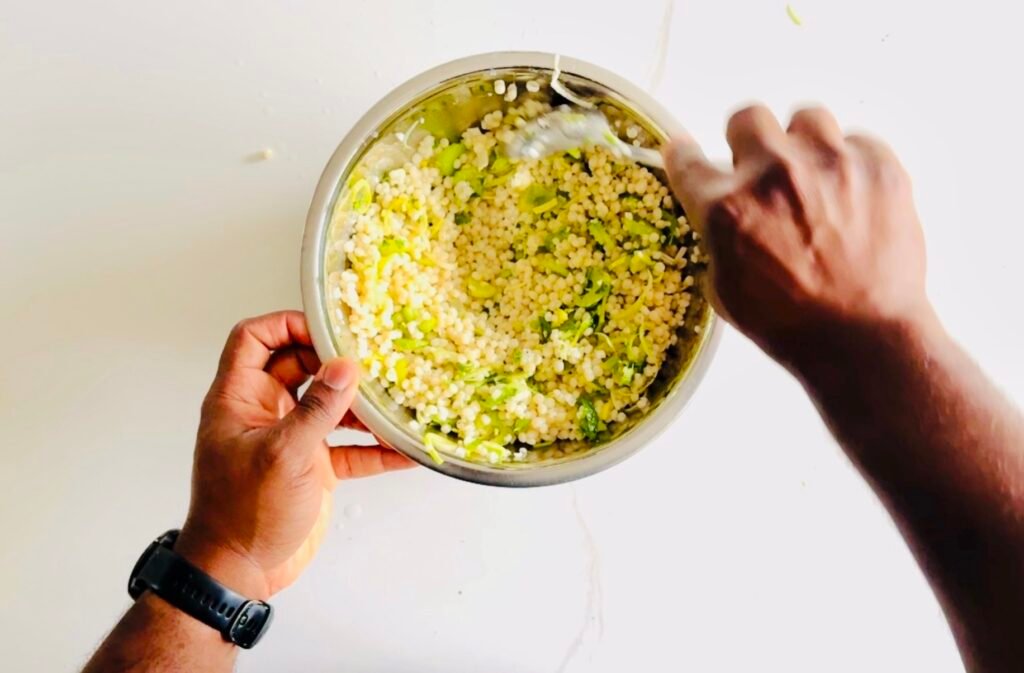
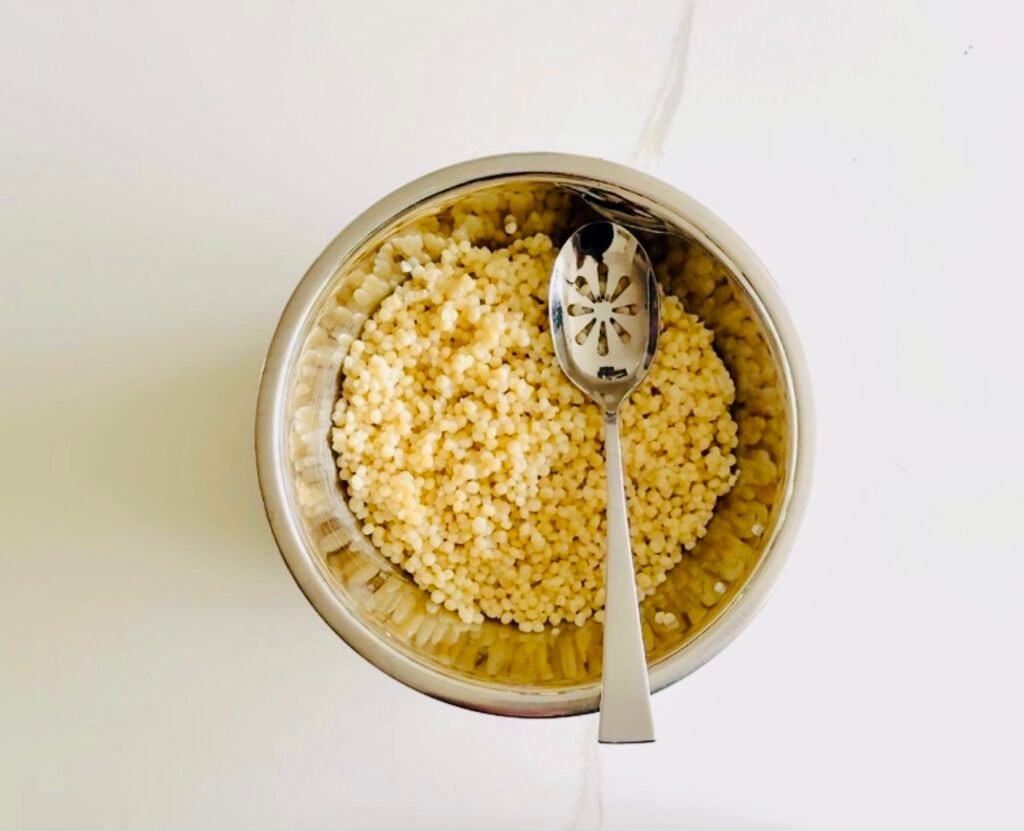
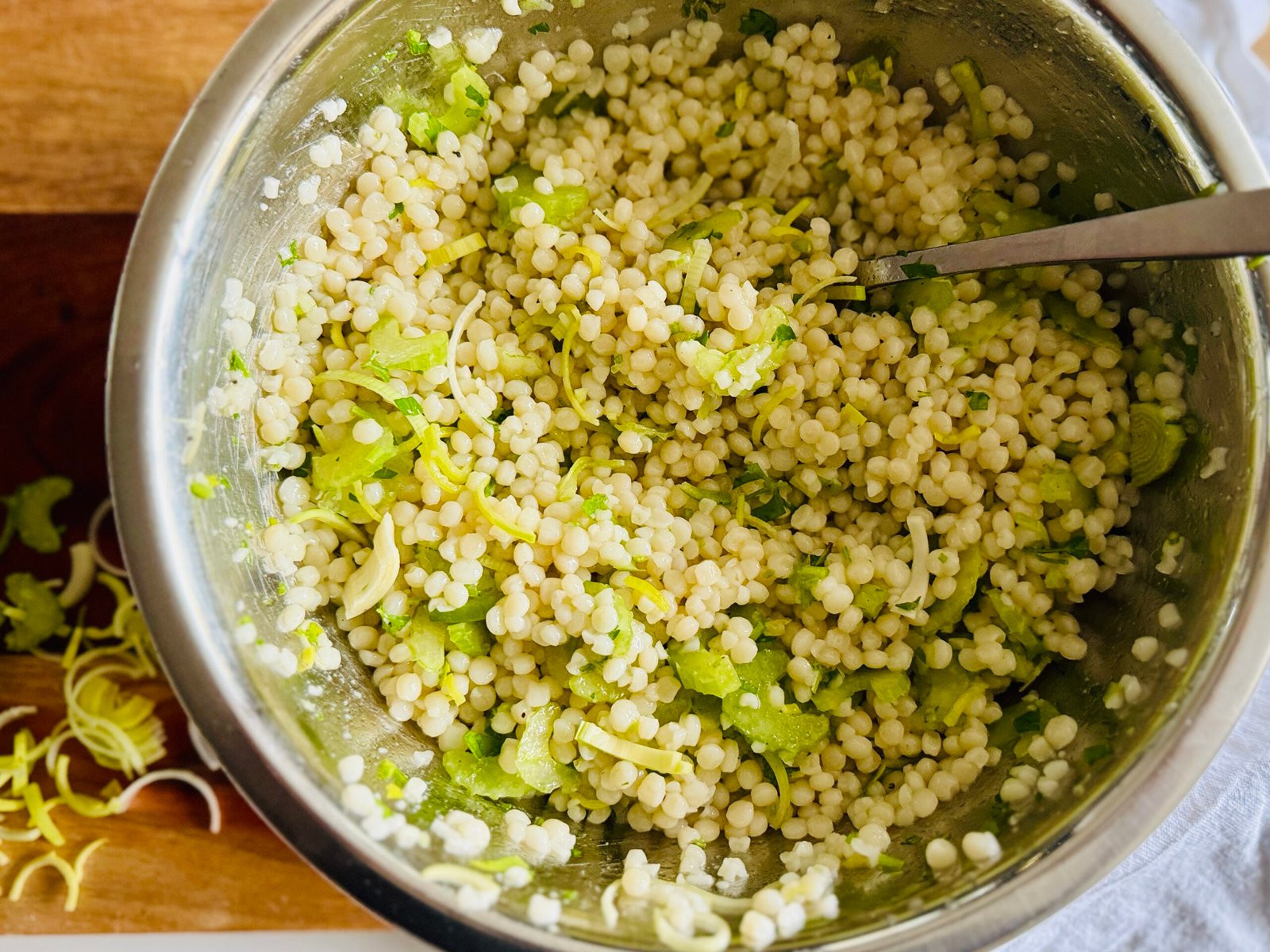
While that is happening, cook the pearl couscous and let it cool slightly. Toss it with olive oil, vinegar, lime juice, lime zest, mint, parsley, celery, and leeks if you are using them. This part matters. The roasted pan components are warm and savory, so the couscous needs to bring brightness and freshness. The lime and herbs do exactly that.
Once the pan is ready, all that is left is assembly. Spread the couscous into bowls or onto a platter, add the roasted vegetables and chickpeas, place the baked feta on top, and finish with green sauce.
Main flow at a glance
- Roast the feta, chickpeas, broccoli, tomatoes, and onions on a sheet pan
- Cook and season the pearl couscous with lime, herbs, celery, and leeks
- Layer everything into bowls or onto a platter
- Finish with green sauce and olive oil
- Serve warm or at room temperature
Tips for success and common mistakes
The biggest key here is not crowding the pan. If the vegetables are piled too tightly together they will steam instead of roast. Use a large pan and spread everything out.
Dry the chickpeas well before roasting. Extra moisture makes it harder for them to roast properly.
Do not overcook the couscous. You want it tender, but not mushy. It should still have a little bite so it can hold up against the roasted vegetables and sauce.
Taste the couscous before serving. Sometimes it needs a little more lime juice or salt than you expect. Because feta is salty, I like to season the couscous enough so it tastes bright on its own, not bland underneath the toppings.
If your feta is not taking on much color, a quick minute under the broiler at the end helps.
A microplane or fine zester is really useful here because the lime zest adds a lot of aroma without changing the texture.
Variations and easy swaps
This is a flexible bowl, which is one reason I like it so much.
You can swap pearl couscous for quinoa, farro, or rice if that is what you have.
You can add cucumber at the end for more freshness and crunch. This works especially well if you are serving the bowl at room temperature.
You can finish the bowl with toppings like my pickled red pepper and onions for another layer of acid and color. That would be a perfect final touch if you want the bowl to feel even more vibrant.
You can also use creamy Greek sauce instead of green sauce if you want something more cooling and creamy. Both work really well here, just in different ways.
If you want to make the bowl more filling for a bigger crowd, add extra chickpeas or serve it with warm pita on the side.
Serving suggestions and pairing ideas
This is the kind of recipe that works in different settings. On a normal weeknight, you can plate it in individual bowls and call it dinner. If people are coming over, I would absolutely serve it on a large platter with the green sauce spooned over the top and extra toppings on the side.
You could build out the table with a simple salad, pita, olives, and maybe a second sauce from my top 5 sauces. That is one of the reasons I rely so much on sauces. A single bowl like this can feel completely different depending on what you finish it with.
For serving, I like using shallow bowls or a big platter so you can really see the layers. Presentation matters with a dish like this because the colors are part of the appeal.
Storage, reheating, and make ahead tips
This recipe stores surprisingly well, especially if you keep the components separate.
Store the roasted vegetables and feta in one container and the couscous in another. Keep the green sauce separate as well. That way everything keeps its texture better.
Glass meal prep containers (BPA-Free) work especially well for recipes like this.
To reheat, warm the roasted vegetables and feta gently in the microwave or in a low oven until just heated through. The couscous can be served cool, room temperature, or lightly warmed depending on what you like. Add the green sauce after reheating so it stays bright and fresh.
You can make the couscous and green sauce ahead, then roast the sheet pan components right before serving. That makes this a very manageable dinner for guests.
Frequently asked questions
Can I make this baked feta bowl ahead of time
Yes. The couscous and green sauce can be made ahead. The vegetables can also be chopped earlier in the day. Roast everything close to serving time for the best texture.
Is feta considered the protein in this recipe
Feta does contain protein, but in this bowl I would think of the chickpeas as the main protein component. The feta is doing more of the work in terms of richness, saltiness, and flavor.
Can I use regular couscous instead of pearl couscous
Yes, but the texture will be different. Pearl couscous gives the bowl more body and chew, while regular couscous will feel lighter.
What can I use instead of green sauce
Creamy Greek sauce would be excellent here. A lemony yogurt sauce would also work.
Can I serve this at room temperature
Yes. This bowl is very good warm, but it is also great at room temperature, which makes it nice for lunches and casual hosting.
What toppings go well with this bowl
Pickled onions, pickled peppers, cucumbers, extra herbs, toasted nuts, or another sauce all work well.
Final thoughts
This is one of those recipes that looks beautiful, tastes layered and interesting, and still feels very doable. It is exactly the kind of meal I love because it shows how a few good components can come together into something that feels special. That is the heart of the pantry first approach.
You start with a sauce, choose a meal style, add a protein, a starch, and vegetables, and suddenly dinner becomes much easier to build. This bowl does exactly that.
If you make it, do not be afraid to riff on it. Add toppings, change the sauce, swap the grain, or build it out for friends. And if you want another recipe built around bold flavor and flexible components, start with the 5 house sauces we rely on post and keep the momentum going.
Some of the links in this post are affiliate links, which means I may earn a small commission at no extra cost to you. Thanks for supporting the blog.
Za’atar Baked Feta Bowl with Chickpeas, Broccoli, and Green Sauce
Equipment
- Parchment paper
- Medium pot
- Serving bowls
Ingredients
For the baked feta and vegetables
- 2 blocks feta 8 ounces each, about 454 g total
- 1 can chickpeas drained, rinsed, and dried, about 15 ounces or 425 g can, about 240 g drained
- 1 large head broccoli cut into florets, about 500 g
- 1 pint cherry tomatoes about 280 g
- 1 medium onion cut into wedges, about 180 g
- 3 tablespoons extra virgin olive oil about 45 ml
- 1 to 1 ½ tablespoons za’atar about 8 to 12 g
- ½ teaspoon kosher salt about 3 g
- ½ teaspoon black pepper about 1 g
For the lime herb couscous
- 1 cup pearl couscous about 180 g
- 1 tablespoon olive oil about 15 ml
- 1 tablespoon vinegar about 15 ml
- 2 tablespoons fresh lime juice about 30 ml
- 1 teaspoon lime zest about 2 g
- 2 tablespoons chopped mint about 5 g
- 2 tablespoons chopped parsley about 8 g
- ⅓ cup finely chopped celery about 35 g
- 2 tablespoons finely chopped leeks optional, about 15 g
- ½ teaspoon kosher salt about 3 g
- ¼ teaspoon black pepper about 0.5 g
For serving
- ½ to ¾ cup green sauce about 120 to 180 ml
- extra olive oil for finishing optional
Instructions
- Preheat the oven to 425°F. Line a large sheet pan with parchment paper.
- Add the chickpeas, broccoli, cherry tomatoes, and onion wedges to the sheet pan. Drizzle with olive oil and season with za’atar, kosher salt, and black pepper. Toss until everything is well coated.
- Nestle the feta blocks onto the pan and drizzle them lightly with a little more olive oil.
- Bake for 25 to 30 minutes, until the broccoli is tender and charred in spots, the tomatoes are blistered, and the feta is warm and lightly golden. Broil for 1 to 2 minutes at the end if you want deeper color.
- While the sheet pan bakes, cook the pearl couscous according to package directions. Drain if needed, rinse briefly if desired, and let it cool slightly.
- Transfer the couscous to a bowl. Add olive oil, vinegar, lime juice, lime zest, mint, parsley, celery, and leeks if using. Season with kosher salt and black pepper, then toss well. Taste and adjust the lime and salt as needed.
- To assemble, spoon the couscous into bowls or onto a serving platter. Top with the roasted vegetables and chickpeas, then add the baked feta.
- Finish with generous spoonfuls of green sauce and a drizzle of olive oil if desired. Serve warm or at room temperature.

Rufus Dewanou says
The Colorful Pantry