
In 2024, my wife and I traveled to Switzerland for our wedding anniversary. There was so much to love about that trip, but some of the meals we still talk about are the fondues we had together. Sitting around a pot of bubbling cheese, dipping bread, and taking our time over dinner made the whole experience feel special.
We enjoyed fondue enough that, after coming home, we bought our own fondue pot. Every once in a while, we'll pull it out and turn an ordinary evening into something that reminds us of Switzerland.
But here's the thing: I don't want you to need a specialty cheese shop to make it. This Swiss-inspired cheese fondue with Gruyère and Gouda keeps the spirit of the fondue we loved, with cheeses and other ingredients that are relatively easy to find in U.S. grocery stores. If you can get Gruyère but not Emmental, mild, young Gouda is a practical substitute. And you don't need kirsch to make a good pot of fondue.
This is the first recipe in my What We Ate on Our Trips collection: dishes we enjoyed while traveling and now love making at home. The best part is not just how it tastes—it's how it gets everyone around the same table.
This post contains affiliate links. As an Amazon Associate, I earn from qualifying purchases at no additional cost to you.
Jump to: Best cheeses · Ingredients · Method · Troubleshooting · What to dip · Recipe card
Swiss Fondue at Home, Without the Specialty Shopping Trip
There isn't just one cheese combination used throughout Switzerland. Gruyère appears in many versions; others pair it with Emmental or cheeses like Vacherin Fribourgeois. Some add kirsch, a clear cherry spirit. I love those traditions, but this is the version we can make comfortably at home from ingredients available at a regular American supermarket.
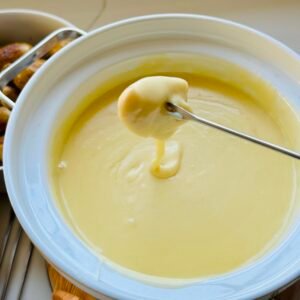
The foundation is still familiar: flavorful cheese, dry white wine, a little garlic, and gentle heat. The wine isn't there to make the pot taste boozy. It brings acidity and moisture that help the cheeses melt into a smooth sauce. Cornstarch adds a little insurance against separation.
Why I Use Gruyère and Gouda
Gruyère is the flavor anchor
Gruyère gives this fondue the nutty, savory, slightly earthy taste that I associate with fondue in Switzerland. It's the cheese I would keep if I had to choose only one traditional element. These days, it is easier to find in many U.S. grocery stores than some of the other Swiss cheeses.
Young Gouda makes it approachable
Instead of hunting down Emmental, I use plain, mild, young Gouda. It softens the overall flavor and melts nicely alongside Gruyère. Buy a block and grate it yourself. I would not use smoked Gouda for this recipe because the smoky flavor takes the fondue in a different direction, and I would avoid very aged, crumbly Gouda because it doesn't behave like the young kind.
For more complexity, add a little aged Gruyère
If you have an aged Gruyère, I like replacing 1–2 ounces of the regular Gruyère with the aged version. It adds a little more savory depth and that almost funky, mature-cheese character I love. Keep the total cheese at one pound; we're changing the blend, not loading the pot with extra cheese.
Ingredients That Make the Fondue Work
Dry white wine
Use a dry white wine you'd be happy to drink, such as Sauvignon Blanc or Pinot Grigio. There's no need to buy an expensive bottle. For this amount of cheese, I use one cup. Warm it gently until steaming, not boiling aggressively.
Garlic
Cut a clove of garlic and rub the inside of the pot before cooking. It's such a small step, but it gives the fondue a subtle garlic aroma without leaving bits of garlic in every bite. You can discard the clove afterward.
Cornstarch
I toss the freshly grated cheese with cornstarch before melting it. This disperses the starch evenly and helps make the fondue stable rather than greasy or clumpy. It's easier than trying to fix a broken pot at the end.
Lemon juice, pepper, and nutmeg
A little fresh lemon brings brightness; a small pinch of pepper and nutmeg rounds out the cheese. Nutmeg is easy to overdo, so I keep it subtle. The cheese usually brings plenty of salt on its own—taste before adding any.
Do you need kirsch?
No. Kirsch is a traditional addition in many Swiss-style fondues, but it isn't required here. If you have it, you can add a tablespoon at the end. A tablespoon of plain brandy is another optional variation, or you can simply leave it out. I don't recommend using a sweet berry liqueur as a one-for-one substitute; it can pull the cheese toward a fruity sweetness that doesn't belong in this version.
How to Make Cheese Fondue That's Smooth, Not Stringy
1. Grate the cheeses and coat them with cornstarch
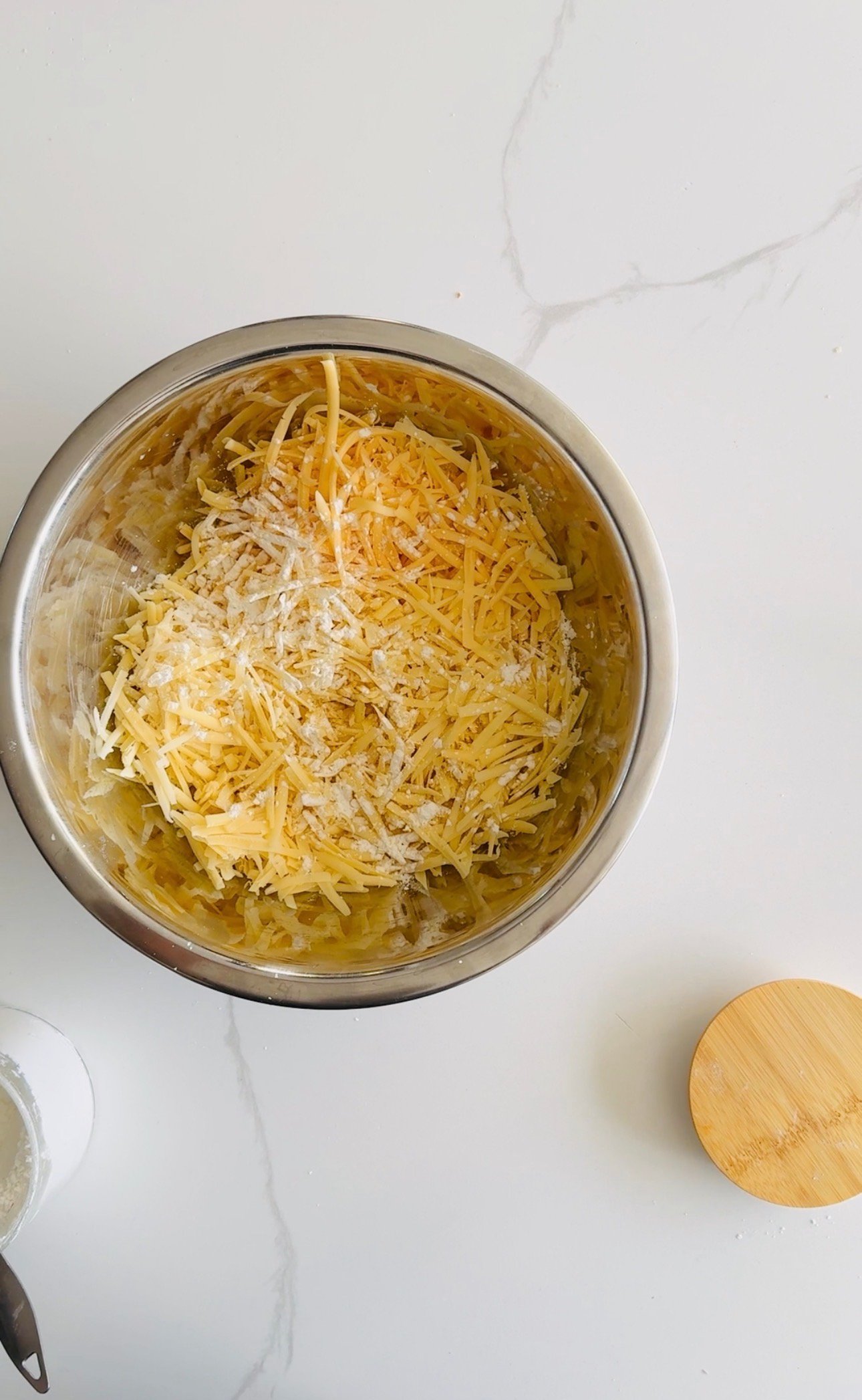
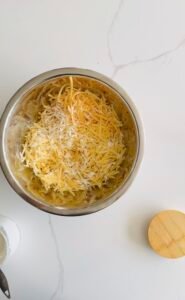
Grate eight ounces each of Gruyère and young Gouda. Small, even shreds melt more predictably than big pieces. If you don't already have one, a box grater makes this prep step faster. Toss both cheeses in a bowl with the cornstarch until every handful is lightly coated.
2. Rub the pot with garlic and warm the wine
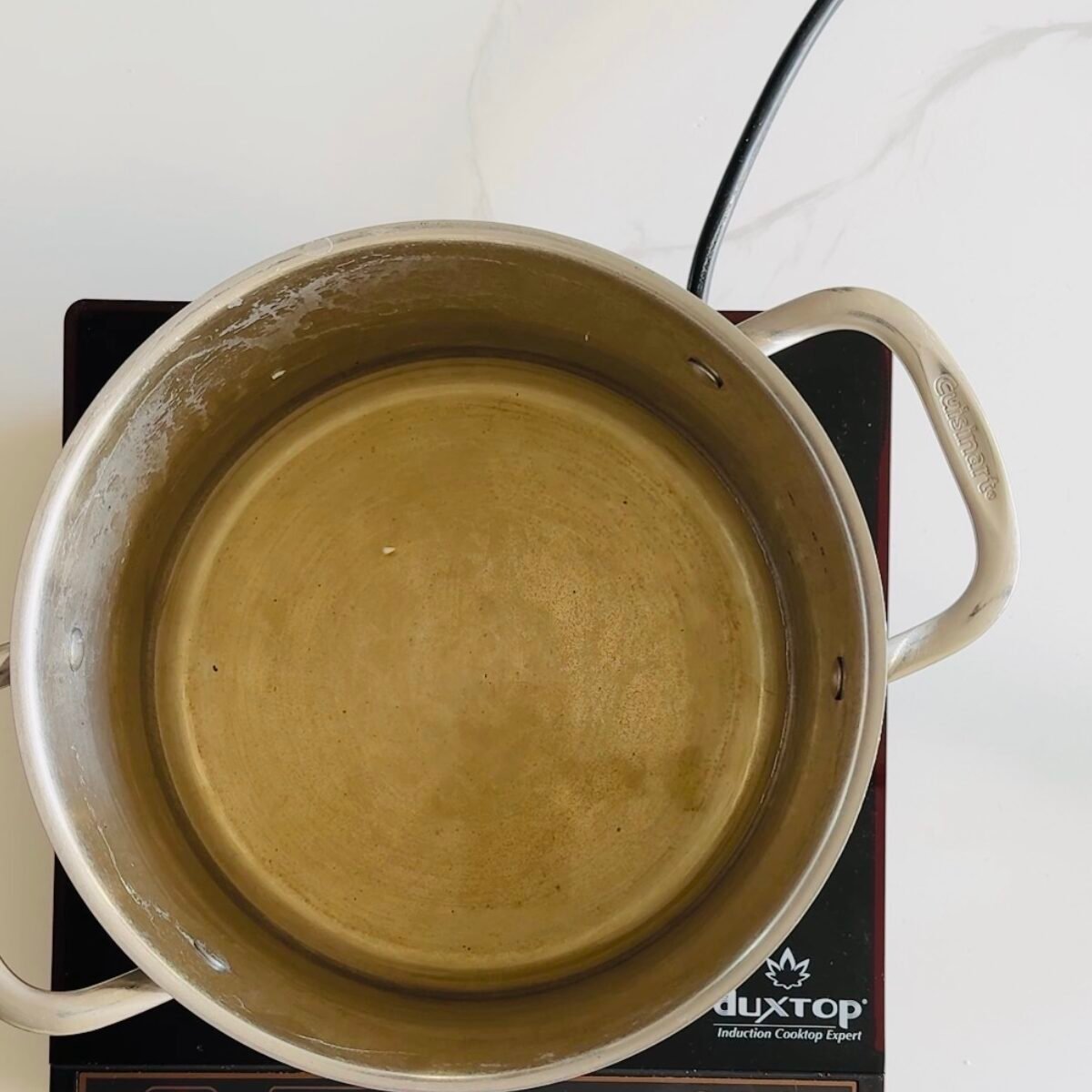
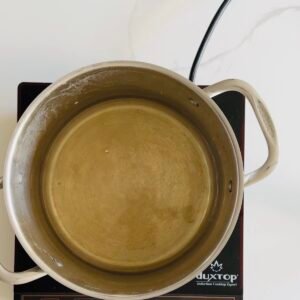
Rub the inside of a heavy-bottomed saucepan or your stovetop-safe fondue pot with the cut garlic clove. Add the wine and heat gently until you see steam and the first little bubbles at the edge. Don't let the wine boil hard.
3. Add the cheese a handful at a time
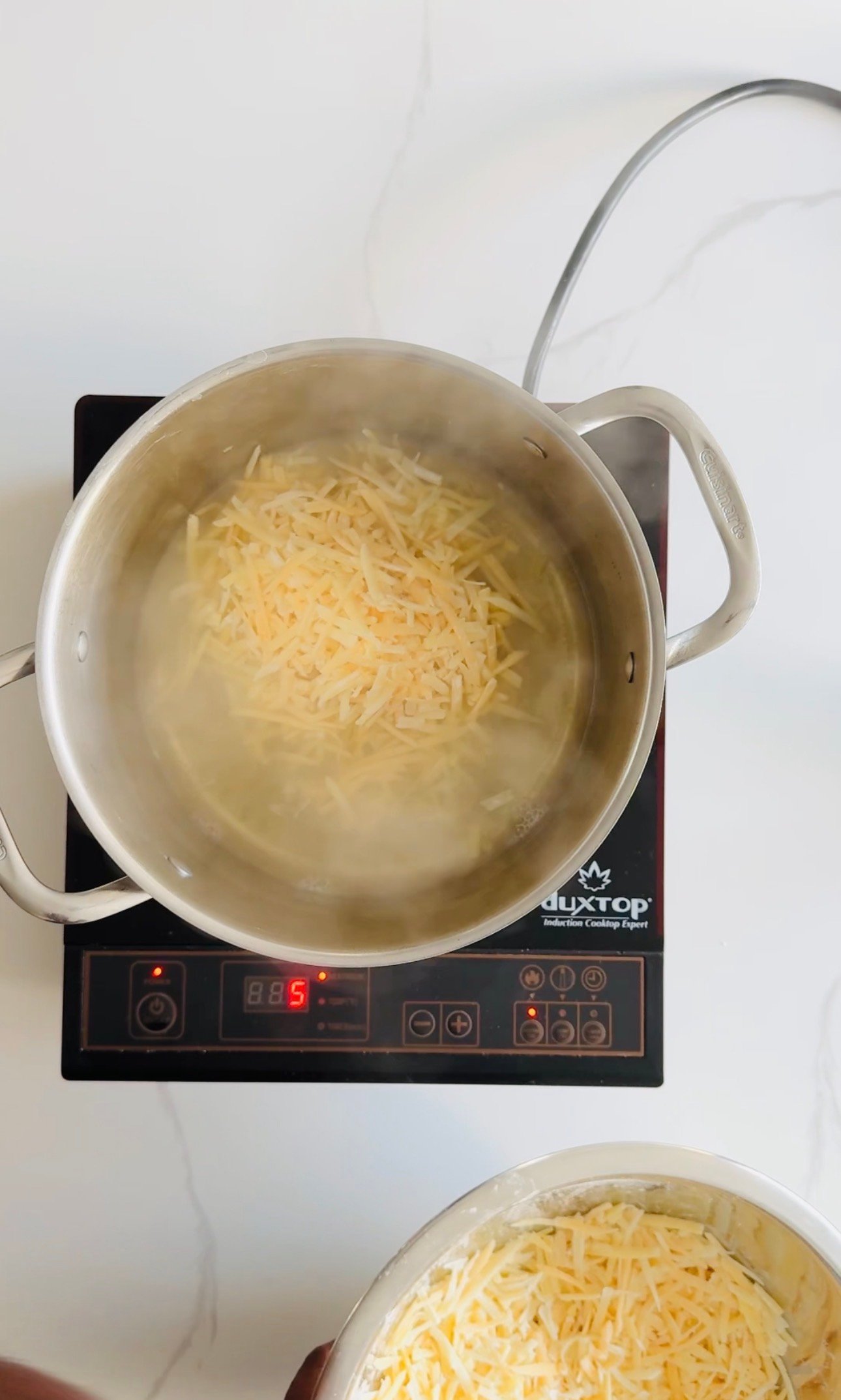
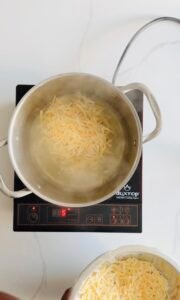
Reduce the heat to low. Add a small handful of the grated cheese, stirring slowly until it has mostly melted before adding the next. Work patiently until all the cheese is incorporated, about 8–10 minutes in total. Keep the fondue hot enough to melt but never at a rolling boil.
4. Finish the flavor and serve warm
Stir in the lemon juice, nutmeg, black pepper, and optional kirsch or brandy. Taste before adding salt. If it's a little thick, stir in a tablespoon of warm wine at a time until the texture is right. Transfer to a fondue pot on its lowest warming setting, or keep it gently warm in a heavy pot and serve promptly.
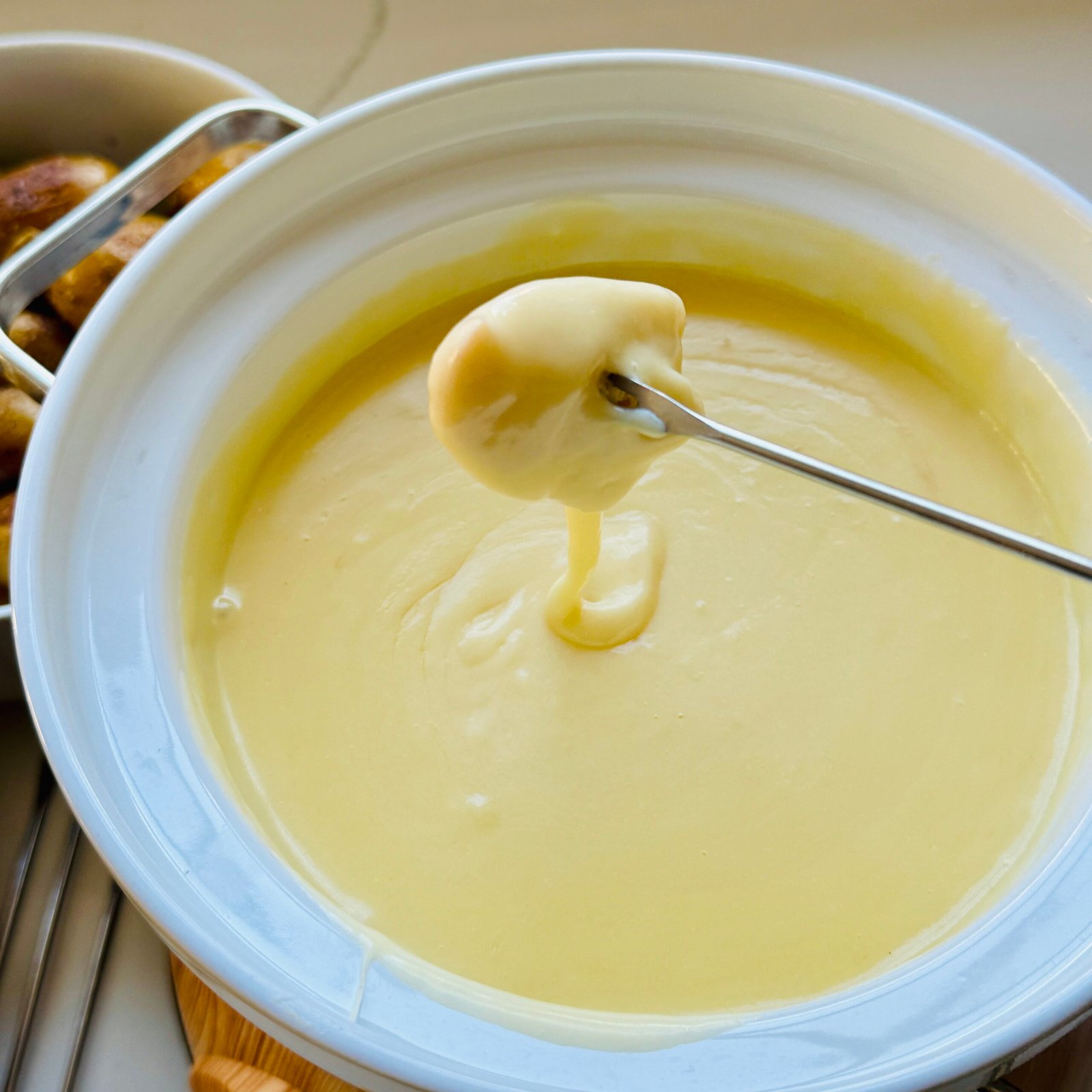
Do You Need a Special Fondue Pot?
Not to melt the cheese. You can make the whole recipe in a heavy saucepan on the stove. The reason we bought a fondue pot after our trip is the experience of keeping the cheese warm at the table, where everyone can keep dipping and talking.
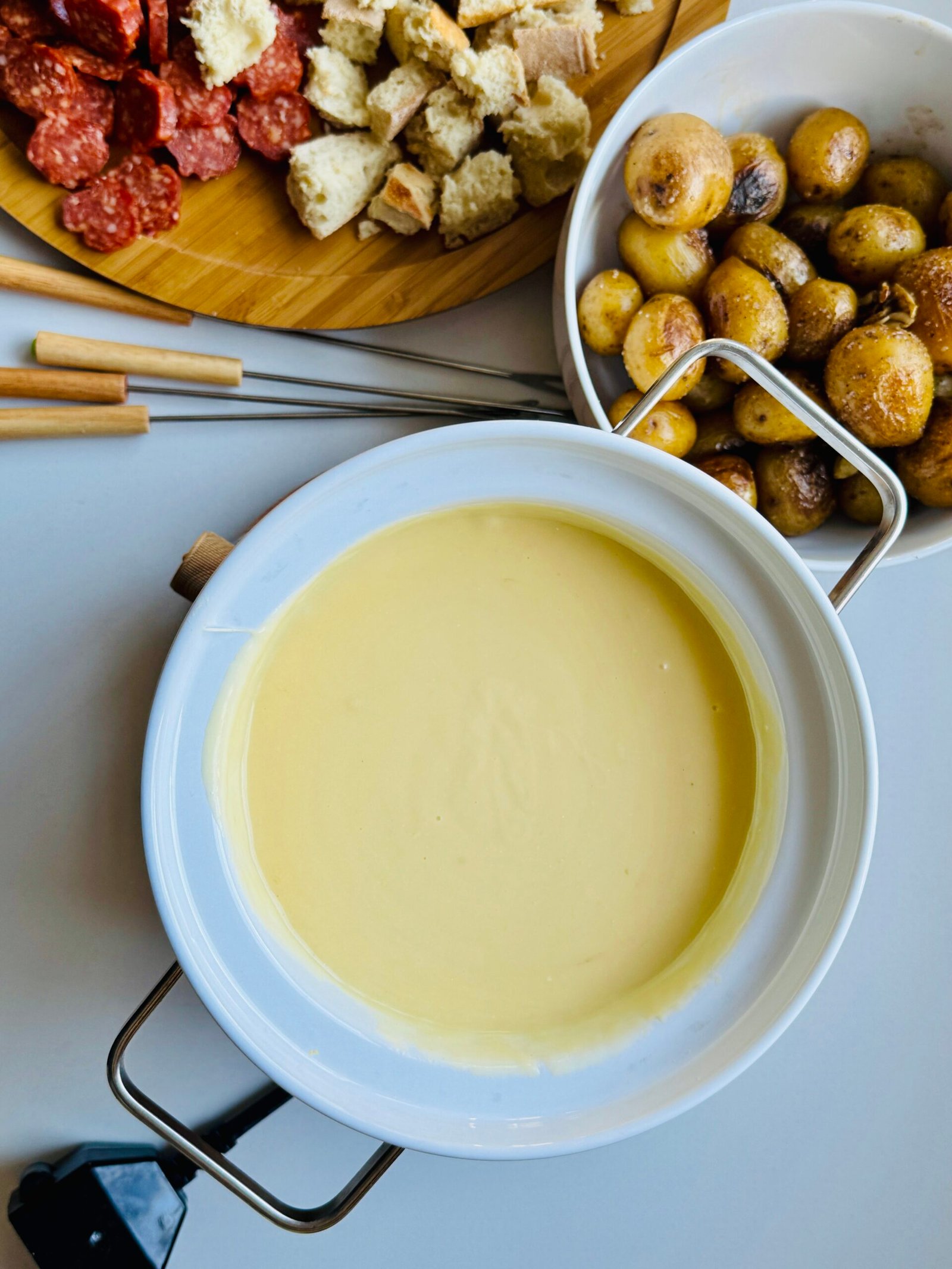
If you want to recreate that tradition, this is the fondue pot we use at home. I like that it isn't limited to melted cheese: the same pot can also be used for an oil-fondue or frying setup when used according to its instructions. That makes it a more versatile piece of equipment if you enjoy hosting. For cheese fondue, keep the heat low enough to hold the cheese warm rather than cooking it aggressively; too much heat can make it separate or scorch. If you're using hot oil, follow the pot manufacturer's oil temperature, fill-limit, and safety directions, which are different from the gentle heat used for cheese.
Cheese Fondue Troubleshooting
Why did my fondue turn stringy or rubbery?
Usually the heat is too high, the cheese went in too quickly, or the pot sat bubbling too long. Turn the heat down and stir gently. Fondue should stay fluid and glossy, not simmer furiously.
What if the cheese and wine separate?
Take the pot off high heat. In a separate cup, mix one teaspoon of cornstarch with a tablespoon of cold white wine, then whisk it into the fondue over very gentle heat until it comes back together. Add only as much as you need, so you don't make the fondue pasty.
What if it's too thick?
Stir in additional warm dry white wine, one tablespoon at a time. A small splash is usually enough. Keep stirring gently and resist the urge to turn up the heat.
Can I make it without Emmental?
Absolutely—that's the point of this version. The young Gouda keeps the flavor approachable while Gruyère provides the signature nutty character.
Can I make it without wine?
This particular formula is built around dry white wine, which supplies moisture and acidity. I haven't tested a wine-free version using a direct substitution, so I wouldn't promise the same consistency by simply swapping in water or stock. If you're avoiding alcohol entirely, use a separately tested nonalcoholic fondue recipe instead.
What to Serve with Cheese Fondue
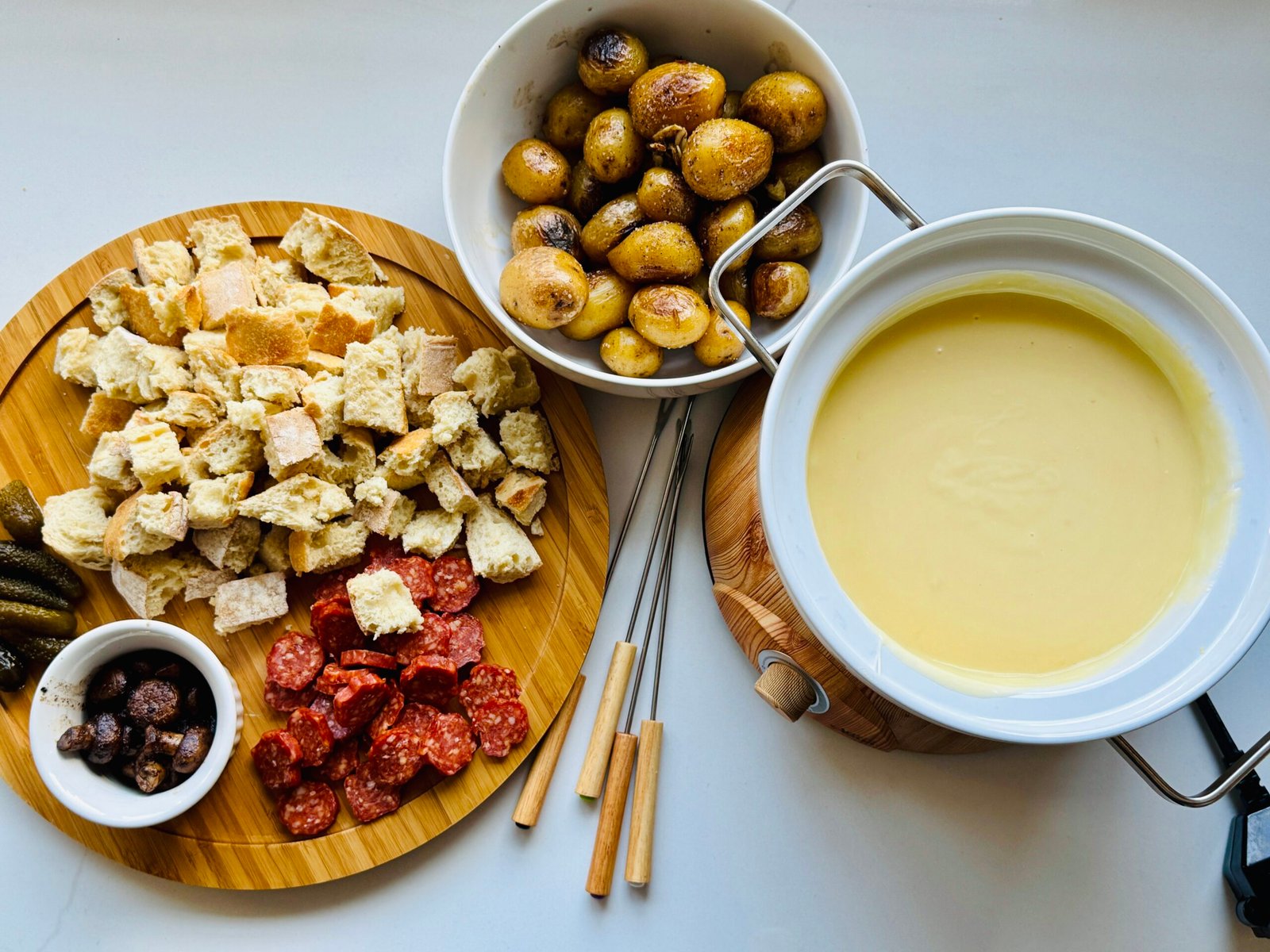
Crusty bread is still my favorite. Cut a baguette or country loaf into roughly one-inch cubes, ideally leaving some crust on each piece so it stays on the fork. But it is fun to give everyone a few other choices, too: small cooked potatoes, lightly blanched broccoli, apple slices, or roasted vegetables.
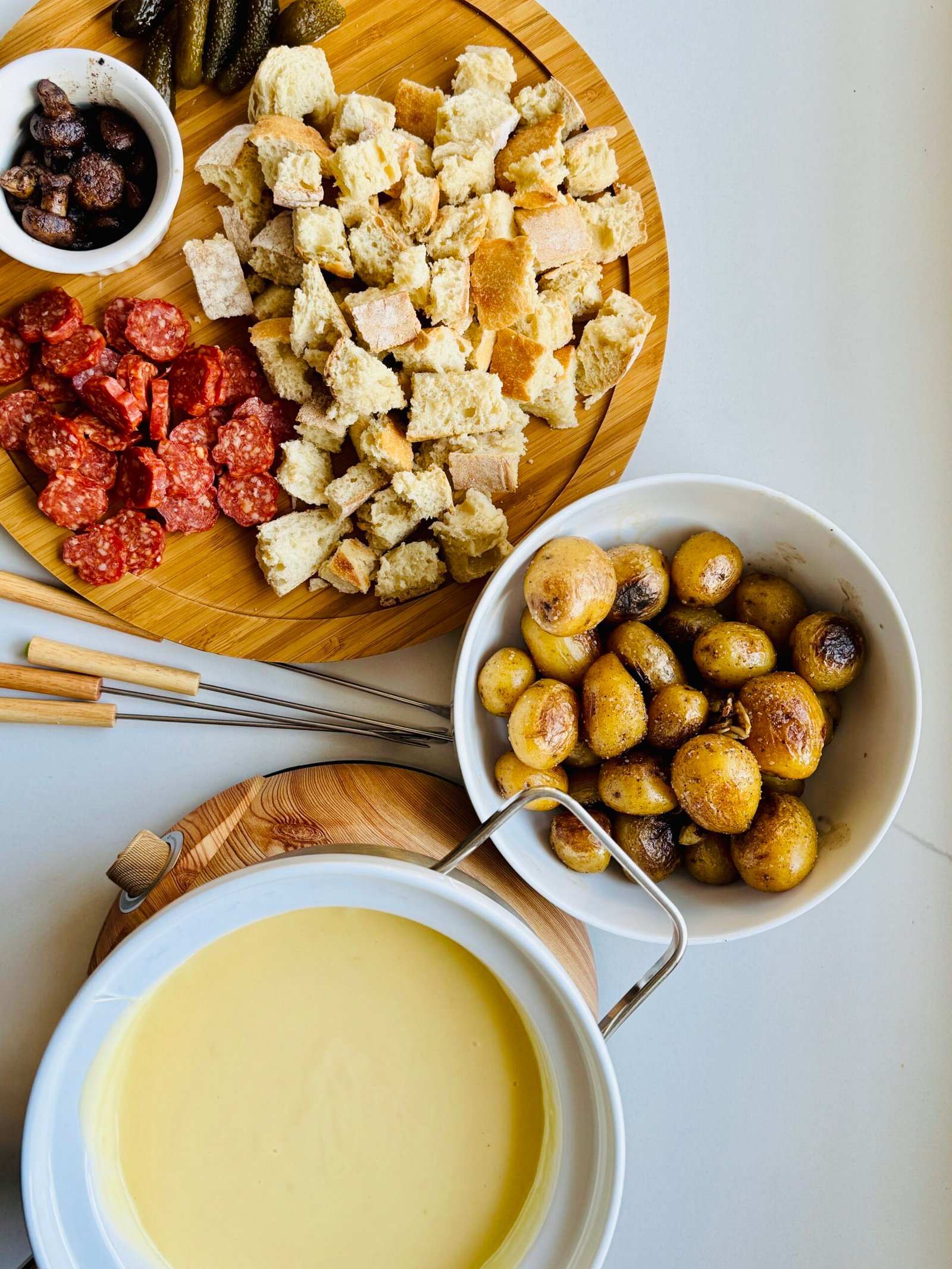
For the rest of the meal, I like something lighter and fresh next to all that rich cheese. Our cucumber, tomato, avocado, and feta salad brings crunch and acidity to the table. If you love Gruyère but want another way to use it later, try my spinach Gruyère quiche.
A Dinner That Gets Everyone Around the Table
The reason we still make fondue isn't that it's the fastest dinner in the world—although the cooking itself is quick. It's because it changes the pace of dinner. Everyone sits around the same pot, there's plenty of time to talk, and the meal becomes an experience.
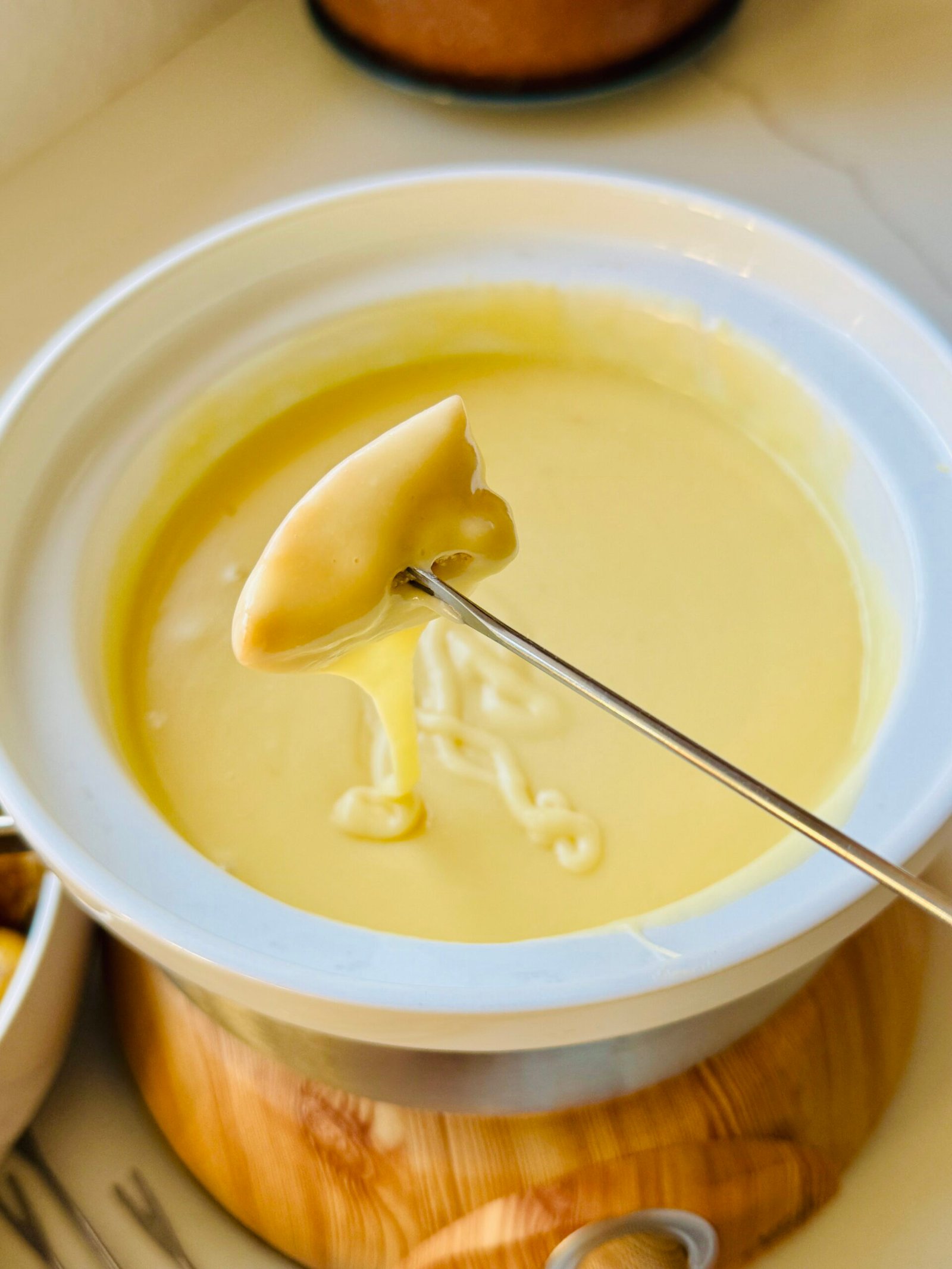
It's especially good for a cozy date night or a small gathering. You can grate the cheese, cube the bread, and prep the dippers ahead of time, then melt the fondue when everyone is ready. That's the same basic idea behind my guide to hosting at home: a little preparation makes the time at the table much more enjoyable.
How to Prep Ahead and Store Leftovers
You can grate the cheeses a day in advance and keep them covered in the refrigerator. The bread can be cubed ahead, and potatoes or vegetables can be cooked and chilled until you need them. Melt the fondue just before serving; it's at its best fresh.
Cool leftover cheese promptly, transfer it to a covered container, and refrigerate for up to three days. Reheat gently over low heat with a splash of wine, stirring frequently. The texture may not be quite as silky the second time, but it also makes a great cheese sauce for cooked potatoes or vegetables.
Easy Gruyère and Gouda Cheese Fondue Recipe
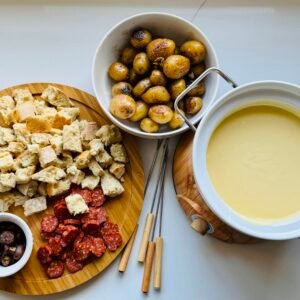
Easy Swiss-Inspired Cheese Fondue with Gruyère and Gouda

Equipment
- Box cheese grater Grate the cheeses yourself for smooth melting
- Cheese fondue pot A saucepan also works for melting; use the fondue pot for table service and follow the maker’s guidance for hot oil
- Wooden spoon or silicone spatula for stirring
- Fondue forks for serving; regular forks work with care
Ingredients
Cheese fondue
- 8 ounces Gruyère cheese freshly grated
- 8 ounces young mild Gouda cheese plain, unsmoked, freshly grated
- 1 ½ tablespoons cornstarch
- 1 garlic clove halved
- 1 cup dry white wine such as Sauvignon Blanc or Pinot Grigio, plus more as needed
- 1 tablespoon fresh lemon juice
- ⅛ teaspoon ground nutmeg
- 1 pinch freshly ground black pepper or to taste
- 1 tablespoon kirsch or plain brandy optional; omit if unavailable
- salt only if needed, after tasting
For dipping (optional)
- 1 small crusty baguette cut into 1-inch cubes
- cooked baby potatoes, lightly blanched broccoli, or sliced apples as desired
Instructions
- Grate the Gruyère and young Gouda from blocks, then toss them together with the cornstarch in a mixing bowl until evenly coated.

- Rub the cut sides of the garlic clove around the inside of a heavy-bottomed saucepan or stovetop-safe fondue pot, then remove the garlic. Pour in the white wine.
- Heat the wine over medium-low heat until steaming and showing small bubbles at the edge. Do not let it boil aggressively, then reduce heat to low.

- Add the coated cheese one small handful at a time, stirring gently until mostly melted before adding more. Continue for about 8–10 minutes, keeping the heat low, until the fondue is silky and smooth. Do not boil the melted cheese.

- Stir in the lemon juice, nutmeg, pepper, and optional kirsch or brandy. Taste, then add salt only if necessary. If the fondue seems thick, loosen with warm white wine, one tablespoon at a time.
- Set the fondue pot on its lowest warming setting at the table, or serve promptly from the saucepan. Dip cubed crusty bread, cooked baby potatoes, blanched broccoli, or apple slices. Stir gently from time to time to keep the cheese smooth.
Notes
Nutrition
Every time we pull our fondue pot out, I think about that trip to Switzerland and why those meals stayed with us. It's simple food, but there's something special about sharing it slowly.
Time in the kitchen is never wasted.

Comments
No Comments