
A naturally fermented hot sauce that develops incredible depth of flavor
I still cannot believe it took me this long to discover fermented hot sauce. The first time I tasted one, it completely changed how I think about hot sauce. Instead of just heat and vinegar, there was depth. There was brightness. There was this incredible layered flavor that felt alive.
That is the magic of fermentation. When peppers, garlic, and vegetables sit in a simple salt brine, beneficial bacteria slowly transform them. Over time the flavors deepen, soften, and develop a gentle tang that you simply cannot get from vinegar alone.
Most store bought hot sauces lean heavily on vinegar for acidity and shelf life. Fermented hot sauce takes a completely different approach. The acidity develops naturally, and the result is a sauce that tastes rounder, more complex, and far more interesting.
Once you make your first batch and taste that depth of flavor, it becomes very hard to go back to the typical bottle from the store.
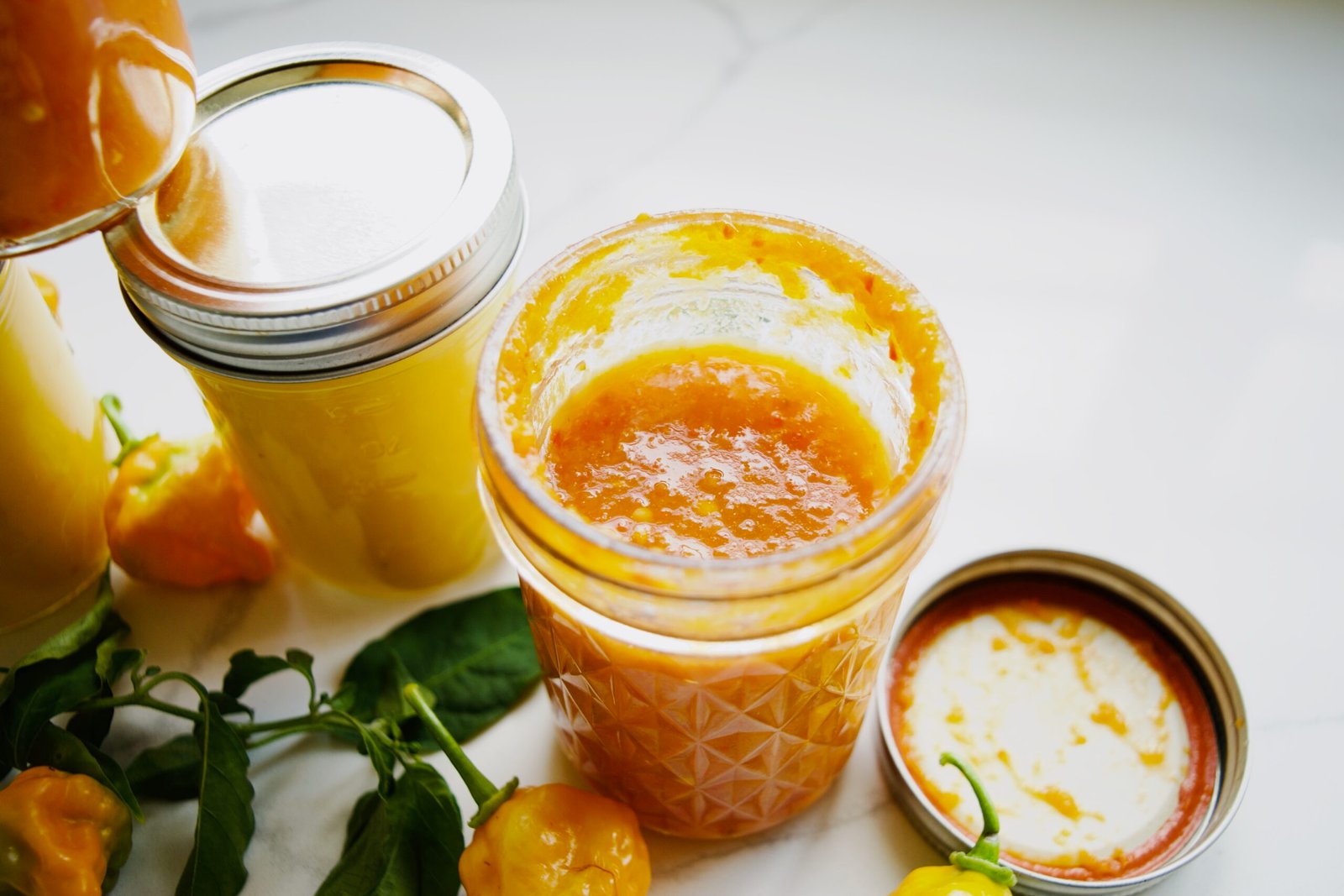
What fermented hot sauce tastes like
Fermented hot sauce has three things happening at once.
Heat from the peppers
Natural tang from fermentation
Savory depth from garlic and vegetables
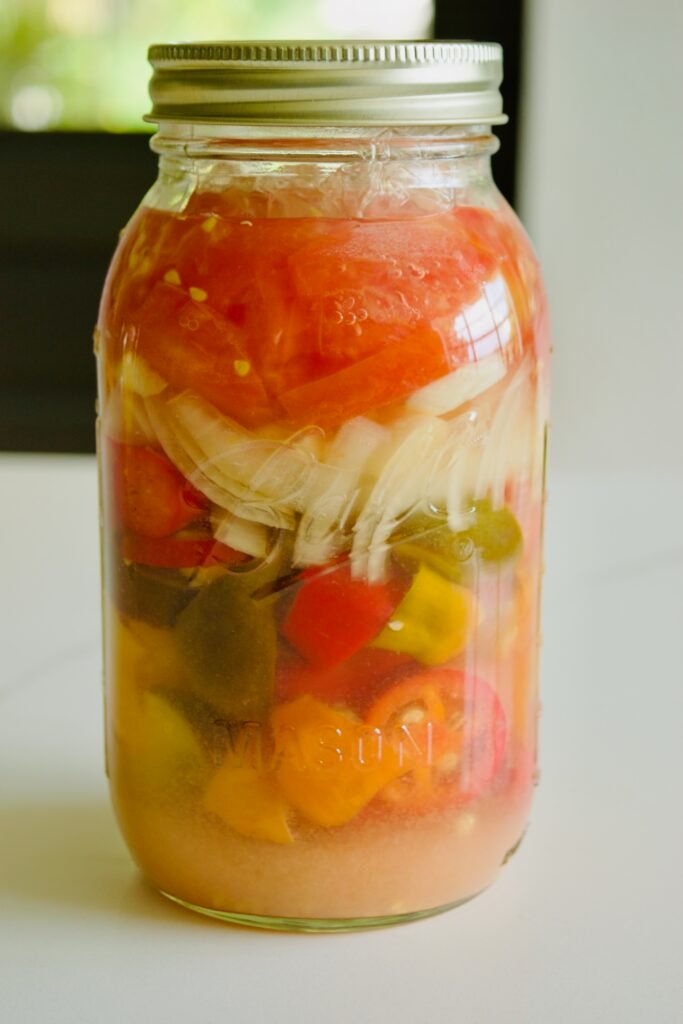
In the classic version the tomato adds body while the poblano peppers deepen the flavor. Jalapenos soften the heat slightly so the habaneros shine without becoming overwhelming.
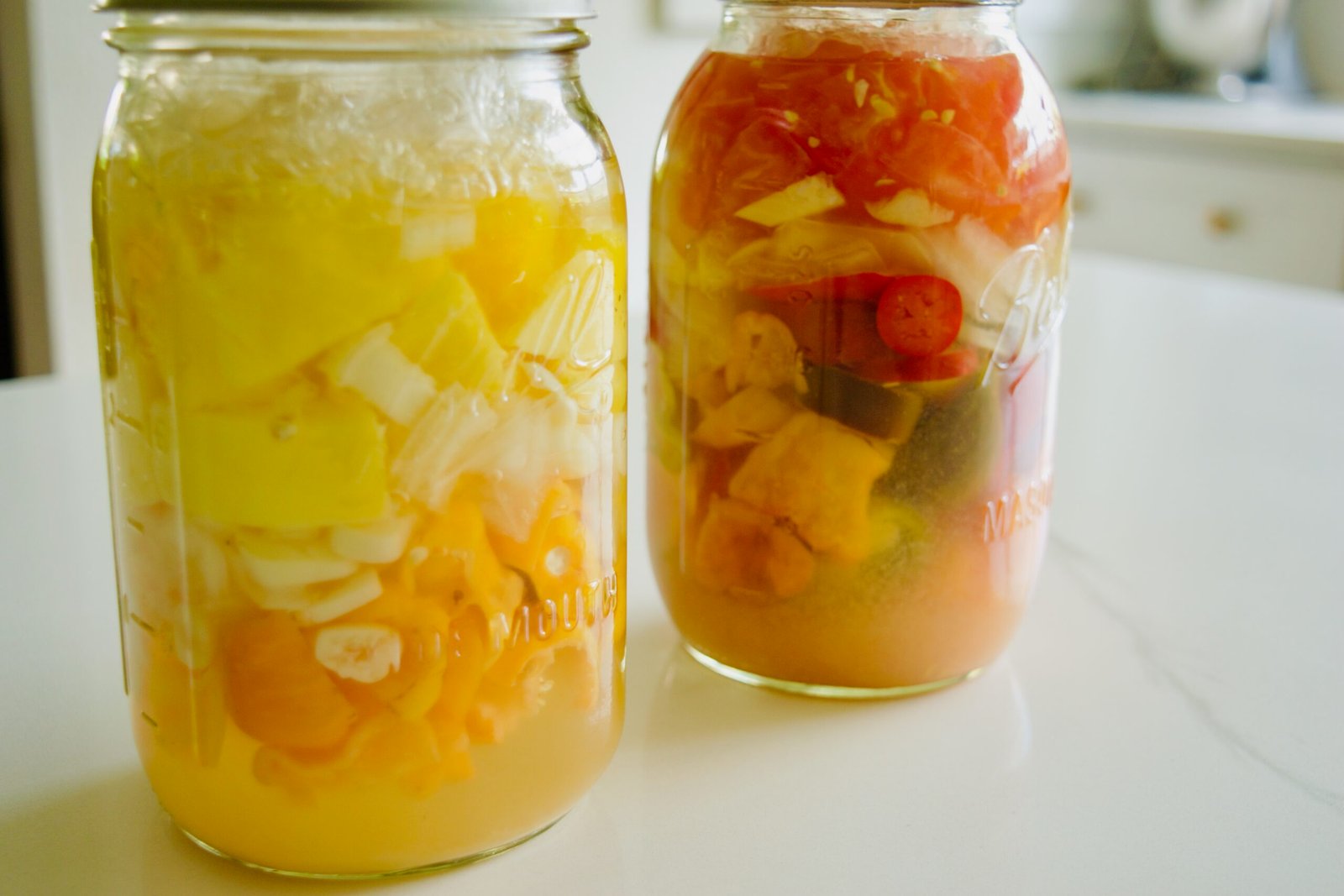
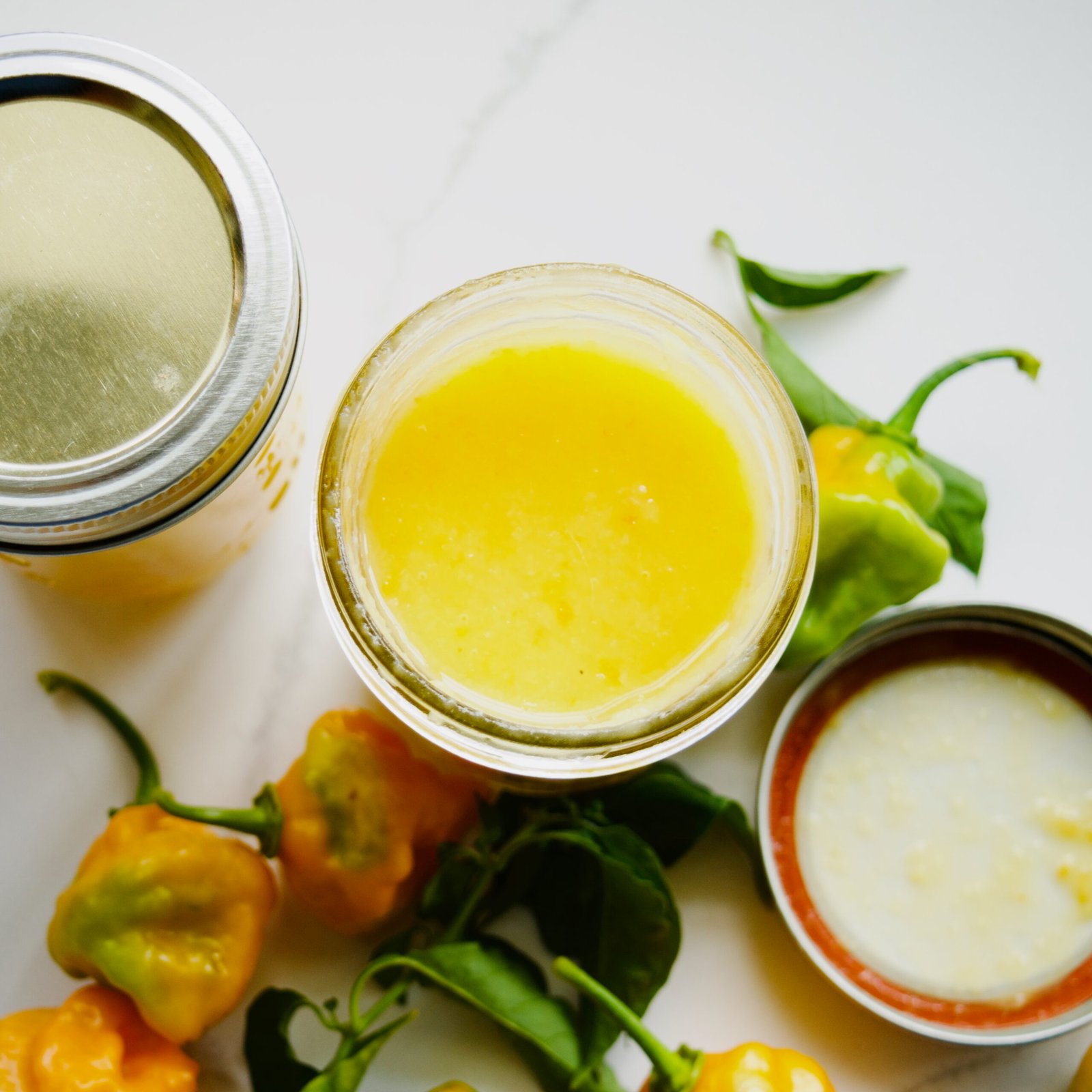
The mango version moves in a slightly different direction. The fruit adds a gentle sweetness that pairs incredibly well with grilled meats and tacos.
Key ingredients that build flavor
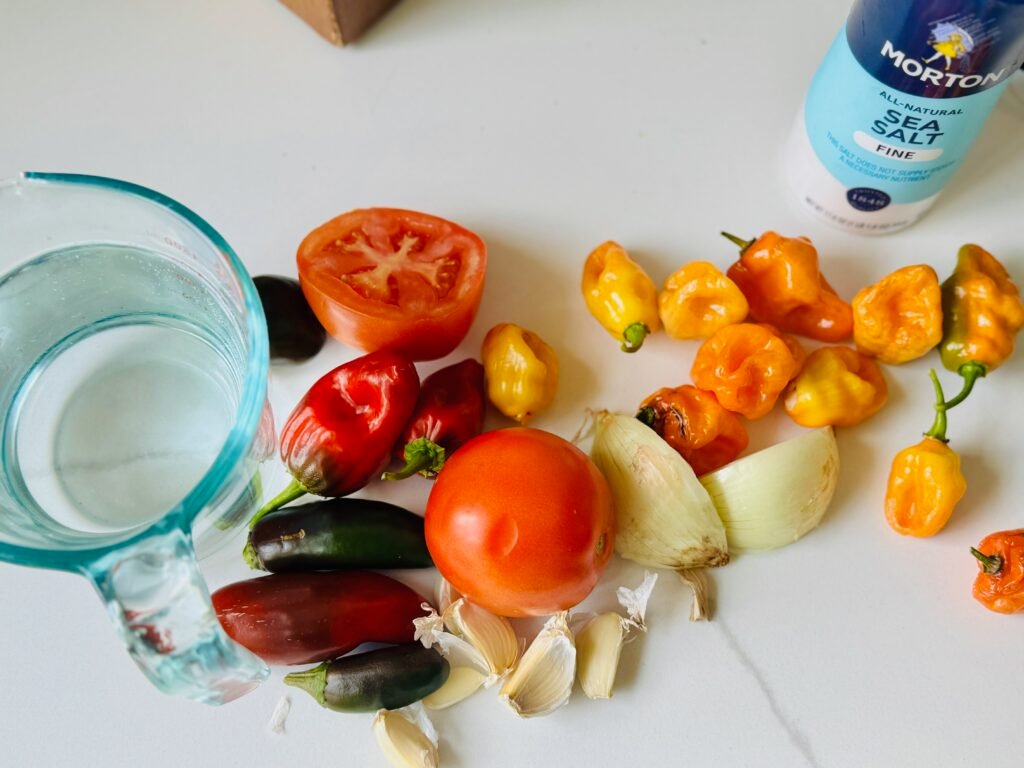
Habanero peppers
These bring bright citrusy heat and a floral aroma that makes the sauce distinctive.
Tomato
The tomato provides body and helps create a smoother sauce.
Poblano peppers
Poblanos add a subtle earthy flavor that rounds out the habaneros.
Garlic and onion
These create a savory base that becomes deeper during fermentation.
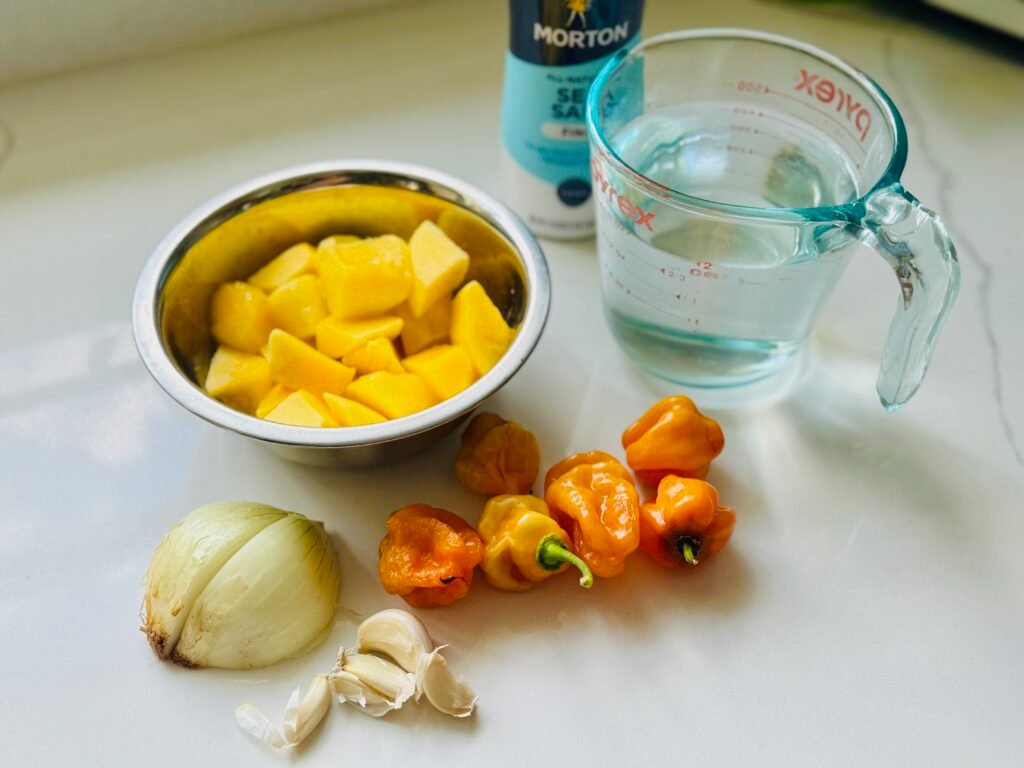
Sea salt and water
A three percent salt brine creates the ideal environment for beneficial fermentation bacteria.
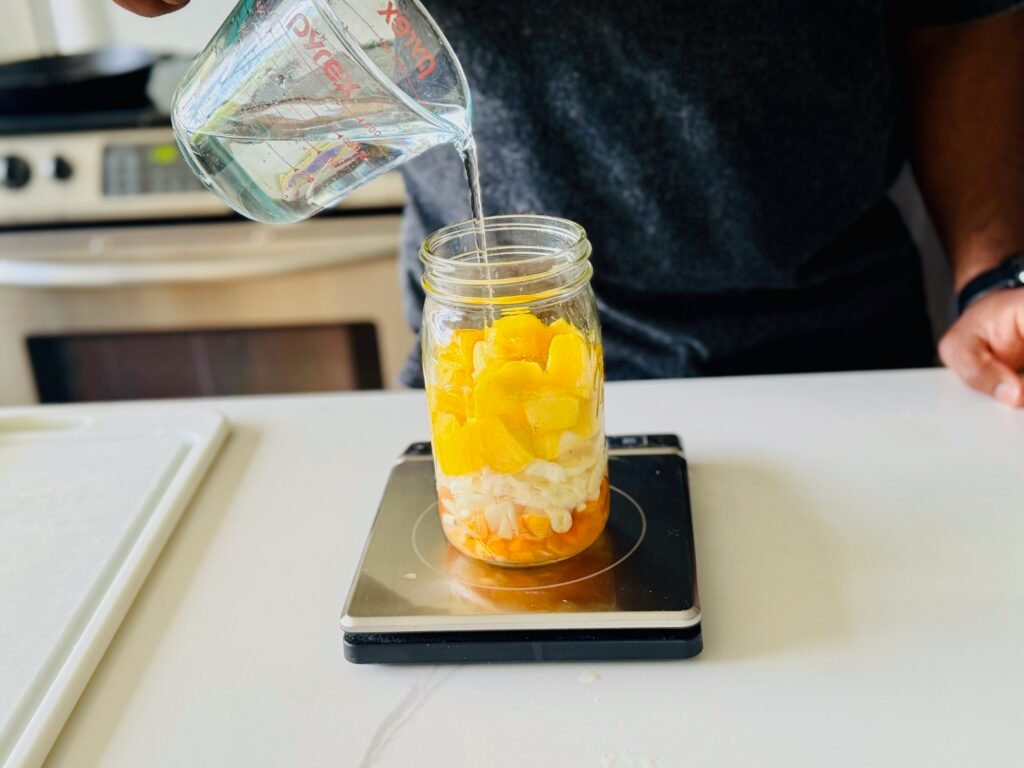
A digital kitchen scale makes calculating the brine incredibly easy. I use a digital kitchen scale for fermentation projects.
How the fermentation process works
Fermentation is actually very simple.
Salt water creates an environment where beneficial bacteria thrive while harmful microbes struggle to survive.
These bacteria consume sugars from the vegetables and release lactic acid which creates the tangy flavor and natural preservation.
Over time the flavor becomes more complex and balanced.
If you are curious about my other pantry condiments check out my quick pickled peppers and onions post.
Step by step overview
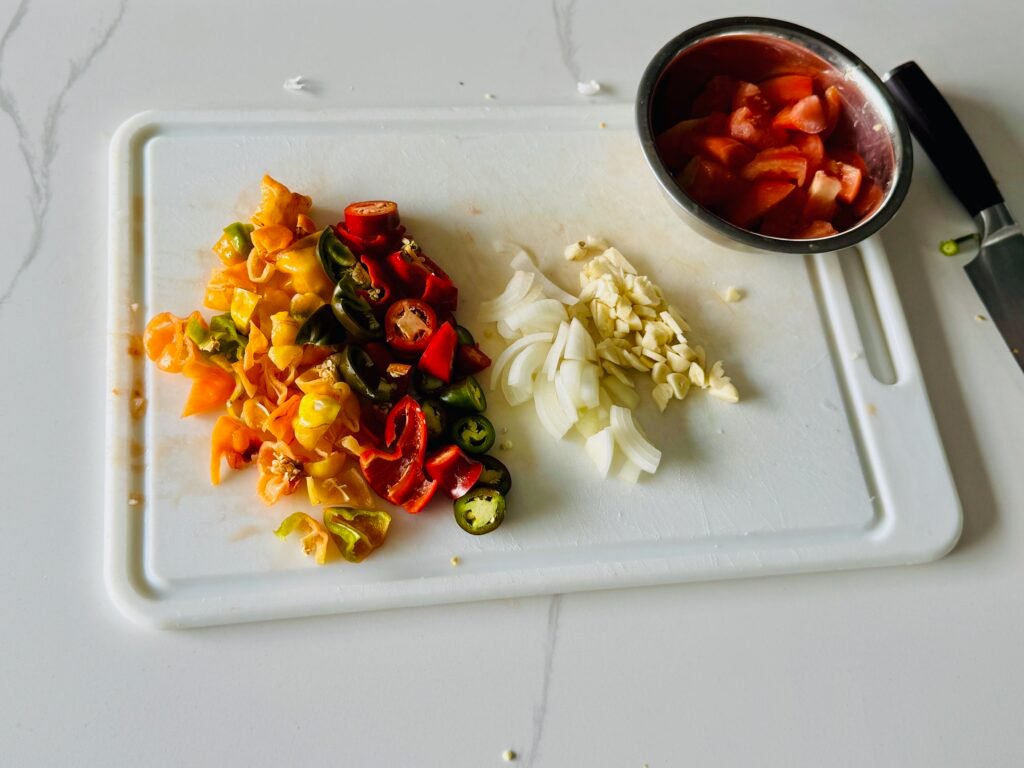
- Chop vegetables into large pieces
- Weigh everything using a kitchen scale
- Calculate three percent salt for the brine
- Dissolve salt into non chlorinated water
- Submerge vegetables completely
- Ferment at room temperature
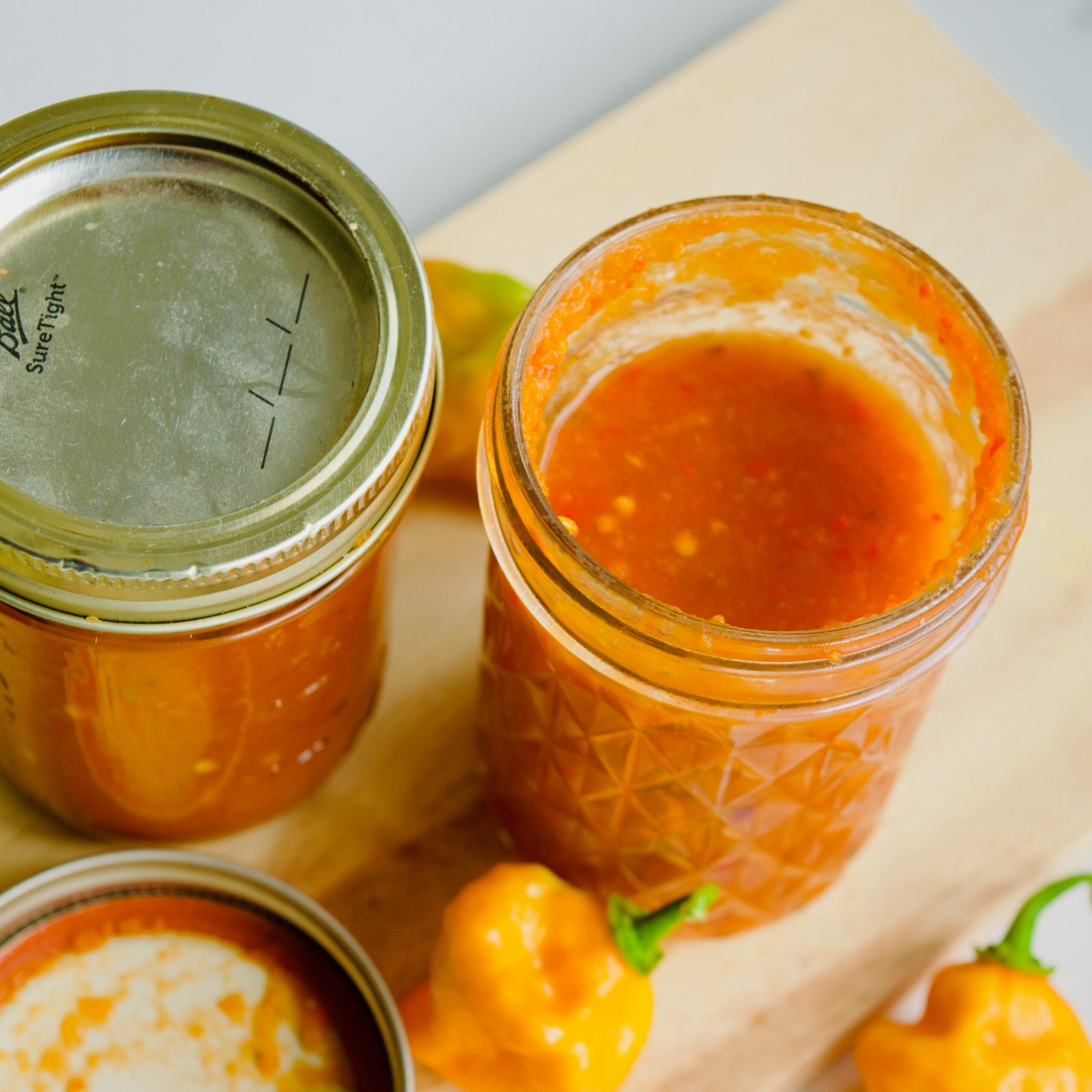
- Blend with brine until smooth
- Bottle and refrigerate
Tips for fermentation success
Always keep vegetables submerged below the brine. This prevents mold.
A fermentation jar with weights makes this easy. I like using glass fermentation jars with weights.
Burp the jar daily during the first week to release gas buildup.
If the brine becomes cloudy do not worry. That is normal.
Variations to try
Mango habanero version
The mango version ferments faster because fruit contains more natural sugars.
Three to five days is usually enough to develop flavor.
Pineapple version
Fresh pineapple creates a bright tropical variation that works beautifully with grilled seafood.
Extra smoky version
Add one roasted poblano pepper before fermenting.
Ways to use this hot sauce
This sauce becomes incredibly versatile.
Drizzle it over tacos or burrito bowls.
Add it to scrambled eggs.
Mix it into marinades for grilled chicken.
It also works beautifully with bold pantry first meals like our curry chickpea bowl.
Storage and make ahead tips
After blending store the sauce in sterilized glass bottles.
Swing top fermentation bottles work very well for this purpose.
Refrigeration slows fermentation and keeps the flavor balanced.
The sauce will continue to develop slowly over time.
Frequently asked questions
Is cloudy brine safe
Yes. Cloudy brine is a normal sign that fermentation is active.
What if vegetables float
Use a fermentation weight or small glass jar to keep them submerged.
How spicy is this sauce
The heat level is strong but balanced by fermentation and other peppers.
Can I ferment longer
Yes. Longer fermentation creates deeper flavor but also more tang.
Do I need vinegar
No. Fermentation naturally produces acidity.
Final thoughts
Fermented hot sauce feels like unlocking a deeper level of flavor.
The process is simple yet the results taste incredibly complex.
Once you master this method you can experiment endlessly with different peppers, fruits, and spices.
If you enjoy bold flavors you might also like our post on the five sauces we use to create variation of meals throughout the weeks.
Some of the links in this post are affiliate links, which means I may earn a small commission at no extra cost to you. Thanks for supporting the blog.
Fermented Habanero Hot Sauce

Equipment
- Glass fermentation jar
- Kitchen scale
- Blender
- Fermentation weight
- Equipment suggestions for readers
Ingredients
Classic Fermented Habanero Hot Sauce
- 1 medium tomato about 120 g chopped
- 3 jalapenos about 180 g stems removed
- 2 poblano peppers about 240 g stems removed
- 10 habanero peppers about 80 g stems removed
- 6 garlic cloves about 18 g
- half onion about 100 g chopped
- non chlorinated water
- sea salt calculated at three percent of vegetable weight
Mango Fermented Habanero Hot Sauce
- half onion about 100 g chopped
- 5 garlic cloves about 15 g
- 5 habanero peppers about 40 g
- 1 cup fresh mango about 165 g diced
- non chlorinated water
- sea salt calculated at three percent of ingredient weight
Instructions
Prepare vegetables
- Roughly chop all vegetables into large pieces. Seeds can remain unless you want slightly less heat.
Weigh ingredients
- Place all chopped ingredients into a bowl and weigh them in grams using a kitchen scale.
Calculate salt for brine
- Multiply the total ingredient weight by 0.03 to determine the grams of salt needed.
- Example
- If ingredients weigh 1000 g
- Salt required equals 30 g
Prepare brine
- Dissolve the calculated salt into enough non chlorinated water to fully submerge the vegetables.
Pack the jar
- Transfer vegetables into a clean glass jar and pour brine over the top until everything is completely submerged.
- Place a fermentation weight on top to keep ingredients below the surface.
Ferment
- Cover loosely with a lid and store at room temperature away from direct sunlight.
- Classic sauce fermentation time
- 7 to 14 days
- Mango sauce fermentation time
- 3 to 5 days
- Open the jar daily during the first week to release gas. This process is often called burping.
- You will notice bubbles forming and the liquid becoming cloudy which indicates healthy fermentation.
Blend
- Once fermentation tastes pleasantly tangy transfer solids into a blender.
- Add about half a cup of the brine and blend until smooth.
- Adjust thickness by adding additional brine gradually.
Season
- Taste and adjust seasoning.
- You can add a small pinch of salt, a squeeze of lime juice, or a small amount of reserved brine to brighten the flavor.
Bottle
- Transfer the finished hot sauce into sterilized bottles or jars and refrigerate.
Notes
Keep vegetables fully submerged to prevent mold.
Cloudy brine and bubbling indicate healthy fermentation.
Substitutions
You can replace poblanos with serrano peppers for more heat.
Pineapple can replace mango in the fruit variation.
Storage
Refrigerated fermented hot sauce keeps for several months.
Serving ideas
Use this sauce on tacos, grilled meats, roasted vegetables, eggs, and rice bowls.
Rufus Dewanou says
The Colorful Pantry