
A deeply savory homemade kimchi with napa cabbage, rice paste, Korean pear, and classic fermentation flavor
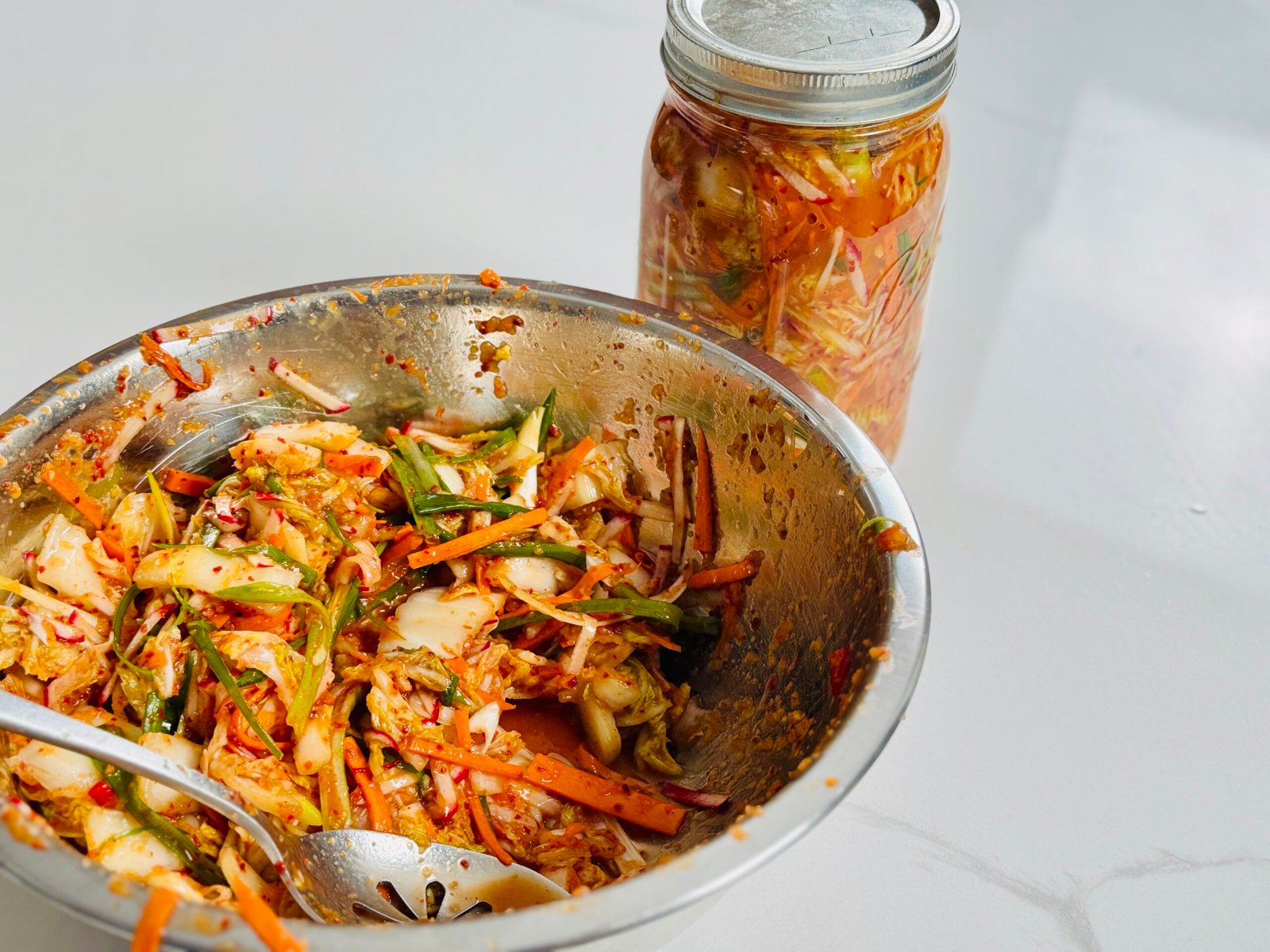
Kimchi has become incredibly popular in recent years. What was once something many people only encountered in Korean restaurants is now a common sight in grocery stores everywhere. Yet after trying countless versions, I often found that many lacked the depth and balance that makes truly great kimchi so special. That is why I wanted to share this recipe. It is a traditional approach that captures the flavors that made kimchi famous in the first place.
If you have ever wanted to make real kimchi at home, this is a wonderful place to begin. At its core, great kimchi is all about balance. Salt, spice, sweetness, and deep savory fermentation all working together in harmony. The process may seem mysterious at first, but it is actually beautifully simple once you understand the rhythm. Salt the cabbage, build a rich seasoning paste, coat every leaf, and let time do what it does best. As I often say, time is food’s best friend.
Traditional napa cabbage kimchi is one of those recipes that rewards patience. On the first day it tastes bright, crisp, and lively. After a few days it transforms into something deeper and more complex, with layers of tangy fermented flavor developing in every bite. And once you have a jar in the refrigerator, it quickly becomes one of the most useful ingredients in your kitchen. I often turn it into kimchi fried rice, and it fits perfectly into the way I like to cook through my Pantry First Method.
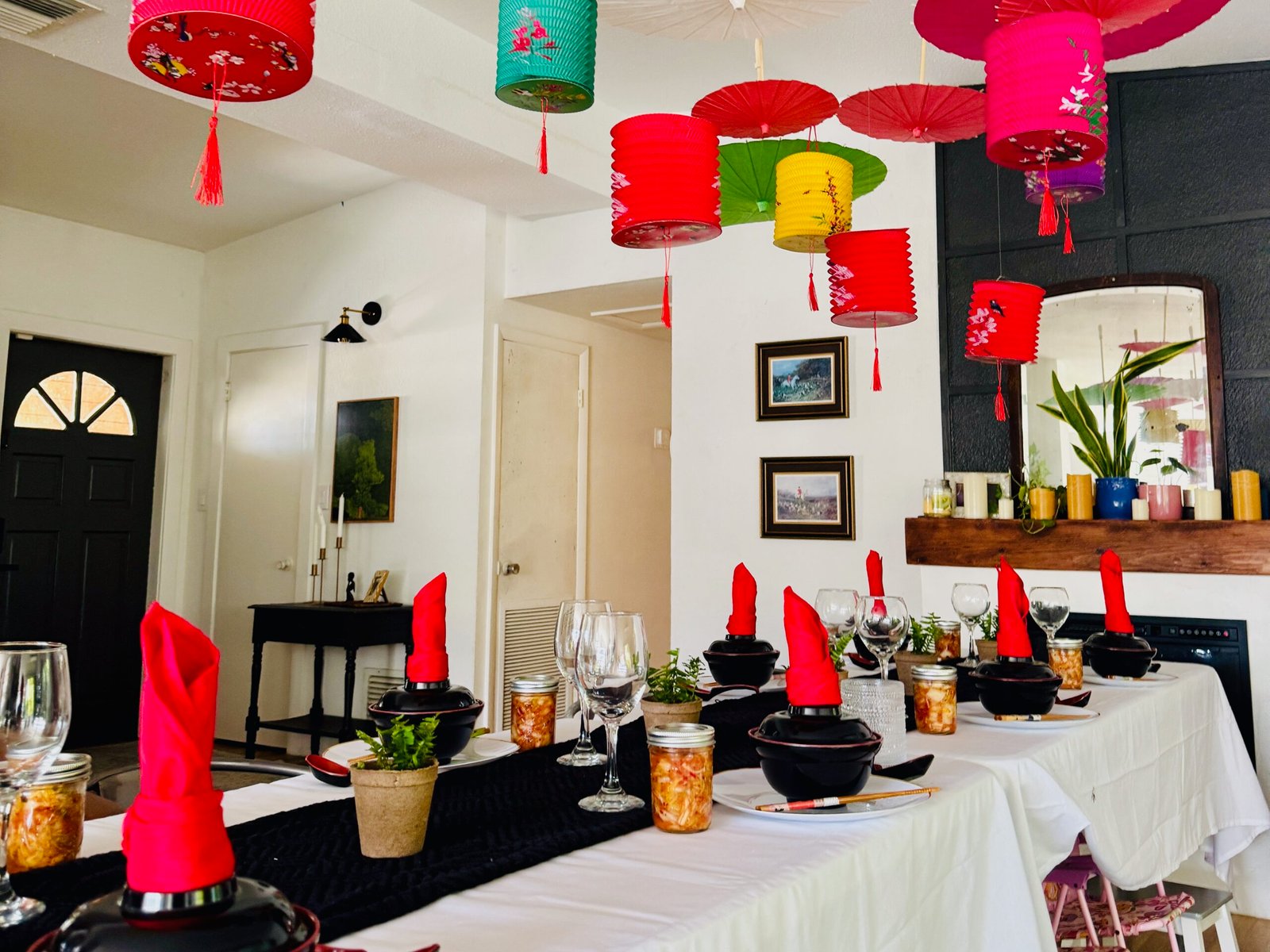
I once served this exact recipe at an Asian themed dinner party and by the end of the night every guest left with a jar of kimchi to take home.
What this kimchi tastes like and why you will love it
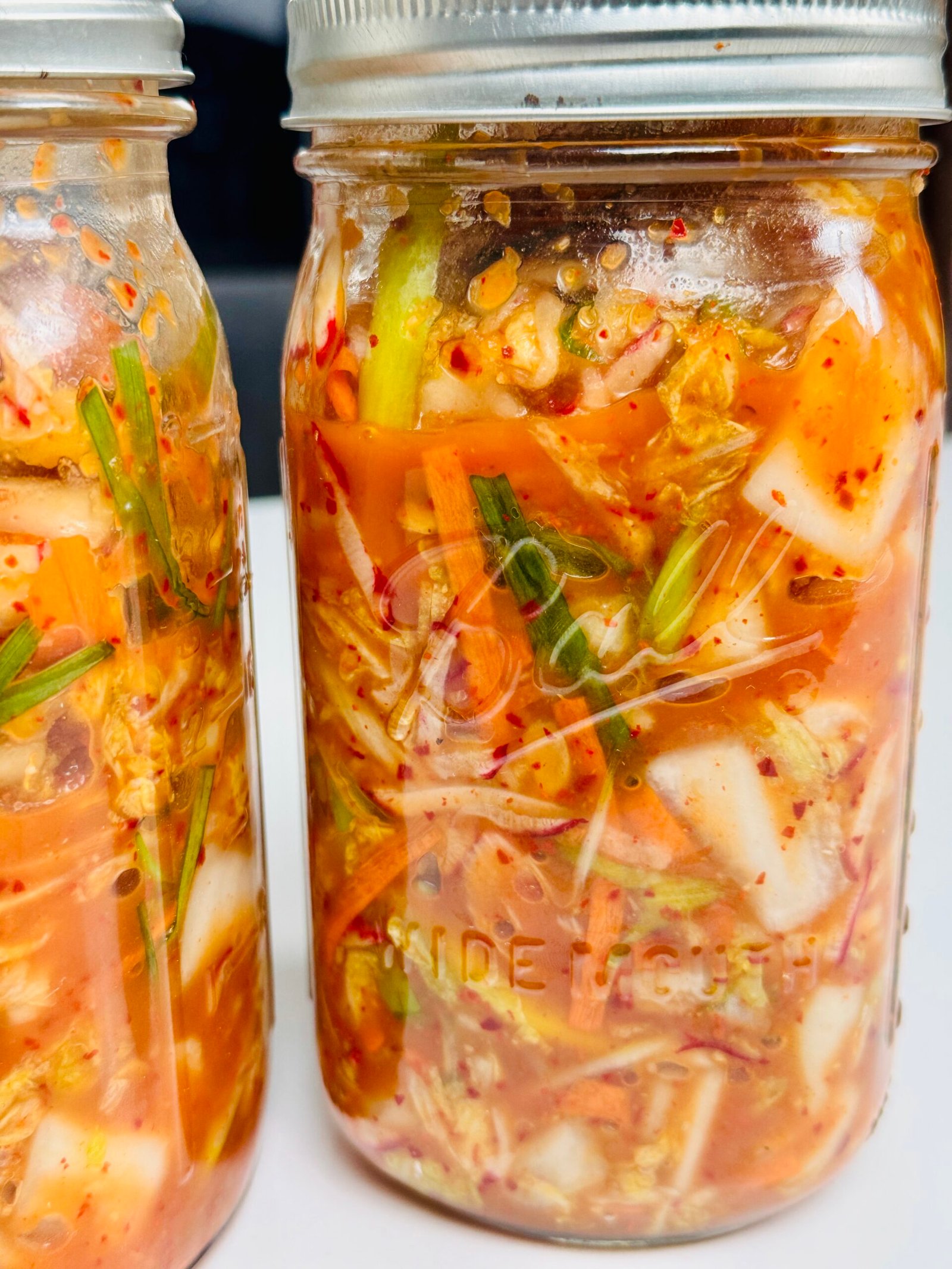
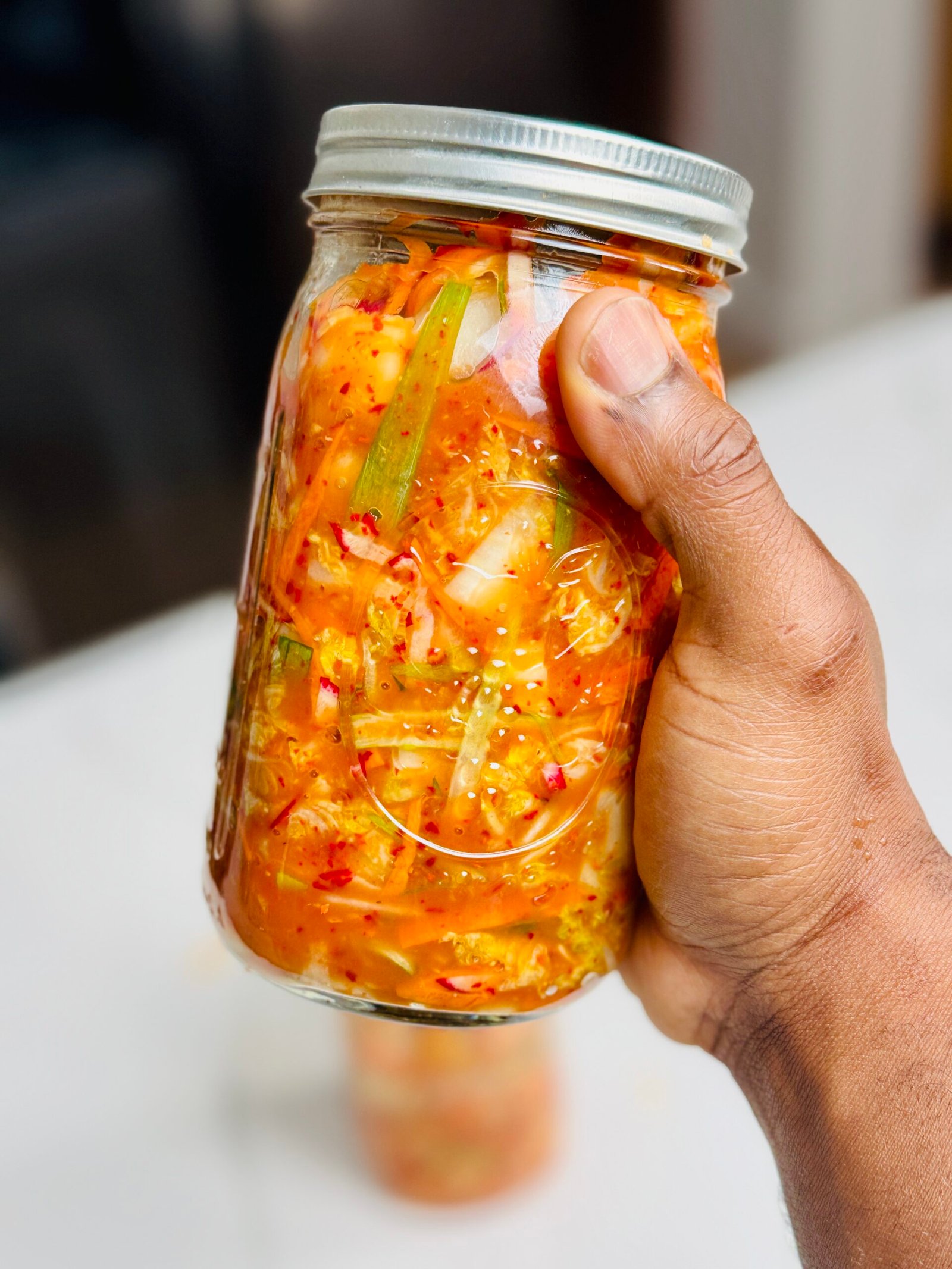
This kimchi is spicy, garlicky, savory, lightly sweet, and full of that unmistakable fermented depth. The napa cabbage softens just enough while keeping a satisfying bite. The radish and carrot bring crunch. The rice paste helps the seasoning cling to every fold of cabbage, and the Korean pear rounds everything out with gentle sweetness.
You will love this recipe because it gives you a traditional style result without making the process feel complicated. The ingredient list is intentional. Every step matters. And once you make it once, you start to realize homemade kimchi is not only achievable, it is one of the most useful things to keep in your fridge.
Key ingredients and why they matter
Napa cabbage is the heart of the recipe. It becomes tender while still holding structure, and its folds capture the seasoning beautifully.
Salt is what begins the transformation. It draws water out of the cabbage, softens it, and prepares it to absorb the kimchi paste.
Rice flour paste gives the kimchi body. It helps the paste coat the vegetables evenly and supports fermentation.
Korean pear adds sweetness and freshness. If you do not have one, apple is a great substitute.
Onion, garlic, and ginger build the aromatic backbone. Blending them creates a smooth base that distributes flavor throughout the batch. A high speed blender at works especially well here.
Fish sauce and fermented shrimp are what bring deep savory flavor. These ingredients create the classic umami note that makes traditional kimchi taste complete. If you need a substitute for fermented shrimp, a little extra fish sauce works well, or you can use soy sauce and a small spoonful of miso for a different but still flavorful result.
Gochugaru gives kimchi its signature color and fruity heat. This is not the place for generic red pepper flakes. Good Korean chili flakes make a huge difference.
Radish, carrots, and green onion add both texture and freshness. I used radish here, and if you do not have daikon you can also use red radishes, watermelon radish, turnips, or kohlrabi.
Step by step overview
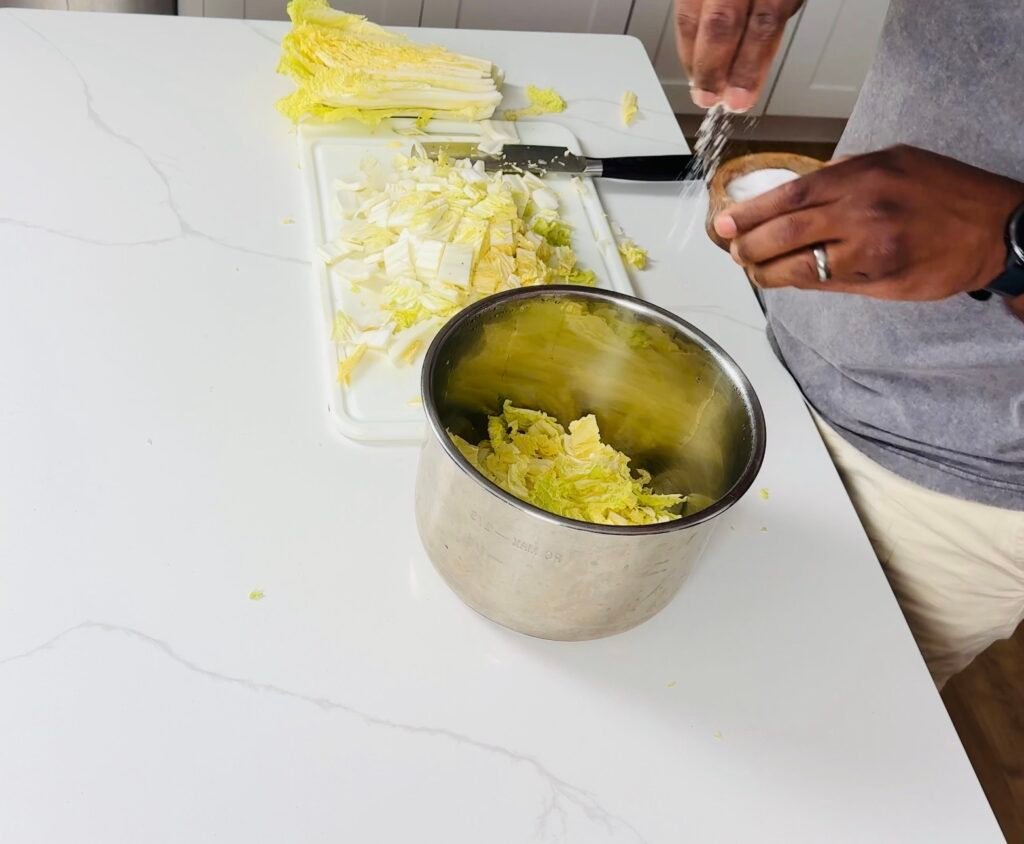
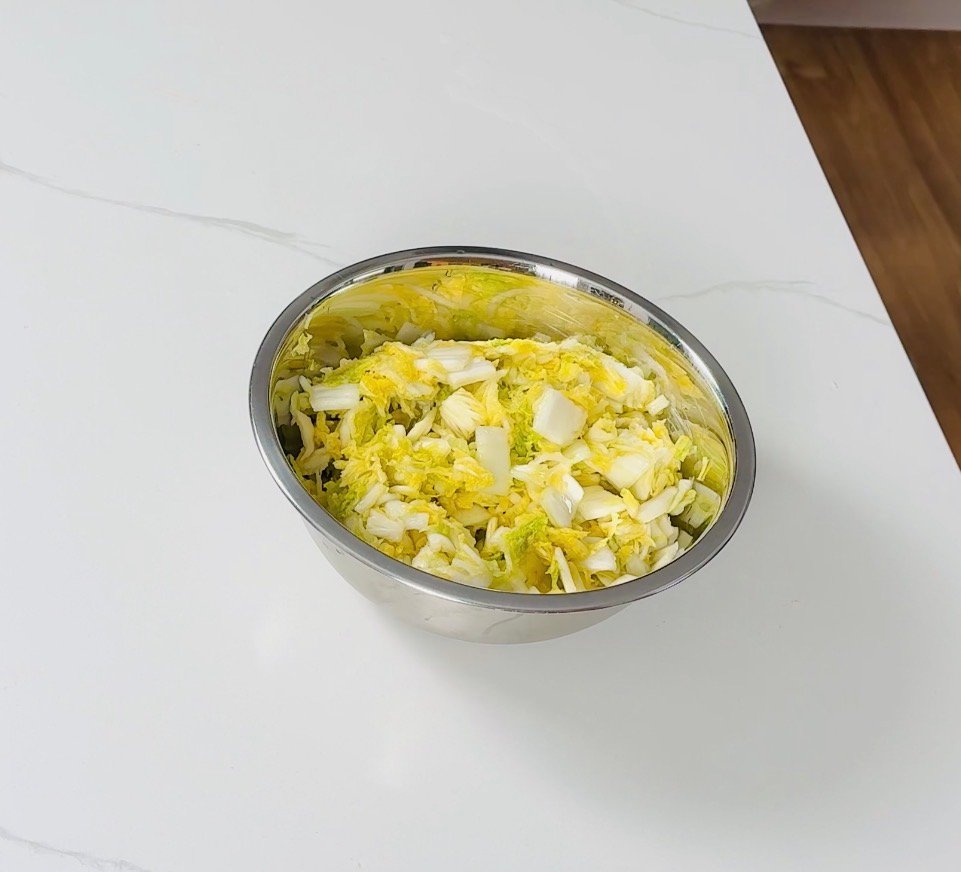
The process starts by salting the cabbage. This is what softens the leaves and seasons them from within. You do not want mushy cabbage. You want it flexible, slightly tender, and still structured enough to hold up during fermentation. After salting, the cabbage gets rinsed thoroughly and drained so the seasoning paste will cling properly.
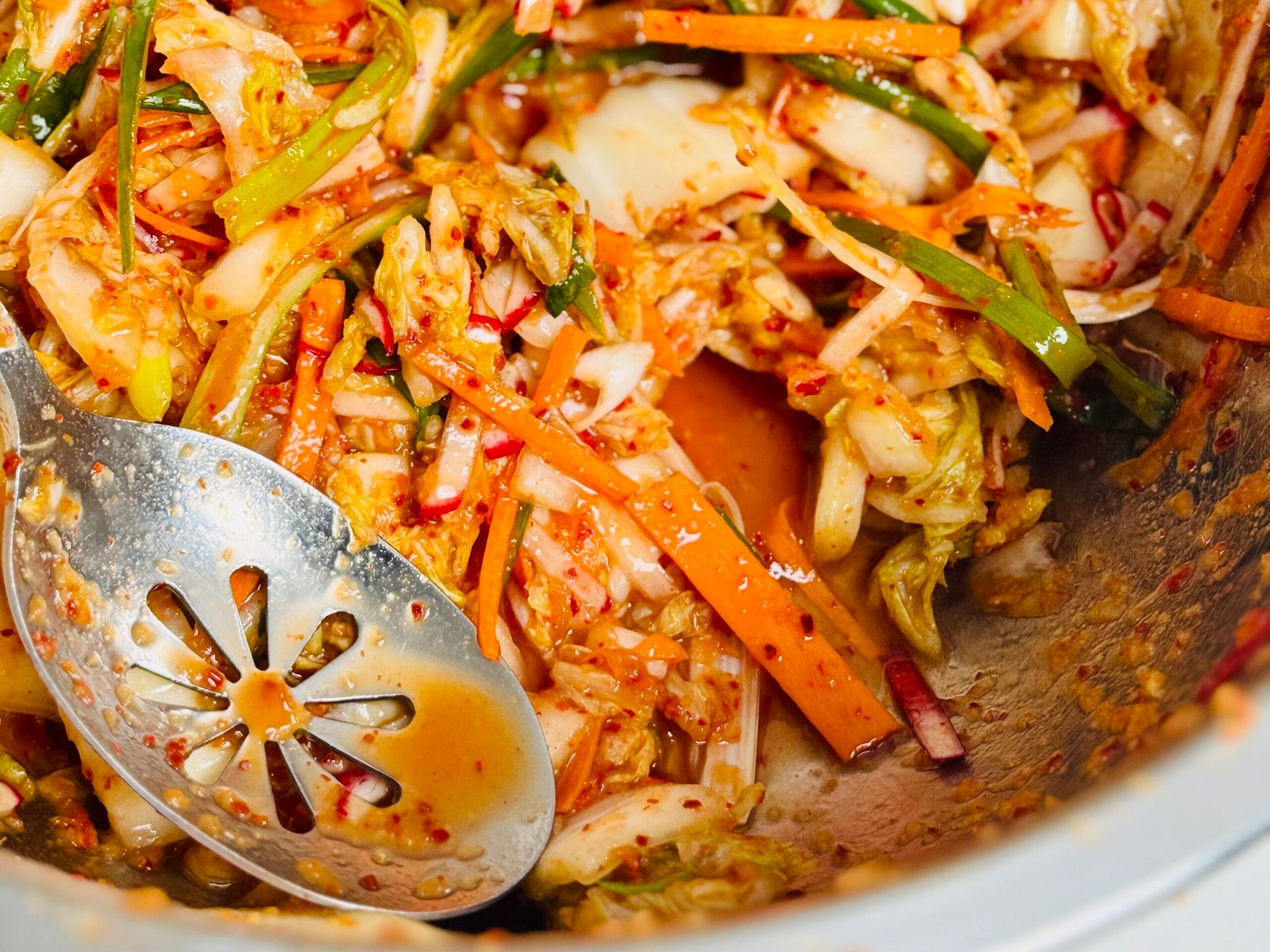
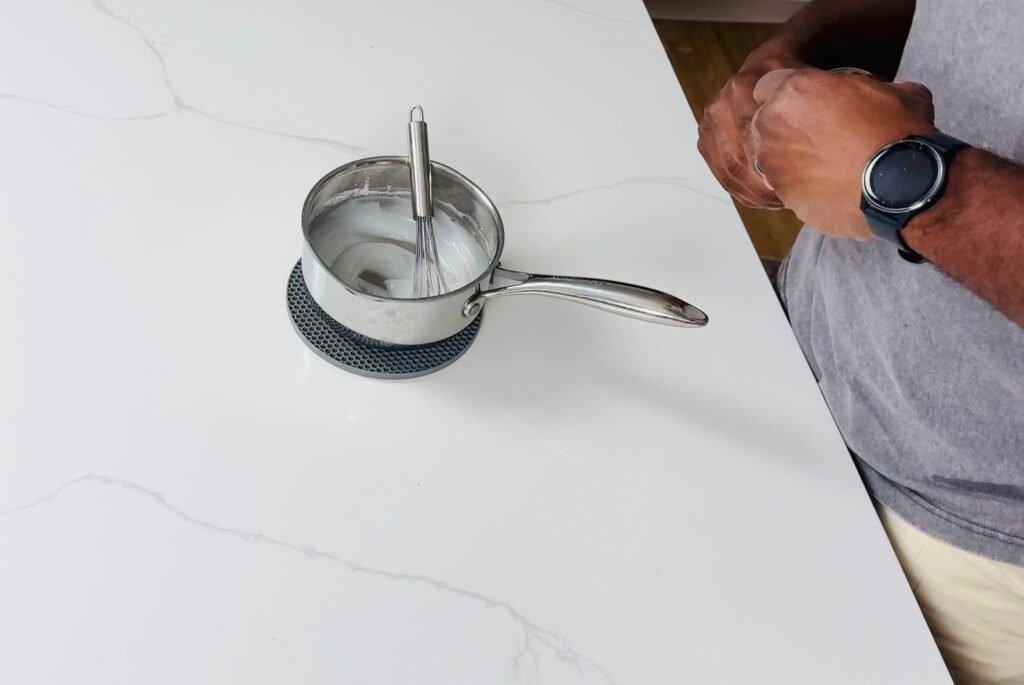
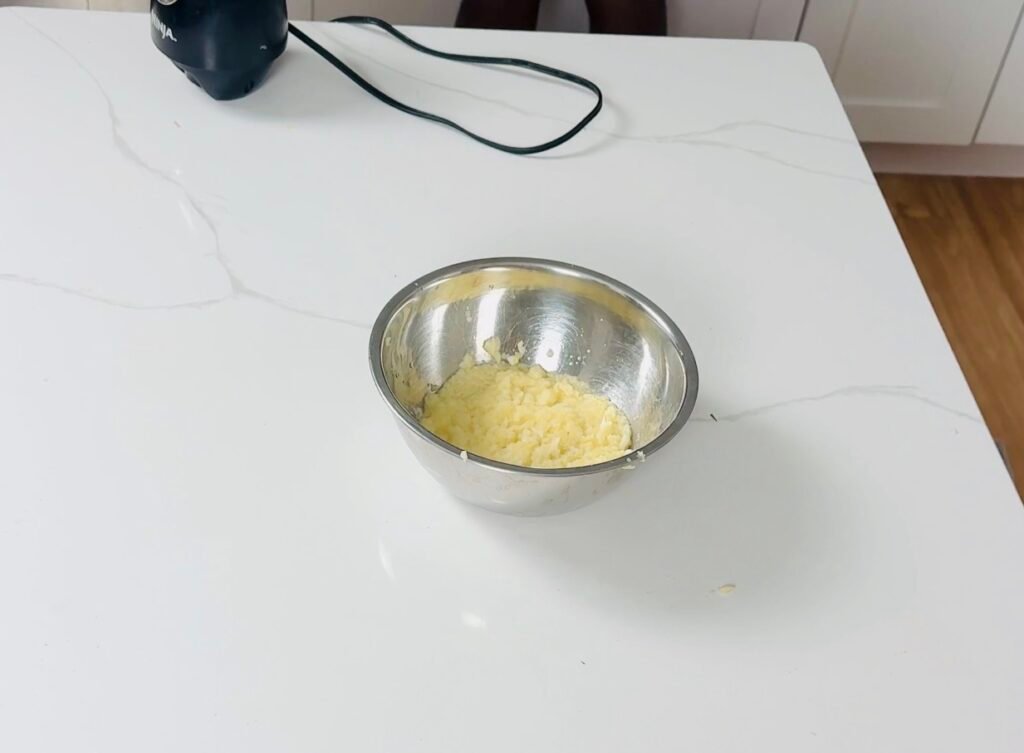
Next comes the rice paste and aromatics. The rice flour is cooked briefly with water until it thickens into a loose paste. Once cooled, it gets mixed with the blended pear, onion, garlic, and ginger. Then fish sauce, fermented shrimp, and gochugaru turn that mixture into the deeply savory red paste that defines the recipe.
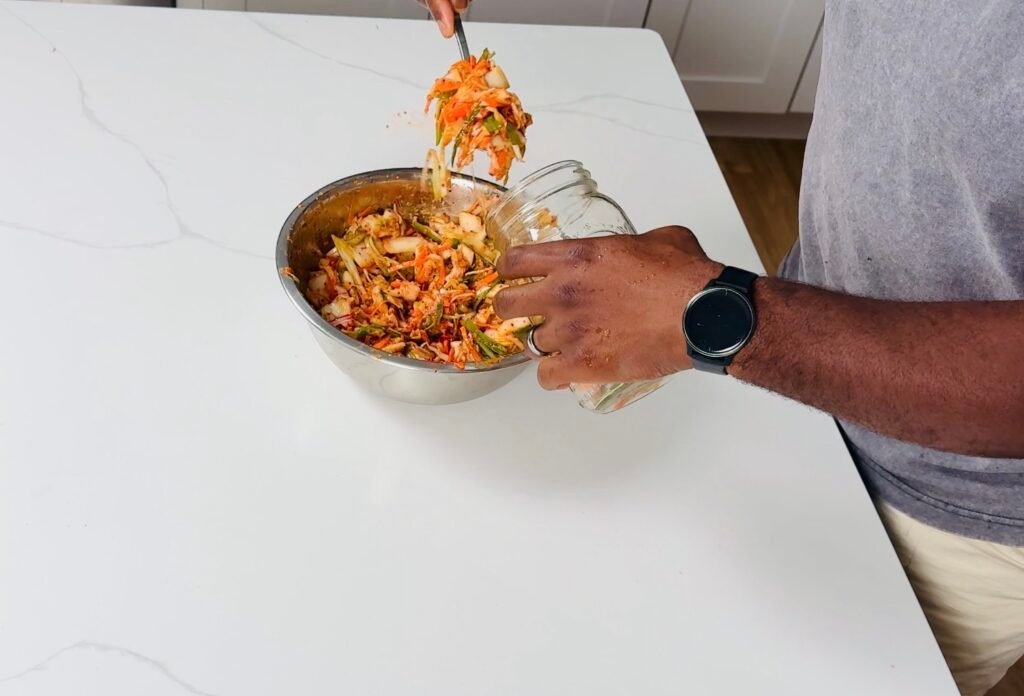
Finally, the vegetables get mixed into the paste, the cabbage is coated thoroughly, and everything is packed into jars. Clean glass jars are especially useful for this process because you can monitor the fermentation easily.
Main flow
- Salt and soften the napa cabbage
- Rinse and drain well
- Make the rice paste
- Blend the pear, onion, garlic, and ginger
- Stir together the kimchi paste
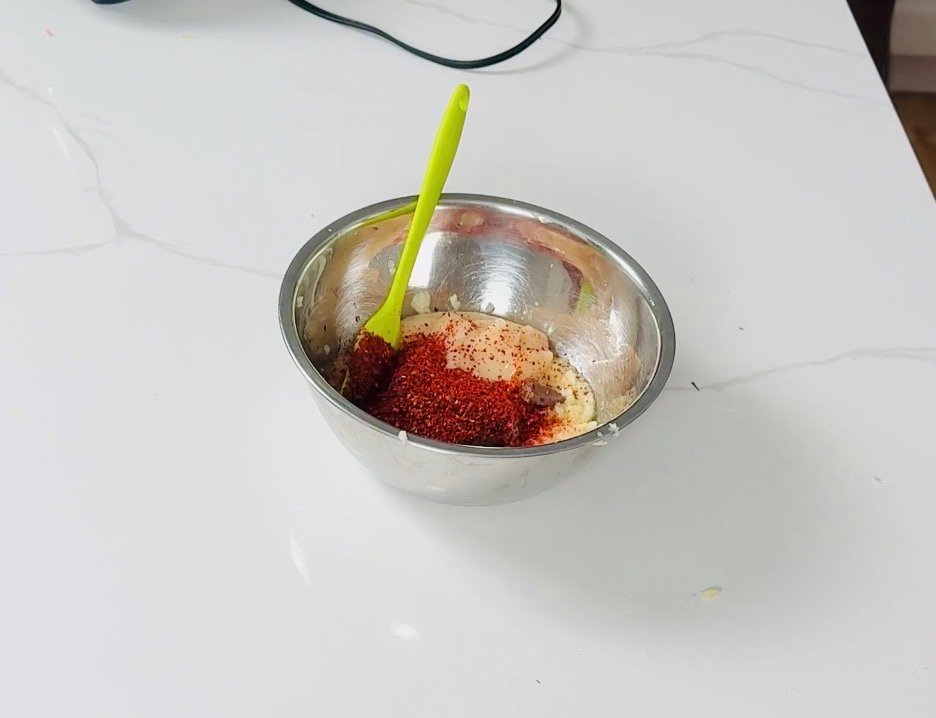
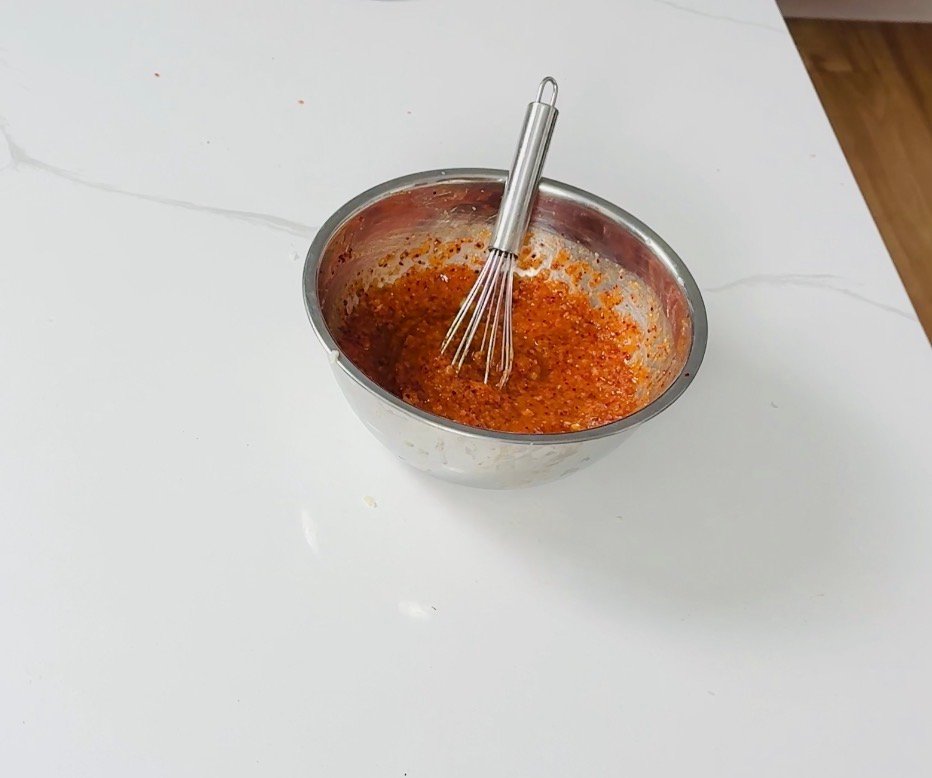
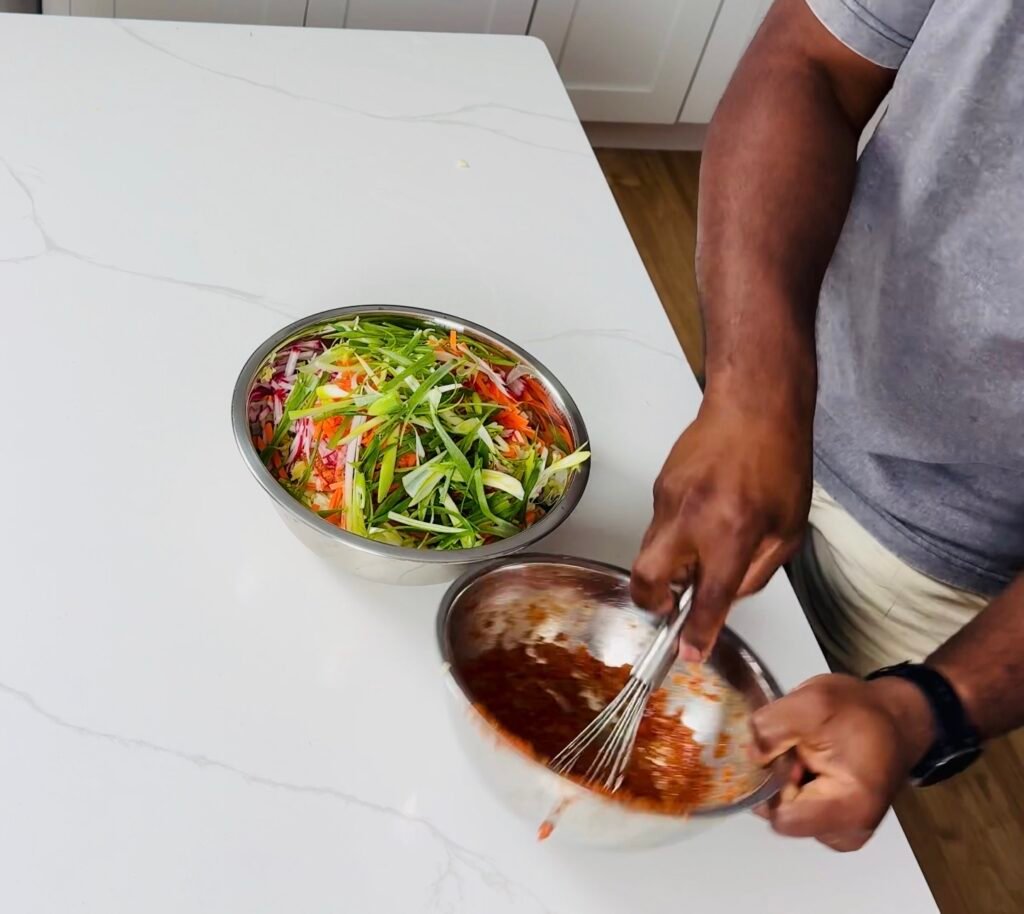
- Add radish, carrot, and green onion
- Coat the cabbage thoroughly
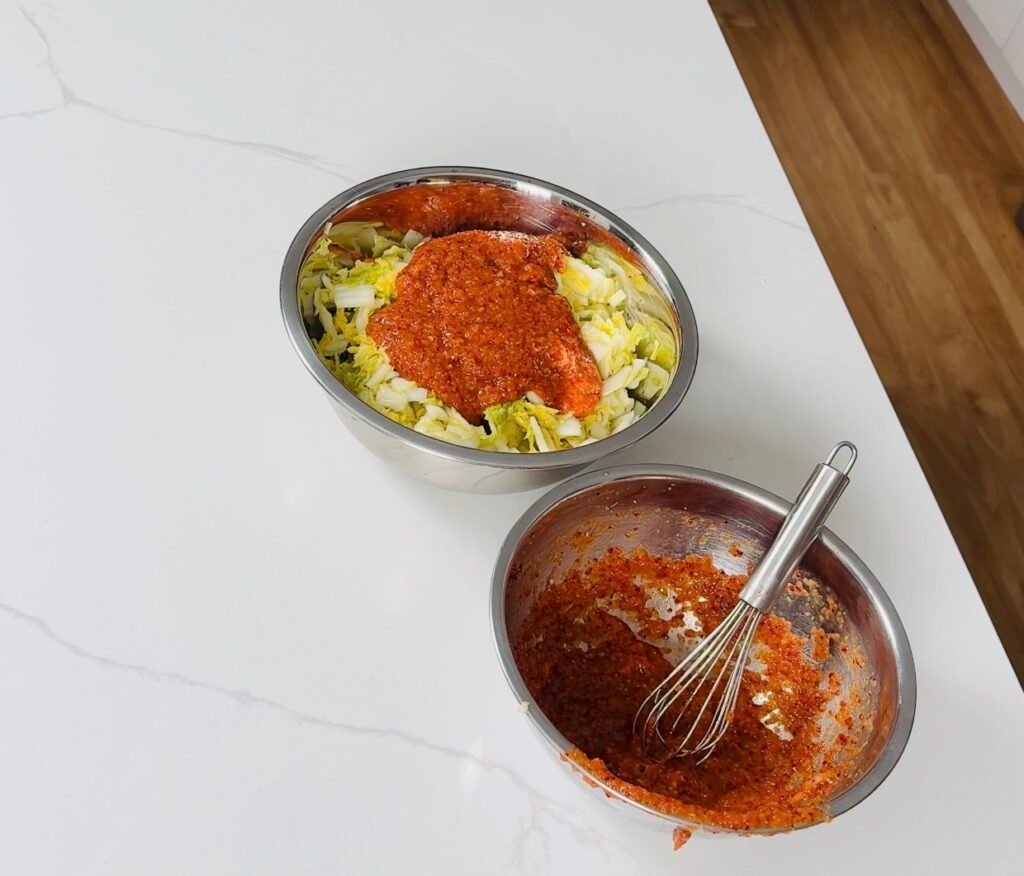
- Pack into jars and ferment
- Refrigerate once the flavor is where you want it
Tips for success and common mistakes
The biggest tip is to drain the cabbage well after rinsing. If the cabbage is holding too much water, the paste can become diluted and slide off instead of coating the leaves.
Do not skip tasting along the way. Taste the paste before mixing it with the cabbage. You want it to feel bold. The flavor will mellow and deepen as it ferments.
Do not over ferment at room temperature without checking it. Depending on your kitchen, it can move quickly. Start tasting after the first day. Some people love it fresher and crunchier. Others prefer a sharper tang.
A common mistake is packing the jars too loosely. Press the kimchi down firmly so the vegetables stay under the juices. Exposure to too much air can affect the fermentation.
Another mistake is using the wrong chili flakes. Gochugaru has a specific texture and flavor that generic crushed pepper just does not give.
Substitutions and variations
If you do not have Korean pear, use an apple. It still brings sweetness and freshness.
If you do not have fermented shrimp, use 1 tablespoon extra fish sauce for a simple substitute. You can also use 1 teaspoon soy sauce and ½ teaspoon miso for a different savory note. Or leave it out entirely if you want a milder profile.
For the radish, daikon is classic, but red radishes, watermelon radish, turnips, and kohlrabi all work. Each gives you a slightly different crunch and flavor.
For heat, use the lower amount of gochugaru if you want a milder kimchi. Use the full amount if you want more intensity.
If you love using prepared flavor bases to create easy meals later, this recipe is a perfect fit for my Pantry First Method , because one batch of kimchi can stretch into bowls, fried rice, grilled meat plates, and quick lunches throughout the week.
Serving suggestions and pairing ideas
Kimchi is one of those ingredients that wakes up everything around it. Serve it alongside rice, grilled chicken, pork, tofu, eggs, dumplings, or noodles. It adds acidity, spice, crunch, and depth all at once.
One of the best next steps is to use it in kimchi fried rice. That is one of my favorite everyday meals because it is fast, satisfying, and exactly the kind of dish that shows how a prepared ingredient can carry dinner.
This kimchi also works beautifully as part of a larger spread. I served it at an Asian themed dinner party, and it ended up being one of those table elements people kept coming back to. There is something fun about sending guests home with a jar of homemade kimchi. It feels generous, practical, and memorable.
Storage, reheating, and make ahead guidance
Kimchi is one of the best make ahead recipes you can have in your kitchen. Once it is in the refrigerator, it keeps developing flavor slowly. Fresh kimchi tastes lively and crisp. After about 1 to 2 weeks, it becomes more sour and more intense. Older kimchi is perfect for cooked dishes like fried rice, stews, and pancakes.
Store it in clean jars with a little headspace and keep pressing it down after each use so the vegetables stay tucked under the liquid. Good storage containers are worth having if you plan to make kimchi regularly.
You generally do not reheat kimchi on its own. Instead, use it in cooked dishes when it gets older. That is when the sourness becomes especially valuable.
Frequently asked questions
How long should kimchi ferment at room temperature?
Usually 1 to 3 days is enough to get fermentation going. The exact time depends on the warmth of your kitchen and how tangy you want it.
Can I make kimchi without fermented shrimp?
Yes. Extra fish sauce is the easiest substitute. Soy sauce with a little miso also works. The final flavor will be slightly different but still delicious.
What can I use instead of daikon?
You can use red radishes, watermelon radish, turnips, or kohlrabi. I used radish in this version and it worked beautifully.
Why do you make a rice paste for kimchi?
The rice paste gives the seasoning body, helps it cling to the vegetables, and supports fermentation. It is a traditional step that adds a lot to the final result.
How do I know when kimchi is ready?
Taste it. Fresh kimchi tastes more bright and vegetal. As it ferments, it becomes tangier, deeper, and more complex. Once it tastes good to you, move it to the refrigerator.
Is homemade kimchi better than store bought?
In many cases, yes. Homemade kimchi gives you more control over salt, spice, sweetness, and fermentation level. It also tastes fresher and more personal.
Final thoughts
Traditional napa cabbage kimchi is one of those recipes that feels bigger than the ingredient list. It is practical, deeply flavorful, and connected to a long tradition of cooking with care and patience. Once you make it, you start to see how useful it is in everyday meals and how special it feels to share with people.
If this is your first batch, trust the process. Salt well, drain well, season boldly, and let time work for you. Then when you are ready for the next delicious step, make my kimchi fried rice and put that jar to very good use.
Looking for other pantry classic check out: Habanero hot sauce recipe and Quick Pickled Red Chili Peppers & Onions
Some of the links in this post are affiliate links, which means I may earn a small commission at no extra cost to you. Thanks for supporting the blog. As an Amazon Associate, I earn from qualifying purchases.

Traditional Napa Cabbage Kimchi

Equipment
- Large mixing bowl
- Mixing spoon
- Gloves
- Clean glass jars or fermentation container
Ingredients
For the cabbage
- 2 large napa cabbages about 4 to 5 pounds total, about 1815 to 2268 g
- ½ cup kosher salt or Korean coarse sea salt about 120 g
- Water as needed
For the rice flour paste
- 2 cups water 480 ml
- 2 tablespoons sweet rice flour or regular rice flour about 16 g
For the kimchi paste base
- 1 Korean pear peeled and chopped, about 200 g
- ½ medium onion about 75 g
- 6 garlic cloves about 18 g
- 1 tablespoon fresh ginger about 15 g
- ¼ cup fish sauce 60 ml
- 2 tablespoons salted fermented shrimp about 30 g
For the seasoning
- ¾ to 1 cup Korean chili flakes about 45 to 60 g
- 1 tablespoon sugar optional, about 12 g
For the vegetables
- 1 cup julienned carrot about 120 g
- 4 green onions cut into 2 inch pieces, about 60 g
- 2 cups julienned radish about 240 g
Instructions
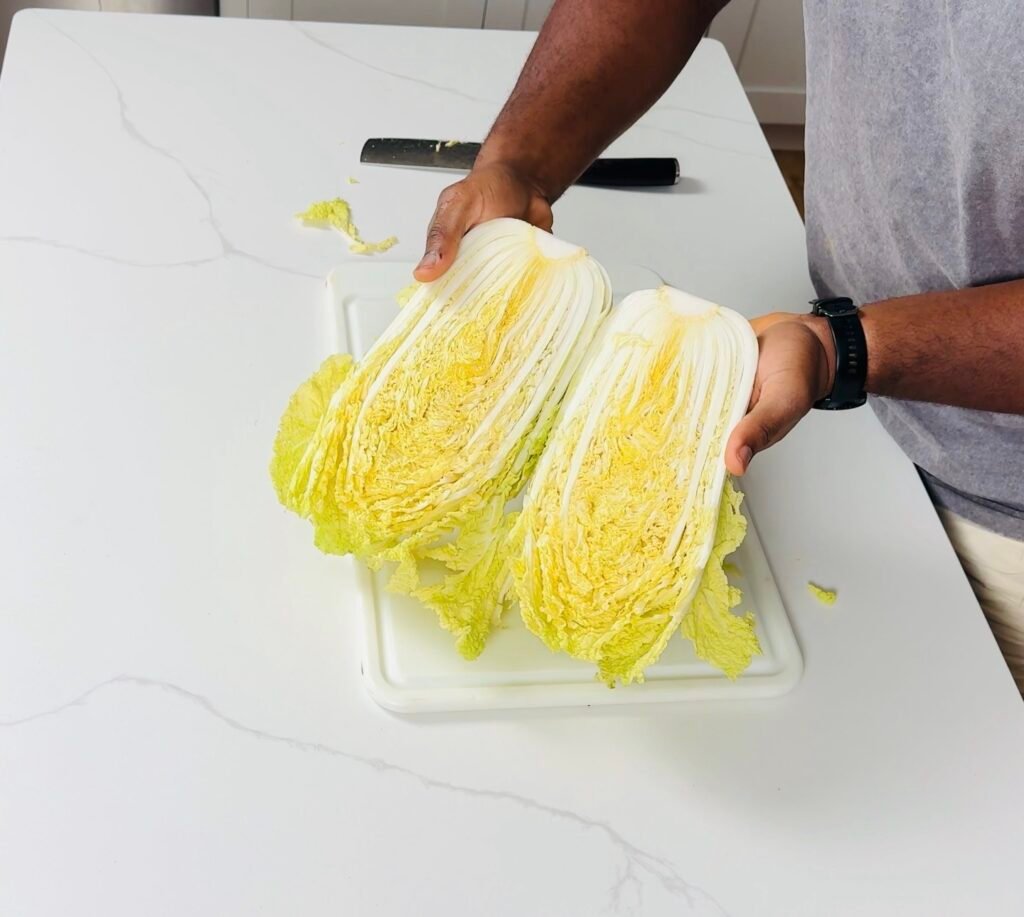
- Cut the napa cabbage lengthwise into quarters, then cut each quarter into bite sized pieces. Place the cabbage in a large bowl.
- Sprinkle the salt between the cabbage layers. Add enough water to lightly cover the cabbage. Let sit for 2 hours, turning every 30 minutes, until the cabbage is softened but still has some structure.
- Rinse the cabbage 2 to 3 times under cold water to remove excess salt. Drain very well in a colander.
- In a small saucepan, whisk together the water and rice flour. Cook over medium heat for 3 to 5 minutes, stirring often, until slightly thickened into a loose paste. Let cool completely.
- In a blender, combine the Korean pear, onion, garlic, and ginger. Blend until very smooth.
- In a large bowl, combine the cooled rice paste, blended pear mixture, fish sauce, fermented shrimp, gochugaru, and optional sugar. Stir until a thick red paste forms.
- Add the julienned radish, carrot, and green onion to the paste. Toss until evenly coated.
- Add the drained cabbage to the bowl. Wear gloves and gently massage the paste into the cabbage until every piece is evenly coated.
- Pack the kimchi tightly into clean jars or a fermentation container. Press down firmly so the vegetables are submerged in their juices. Leave about 1 inch of space at the top.
- Leave the jars at room temperature for 1 to 3 days, depending on how quickly you want it to ferment. Burp the jars once or twice daily and press the kimchi down if needed.
- Taste the kimchi daily. Once it reaches your preferred level of tanginess, transfer it to the refrigerator.
- Refrigerate for at least a few more days for deeper flavor, or enjoy right away for a fresher crunchier kimchi.
Notes
Make sure the cabbage is well drained so the paste clings properly.
Taste after fermentation begins because the flavor develops quickly.
Press the kimchi down in the jar so the vegetables stay under the liquid. Substitutions Use an apple instead of Korean pear.
Use extra fish sauce or a mix of soy sauce and miso if you do not have fermented shrimp.
Use red radishes, watermelon radish, turnips, or kohlrabi instead of daikon. Variations For a milder kimchi, use ¾ cup gochugaru.
For a spicier kimchi, use the full 1 cup gochugaru.
Add more radish for extra crunch.
Use more green onion for a sharper onion note. Storage and reheating Store kimchi in the refrigerator for several weeks to months.
Do not reheat fresh kimchi unless using it in another cooked recipe like fried rice or stew.
Older kimchi is excellent in cooked dishes.
Make ahead guidance
Kimchi is ideal for make ahead cooking because the flavor improves over time.
Make it several days before serving if you want a deeper sour tang. Serving ideas Serve with rice bowls, grilled meats, eggs, noodle dishes, soups, or dumplings.
Use it in kimchi fried rice, pancakes, or stews.
It also fits beautifully into pantry first meals built around bold prepared components.

Comments
No Comments