
Give someone a drink recipe, and they can make one drink. Give them a good syrup, and suddenly they can make twenty.
Very classic saying.
I may have made it up, but the point stands.
A good homemade syrup is much more useful than sugar water. It is a concentrated flavor base that can become lemonade, iced tea, sparkling water, coffee, cream soda, a mocktail, a cocktail, or a pitcher for the table.
Once you understand how syrups actually work, you stop needing a separate recipe every time you want to make a drink. You can start with what you have, build the flavor you want, and adjust from there.
That is why I think syrups fit so naturally into my Pantry First Method. They are also one part of my Flavor Builders system, where marinades start meals, sauces finish meals, and syrups start drinks. Instead of preparing one finished thing, make a flexible flavor component that can go in several directions.
For syrup, there are four things to think about:
- The sweetener
- The liquid
- The flavor source
- The extraction method
The first three determine what goes into the syrup.
The fourth determines whether it actually tastes like mint, strawberry, lemon, vanilla, ginger, hibiscus, or whatever you are trying to capture.
Why homemade flavored syrups are worth making
Most people encounter simple syrup through cocktails, but that is only one use for it.
Because the sugar is already dissolved, syrup blends easily into cold drinks. More importantly, a flavored syrup can carry fruit, herbs, citrus oils, spices, tea, flowers, or vanilla along with that sweetness.
That gives one jar a surprising amount of range.
Mint syrup can sweeten limeade today and iced tea tomorrow. Strawberry syrup can become lemonade, a sparkling drink, or a brunch pitcher. Vanilla syrup works in coffee, cream soda, tea, and cocktails.
That versatility is why homemade syrups belong in my larger guide to Pantry Essentials.
A practical pantry is not just rice, pasta, flour, and canned food. It includes the sauces, marinades, pickles, condiments, syrups, and other flavor builders that make it easier to turn ordinary ingredients into something intentional.
What makes a great syrup
The formula is simple, but each part matters.
The sweetener
Granulated sugar is the most neutral starting point. It gives herbs, fruit, tea, citrus, and spices room to come through clearly.
Brown sugar, raw sugar, honey, maple syrup, and other sweeteners can also work, but they bring their own flavor.
That may be exactly what you want for coffee or a warm spiced syrup. It may be distracting when you are trying to capture something clean and fresh like mint or lemon.
The sweetener also affects body. More sugar creates a richer, heavier syrup. Less sugar creates something lighter that contributes more liquid to the finished drink.
The liquid
Water is the standard choice, but it is not the only one.
Tea, coffee, fruit juice, and other liquids can become part of the syrup itself.
Think about what the liquid already brings to the recipe. Hibiscus tea contributes tartness and color. Coffee brings roasted bitterness. Juice may add acidity, sweetness, or both.
The liquid should support the flavor direction rather than compete with it.
The flavor source
This is the ingredient you actually want the syrup to taste like.
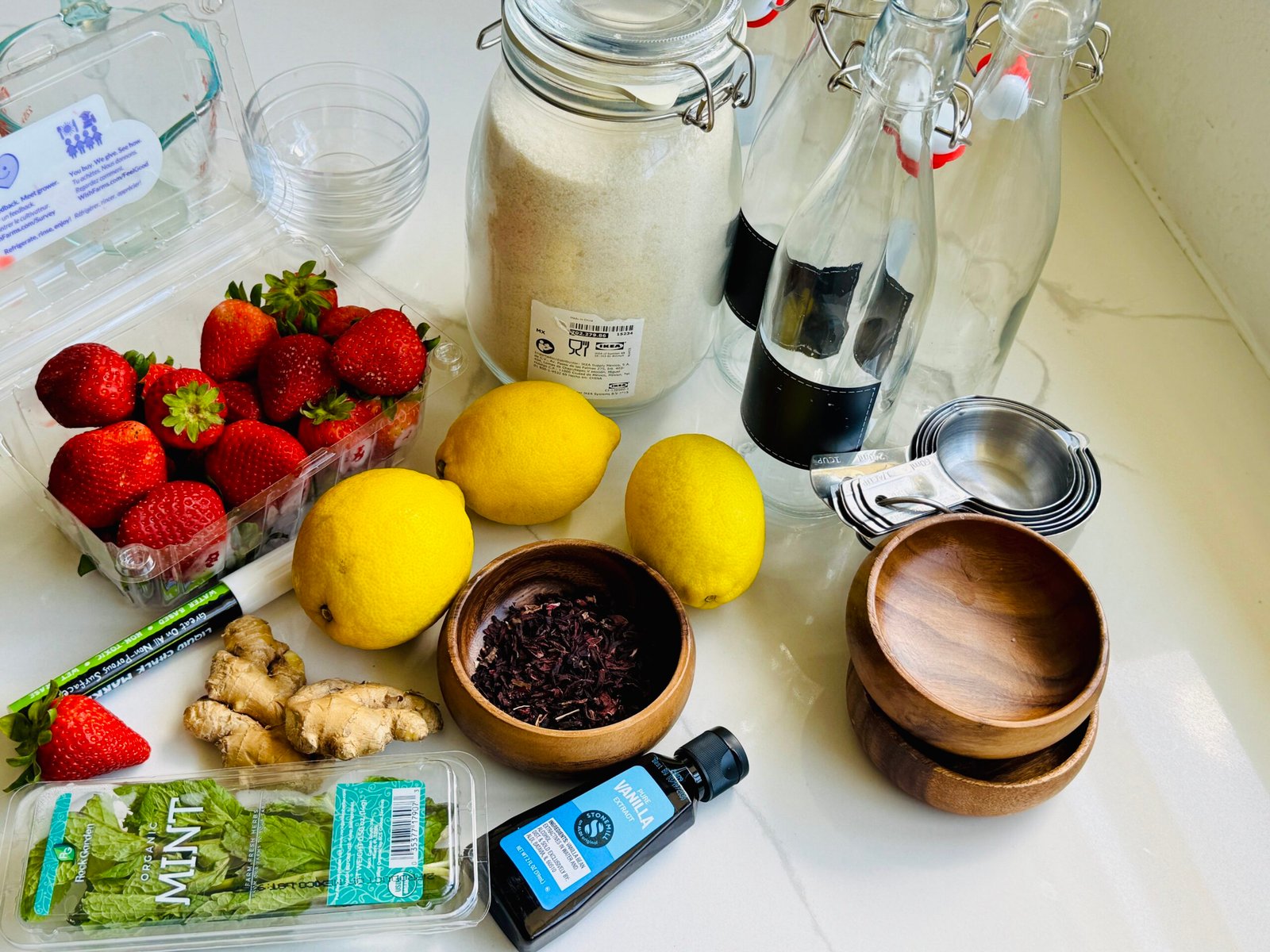
Mint leaves, strawberries, lemon peel, vanilla, fresh ginger, hibiscus, cinnamon, tea, peaches, basil, and lavender are all possibilities.
Quantity matters.
A few tired mint leaves cannot make a strong mint syrup. A small strip of lemon peel cannot produce the same aroma as the peel from several lemons.
Remember that the syrup will eventually be mixed with ice, water, citrus, tea, coffee, or sparkling water. The flavor needs to be clear enough to survive that dilution.
The extraction method
This is where syrup gets interesting.
Not every ingredient should be dropped into boiling sugar water.
Mint is delicate. Strawberries contain their own juice. Citrus peel contains fragrant oils. Ginger can tolerate heat. Hibiscus behaves more like tea.
Different ingredients give up their best flavor in different ways.
That is why I think of the rule this way:
Ratio gives you sweetness and body. Extraction gives you flavor.
Once you understand that distinction, flavored syrup becomes much easier to improvise.
The best simple syrup ratio for drinks
The two ratios worth knowing are standard simple syrup and rich simple syrup.
Standard simple syrup
Standard simple syrup uses a 1:1 ratio.
For an everyday home batch, I usually think of that as 1 cup sugar and 1 cup water.
It is light enough to pour easily and works well in lemonade, iced tea, sparkling drinks, coffee, mocktails, and cocktails.
This is the ratio I reach for most often because it gives me plenty of room to adjust the final drink.
Rich simple syrup
Rich simple syrup uses a 2:1 ratio.
That means two parts sugar to one part water.
It is sweeter and thicker, so you can use less syrup to reach the same level of sweetness. That is especially helpful in cocktails or other drinks where you want to limit the amount of added water.
For casual home use, measuring cups work well. If you want to recreate the exact concentration from one batch to another, weighing the sugar and water gives you more consistency.
Five ways to extract flavor into syrup
Choosing the right extraction method matters more than trying to use one universal syrup recipe for every ingredient.
Gentle simmer
Sturdy ingredients can take heat.
Fresh ginger, cinnamon sticks, vanilla, whole spices, and similar aromatics often need time in warm liquid before their flavor becomes strong enough.
Bring the liquid to a gentle simmer rather than aggressively boiling it. You are trying to extract flavor, not reduce the syrup.
This method works especially well for ginger syrup, cinnamon syrup, chai syrup, vanilla syrup, and other spice based syrups.
Off heat steeping
Delicate herbs usually need a gentler approach.
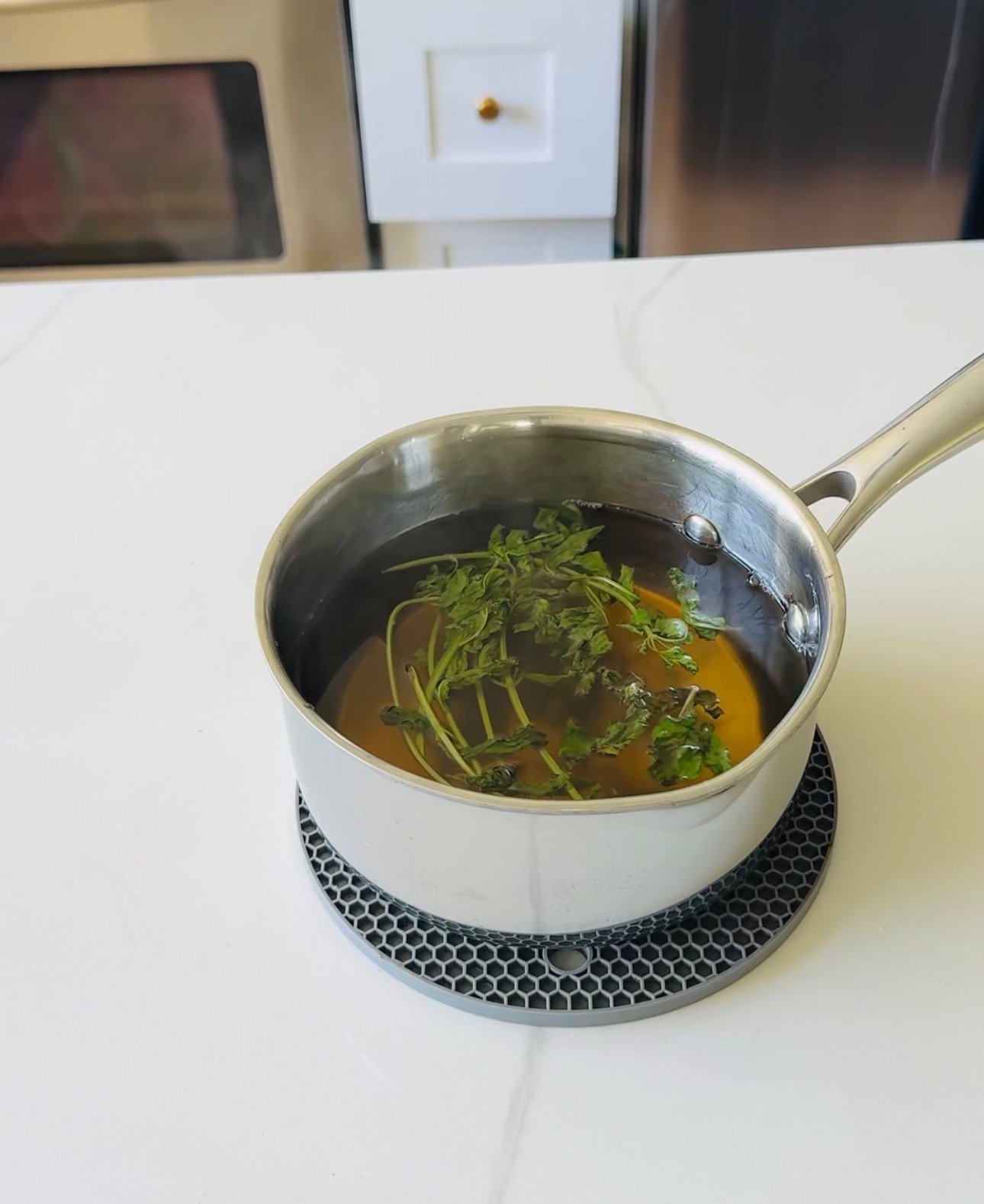
Dissolve the sugar first, turn off the heat, then add the herbs and allow them to steep.
For mint, I go one step further and briefly blanch the leaves before steeping them. I want the finished syrup to taste fresh and green rather than like cooked mint.
This same general approach works well for basil, lavender, delicate teas, and similar ingredients.
If an herb syrup tastes dull or grassy, too much heat may be the problem.
Cold maceration
Maceration is one of my favorite methods for soft fruit.
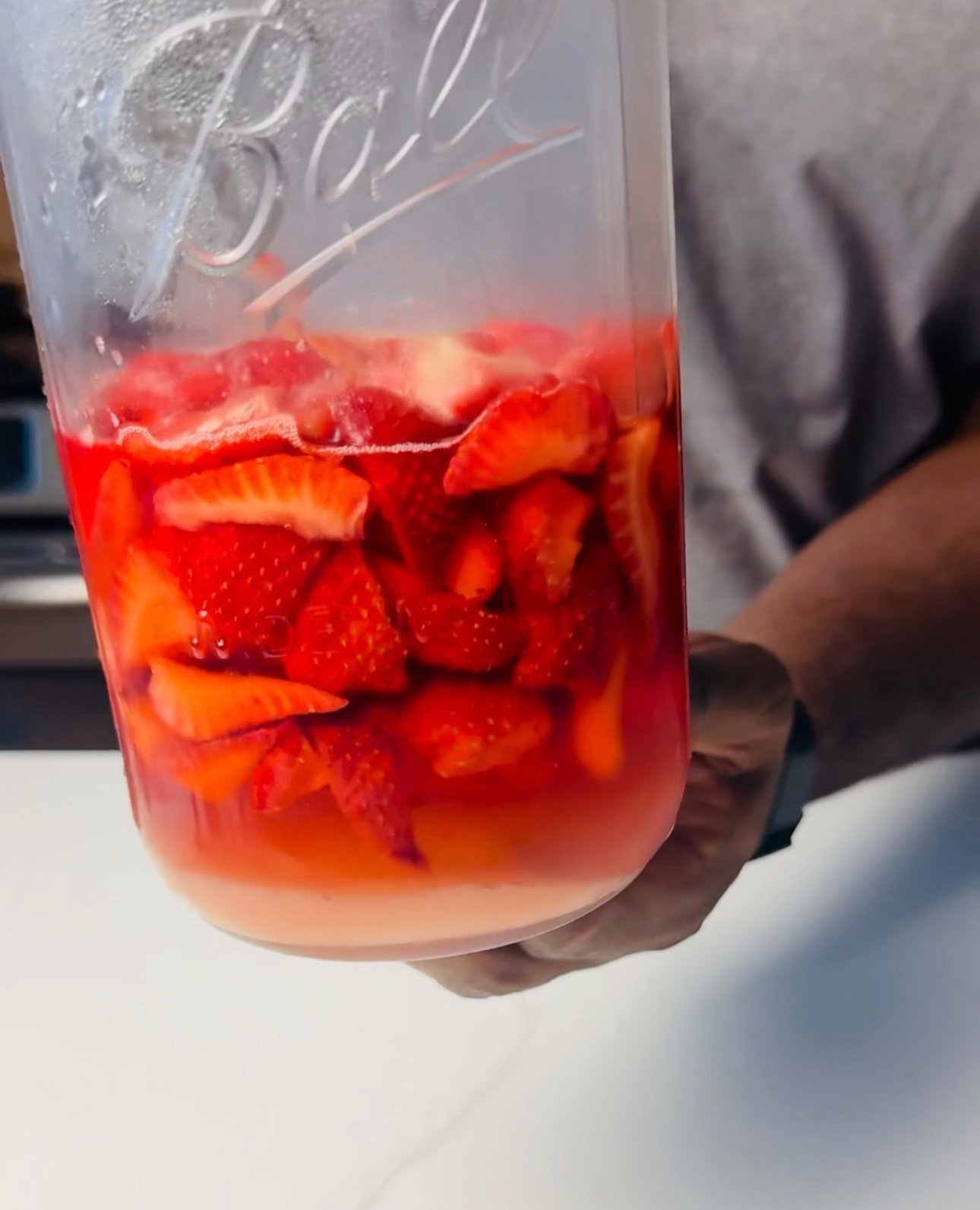
Instead of cooking the fruit, combine it with sugar and let the sugar slowly draw out the juice.
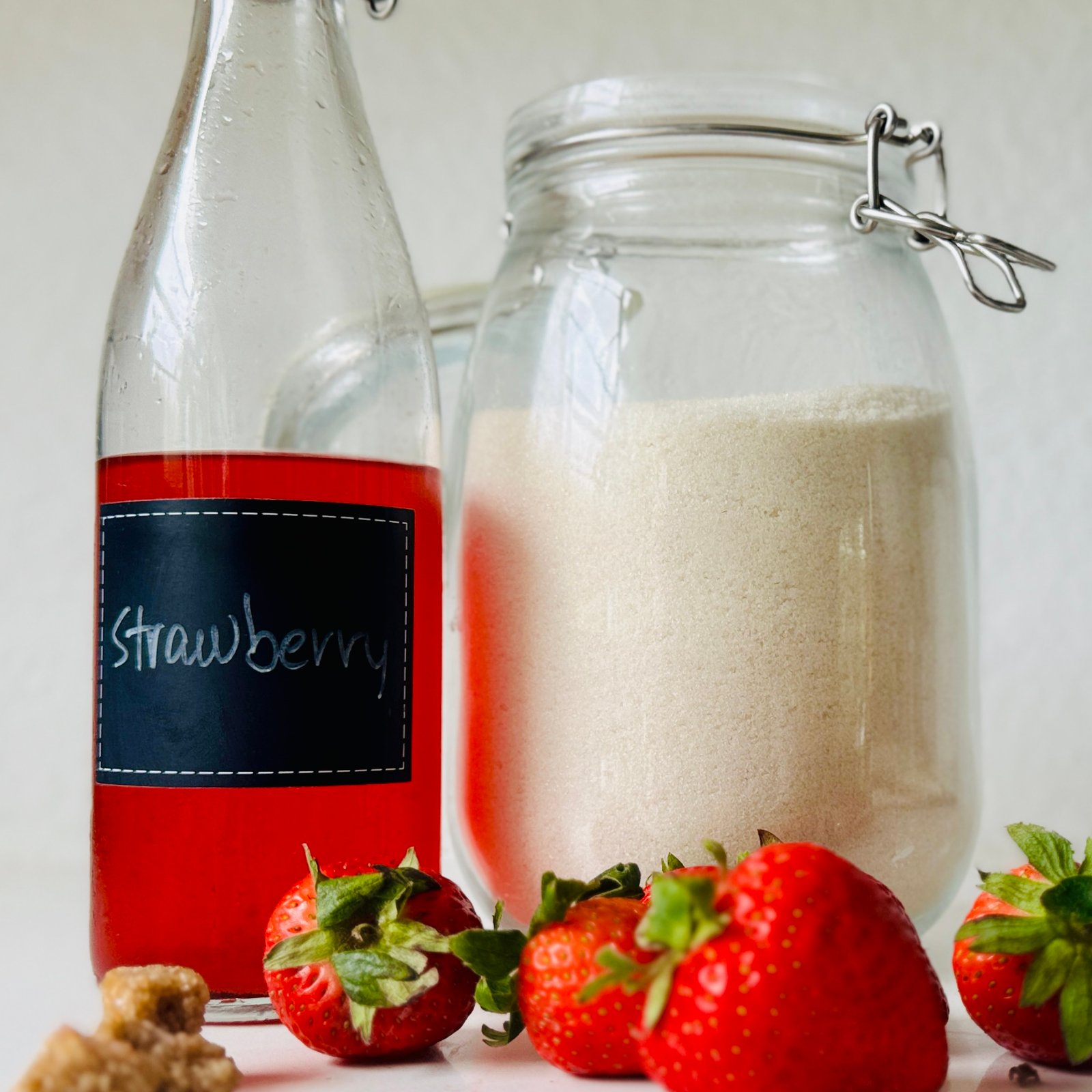
Strawberries are a perfect example.
When sliced strawberries sit with sugar, they begin releasing bright red juice. Over time, that juice mixes with the sugar and creates a syrup that tastes much closer to fresh strawberries than cooked jam.
The same method works beautifully with peaches, raspberries, blackberries, and other juicy fruit.
Once the fruit has released enough liquid, strain the syrup gently. Do not force every bit of fruit through the strainer if you want a cleaner finished syrup.
Oleo saccharum
Citrus works differently because some of its most important flavor is not in the juice.
It is in the peel.
Lemon juice provides acidity. Lemon peel carries fragrant citrus oil.
Oleo saccharum uses sugar to draw those oils out of the peel. Let the citrus peel rest with sugar until it becomes glossy and intensely fragrant, then build the syrup from there.
This method works with lemon, orange, grapefruit, and other aromatic citrus.
If you are making lemonades and citrus drinks regularly, I use this handheld citrus juicer because it makes squeezing fresh lemon and lime juice much faster without bringing out a larger juicer.
Tea, flower, and spice infusion
Some ingredients are easiest to think about like tea.
Hibiscus is a great example.
Hot water pulls out its deep color, tartness, and floral character. Ginger can simmer alongside it or steep separately to bring warmth and a little bite.
This method also works with Earl Grey, chai, dried flowers, and other tea style flavor sources.
It is especially useful for alcohol free drinks because tea, flowers, spices, and herbs can add complexity even when there is no spirit in the glass.
The five syrups I would start with
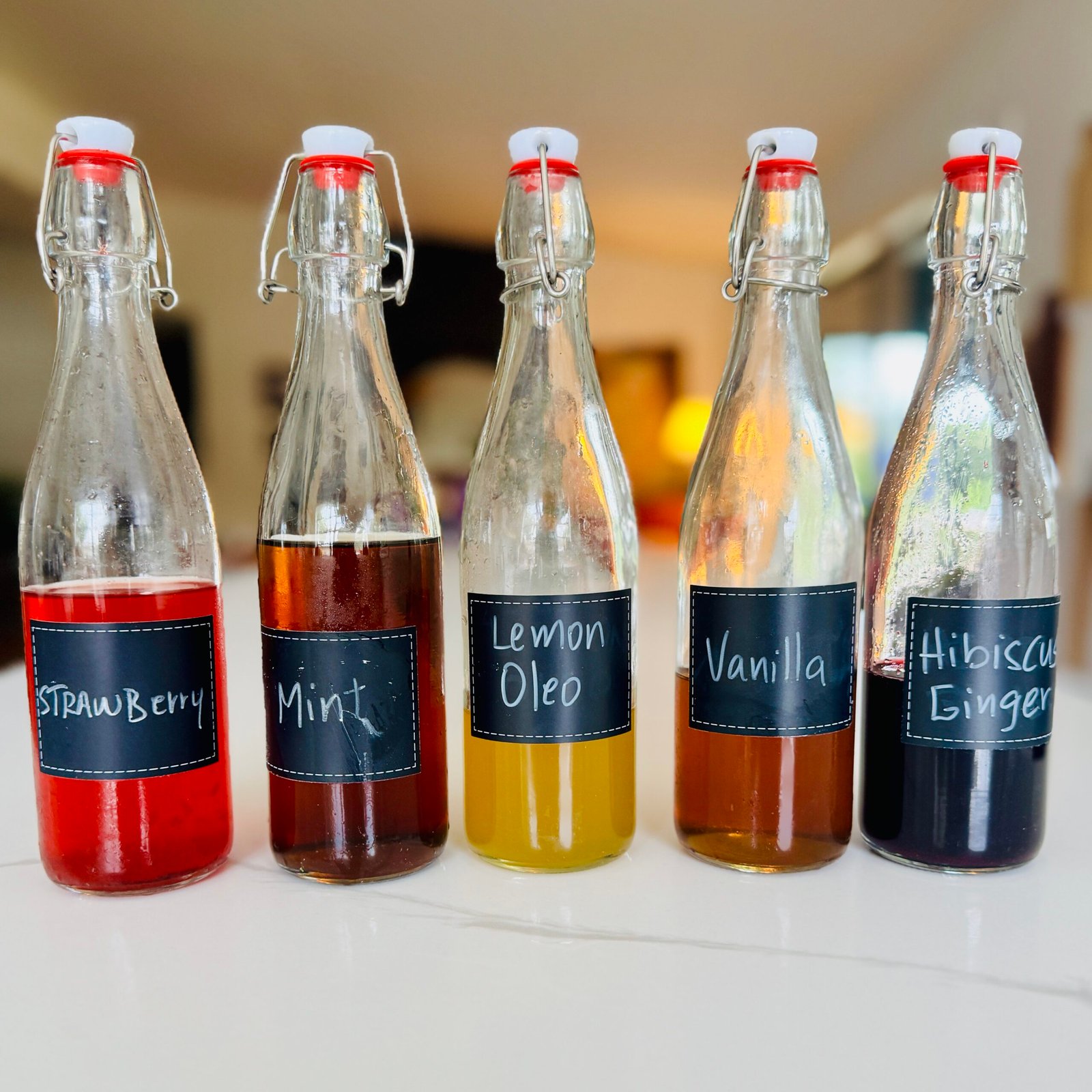
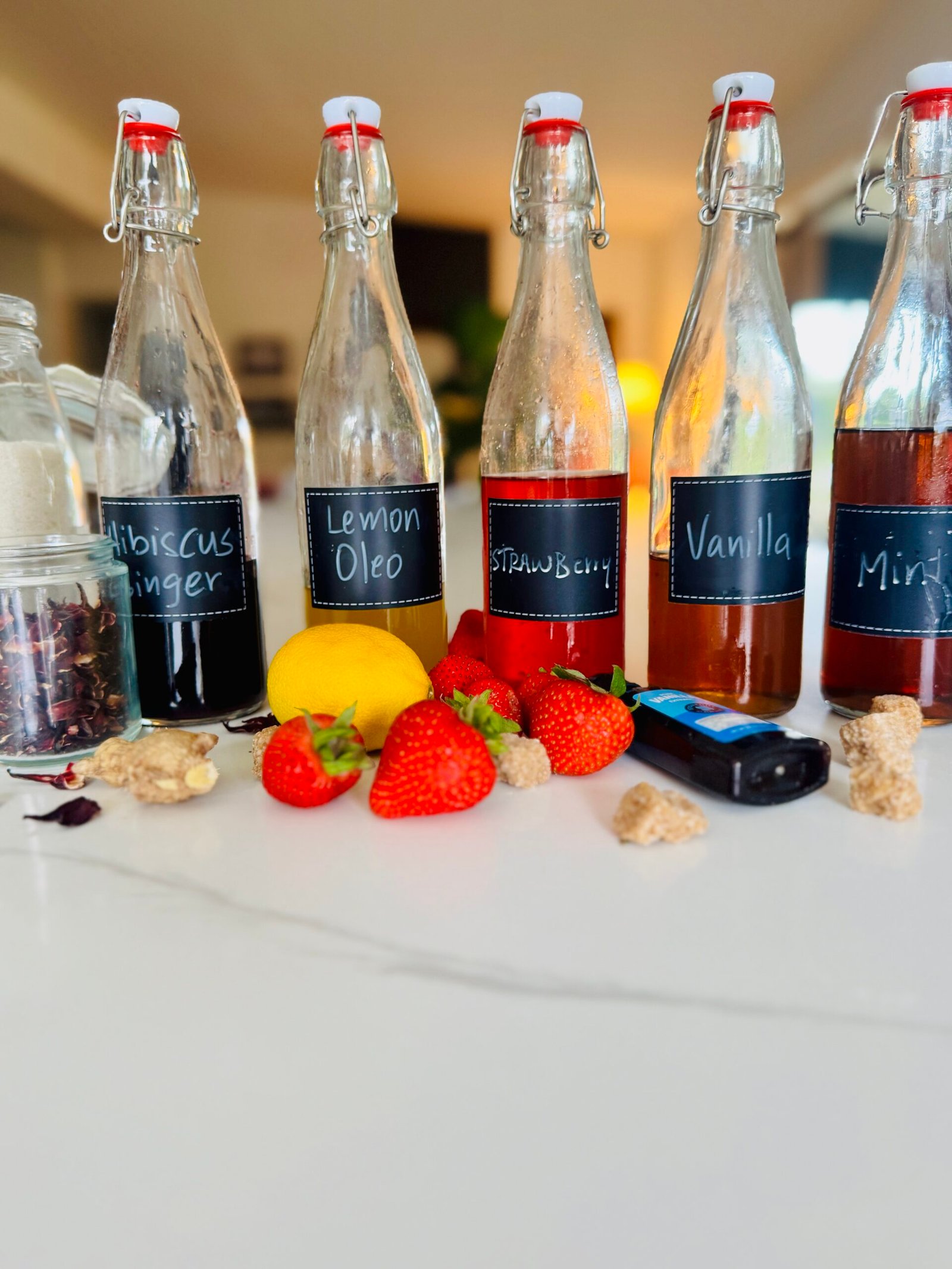
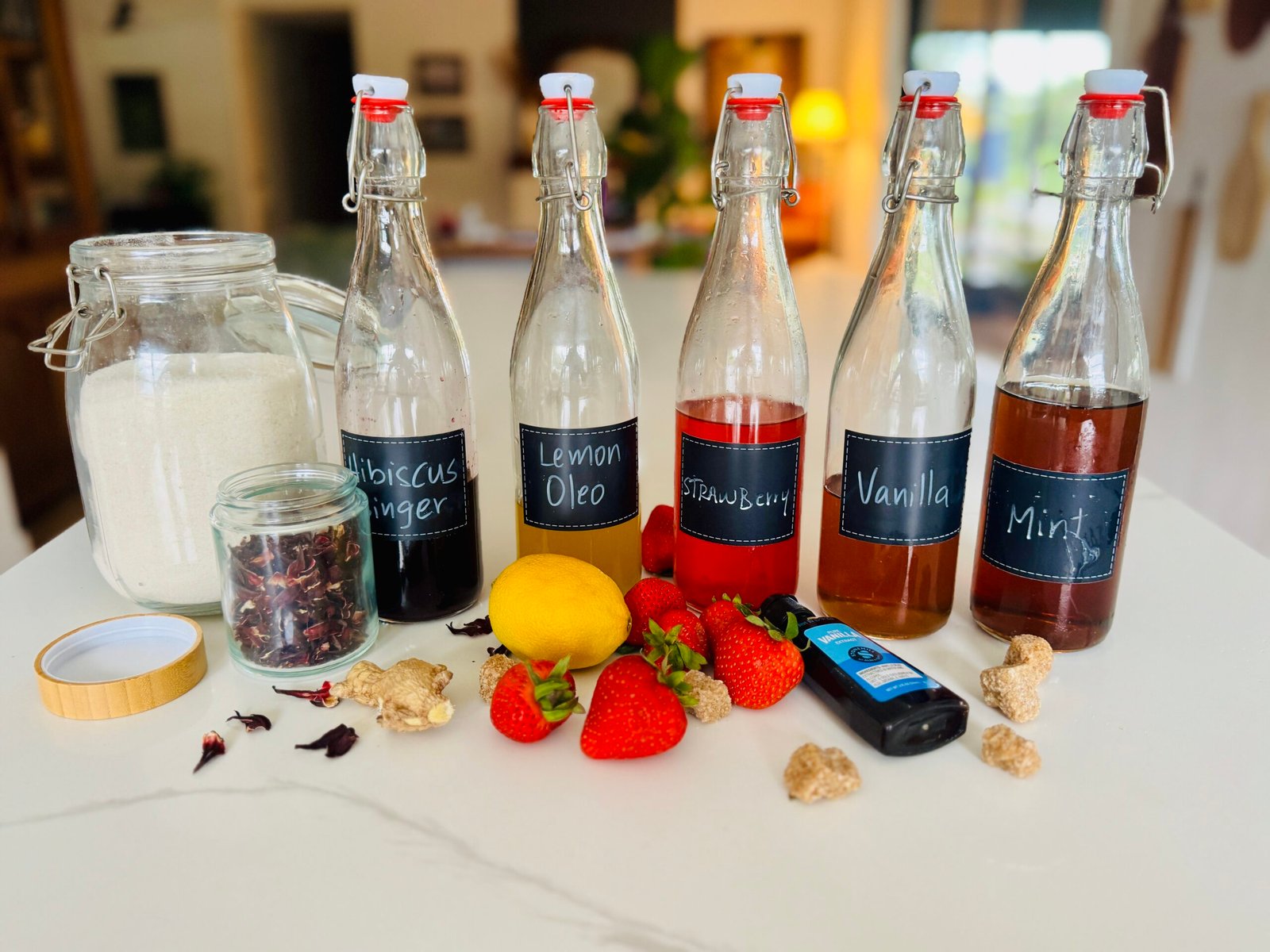
For this Pantry First syrup series, I chose five syrups that teach different techniques rather than five versions of the same recipe.
Mint syrup gives you something fresh, cooling, and herbal. Use it in limeade, iced tea, sparkling water, mojitos, cucumber drinks, and simple mocktails.
My fresh mint simple syrup recipe walks through the quick blanch and covered off-heat steep, then shows exactly how much to use in lemonade, iced tea, mojitos, and a party pitcher
Vanilla syrup is warm and aromatic. It works especially well with coffee, black tea, cream soda, fruit, and richer drinks.
If you want to see how a more specialized version of that idea works, my Pumpkin Spice Latte Syrup combines sweetener, pumpkin, vanilla, and warm spices into one flavor base that I use well beyond coffee.
Lemon oleo saccharum gives you intense citrus aroma. Use it in lemonade, tea, spritzes, punches, and sparkling drinks.
Cold strawberry syrup tastes fresh and juicy rather than jammy. It is perfect for strawberry lemonade, sparkling water, iced tea, cream soda, matcha, and brunch drinks.
Hibiscus ginger syrup brings tartness, floral flavor, color, and spice. It works beautifully with lime, sparkling water, tea, mocktails, and pitcher drinks.
Together, those five syrups give you five very different flavor directions and several extraction techniques you can reuse with other ingredients.
How to build a balanced drink with syrup
A good syrup is the beginning of a drink.
It should not have to carry the whole thing.
Sweetness needs contrast. Most drinks also benefit from dilution, aroma, texture, and sometimes acidity or bitterness.
If the drink tastes too sweet, try adding more water, tea, sparkling water, lemon, or lime before assuming the syrup itself is wrong.
If it tastes flat, a little citrus may bring it back to life.
If it feels thin, another spoonful of syrup may give it more body.
If it tastes like one note, add another layer such as tea, herbs, ginger, coffee, citrus peel, or fresh fruit.
This is also where a syrup becomes more useful than a single drink recipe. You can keep adjusting the same base depending on what you want that day.
Easy formulas for using flavored syrup
For a quick sparkling drink, start with 1 to 2 tablespoons syrup, about 1 tablespoon fresh lemon or lime juice, and 6 to 8 ounces sparkling water over ice.
For lemonade, start with 2 to 3 tablespoons syrup, 2 tablespoons fresh lemon juice, and about 1 cup cold water.
For iced tea, add 1 to 2 tablespoons syrup to 8 ounces chilled tea, then add lemon or lime if the drink needs brightness.
For coffee or espresso, begin with 1 tablespoon syrup and add more after tasting. Vanilla is an easy starting point, but flavored syrups can work with cold brew, lattes, and even matcha.
For a party pitcher, combine the syrup, citrus, and still liquids first. Taste and adjust before adding sparkling water and ice at the end.
That last part matters. If you add the bubbles too early, they will be mostly gone by the time people are ready for another glass.
This is exactly why I like syrups for entertaining. You can prepare the flavor base ahead, then finish the drink when everyone arrives. It fits naturally with the approach in my guide to hosting at home, where the goal is thoughtful food and drinks without spending the entire gathering working.
For cocktails that need shaking, I already use this OXO cocktail shaker. You can see the same basic idea at work in my Pickled Cranberry Margarita, where simple syrup is one part of a drink balanced with citrus, cranberry, brine, and tequila.
Common mistakes when making flavored syrup
Using too much heat with delicate ingredients
Mint and other tender herbs can lose their fresher character when boiled for too long.
Get the syrup hot enough to dissolve the sugar, then let the ingredient steep more gently.
Treating citrus juice and citrus peel as the same thing
They do different jobs.
Juice gives you acidity.
Peel gives you aroma.
If you want a syrup to smell distinctly like lemon, orange, or grapefruit, do not ignore the peel.
Cooking every fruit
Cooked fruit syrup can be delicious. It simply tastes different.
If you want a strawberry syrup that reminds you of ripe berries rather than strawberry jam, cold maceration is usually the better direction.
Forgetting about the finished drink
Do not judge the syrup only by tasting it from a spoon.
Try it with ice, dilution, citrus, or whatever else you plan to use in the final drink.
That is where you find out whether the flavor is actually strong enough.
How to store homemade syrups
Store homemade syrup in a clean container in the refrigerator.
For fruit and herb syrups, I prefer making smaller batches and using them while the flavor is still fresh. Label the container with the date so you do not have to guess when you made it.
Discard syrup if you notice mold, an unpleasant smell, unexpected bubbling, unusual pressure in the container, or other signs that it has started fermenting when that was not intentional.
For longer storage, small portions can also be frozen and thawed as needed.
I already use these wide mouth glass jars elsewhere in my Pantry First kitchen because they are easy to fill, easy to clean, and easy to see in the refrigerator. Visibility matters. If I can see a jar of syrup, sauce, pickle, or other flavor builder, I am much more likely to actually use it.
Syrups as part of a Pantry First kitchen
My Pantry First Method started with food, but the same thinking works with drinks.
Make the flexible component first.
Then decide what it becomes.
For dinner, that component might be a sauce or marinade.
For drinks, it can be syrup.
You can see a similar idea in my Homemade Kombucha for Beginners. Once you understand the base process, the flavors can change again and again without relearning everything from scratch.
That is exactly what I want this syrup series to do.
Learn why mint needs a gentler extraction.
Learn why strawberries can macerate.
Learn why citrus peel matters.
Learn what a 1:1 syrup does differently from a 2:1 syrup.
Then stop treating every syrup like the same recipe with a different ingredient dropped into it.
Frequently asked questions
What is the best simple syrup ratio
For most everyday drinks, a 1:1 ratio of sugar to water is the easiest place to start. It is flexible enough for lemonade, iced tea, coffee, sparkling drinks, cocktails, and mocktails. A 2:1 rich syrup is sweeter and thicker, so less is needed.
Is flavored syrup the same as simple syrup
Simple syrup traditionally refers to sugar dissolved in water. A flavored simple syrup adds another flavor source such as herbs, fruit, tea, citrus peel, vanilla, or spices.
Do I have to boil simple syrup
No. Sugar only needs to dissolve. Heat can make that process faster and is useful when you are extracting flavor from certain ingredients, but prolonged boiling can evaporate water and change the concentration.
Why does my flavored syrup taste weak
You may not have used enough of the flavor source, or you may be using the wrong extraction method. More heat is not always the answer. Mint may need a longer gentle steep, while strawberries may benefit from time with sugar instead of cooking.
Can I use homemade syrup in coffee
Absolutely. Vanilla and warm spice syrups are especially easy to use in coffee, lattes, and cold brew. My Pumpkin Spice Old Fashioned is another example of how one syrup can move between coffee flavors and cocktail flavors without needing a completely different base.
What is oleo saccharum
Oleo saccharum is a citrus technique where peel is combined with sugar so the sugar draws out fragrant citrus oils. It creates a more aromatic citrus flavor than juice alone.
Can homemade syrups be frozen
Yes. Freezing small portions is useful when you make more syrup than you can use while it is fresh. Thaw only what you need for a few drinks at a time.
One syrup can become a lot of drinks
Once you understand the four parts of syrup, you do not need to memorize dozens of recipes.
Choose your sweetener.
Choose your liquid.
Choose what you want the syrup to taste like.
Then choose an extraction method that actually makes sense for that ingredient.
That is the important part.
Mint should taste like mint.
Strawberries should taste like strawberries.
Lemon should smell like lemon before you even take a sip.
A good syrup is not the whole drink.
It gives the drink somewhere to begin.
Some of the links in this post are affiliate links, which means I may earn a small commission at no extra cost to you. Thanks for supporting the blog. As an Amazon Associate, I earn from qualifying purchases.
Comments
No Comments