
This is not the full, traditional Jamaican jerk marinade you might expect. It is my simpler, everyday version, and honestly, it is probably my favorite marinade to make. There are only a handful of ingredients, most of them fresh, but the flavor you get from them is incredible.
I first started making a version of this when I was an undergraduate, back when I was really learning how to cook. I picked up a cookbook that had a very simple jerk marinade, and something about it stuck with me. I have made it, adjusted it, and made it again over the years. At this point, it is one of those recipes I can put together without thinking too much about it, because I know how much flavor it gives me.
There is nothing complicated here: fresh onion, garlic, ginger, green chilies, warm allspice, thyme, lime juice, and oil. You blend it all together, and that is your marinade. It tastes bright, savory, aromatic, a little warm from the spices, and as spicy as you want to make it.
And it is not just for chicken. I use this easy jerk marinade with pork, fish, steak, and pretty much whatever protein I am cooking. You can grill it, roast it, bake it, or cook it in a skillet. This is exactly why it belongs in my five foundational marinades: one simple flavor mixture opens the door to a lot of different meals.
This post contains affiliate links. As an Amazon Associate, I earn from qualifying purchases at no additional cost to you.
Jump to: What makes it different · Ingredients · Method · Reserve some for the rest of dinner · Marinating times · Storage · FAQs · Recipe card
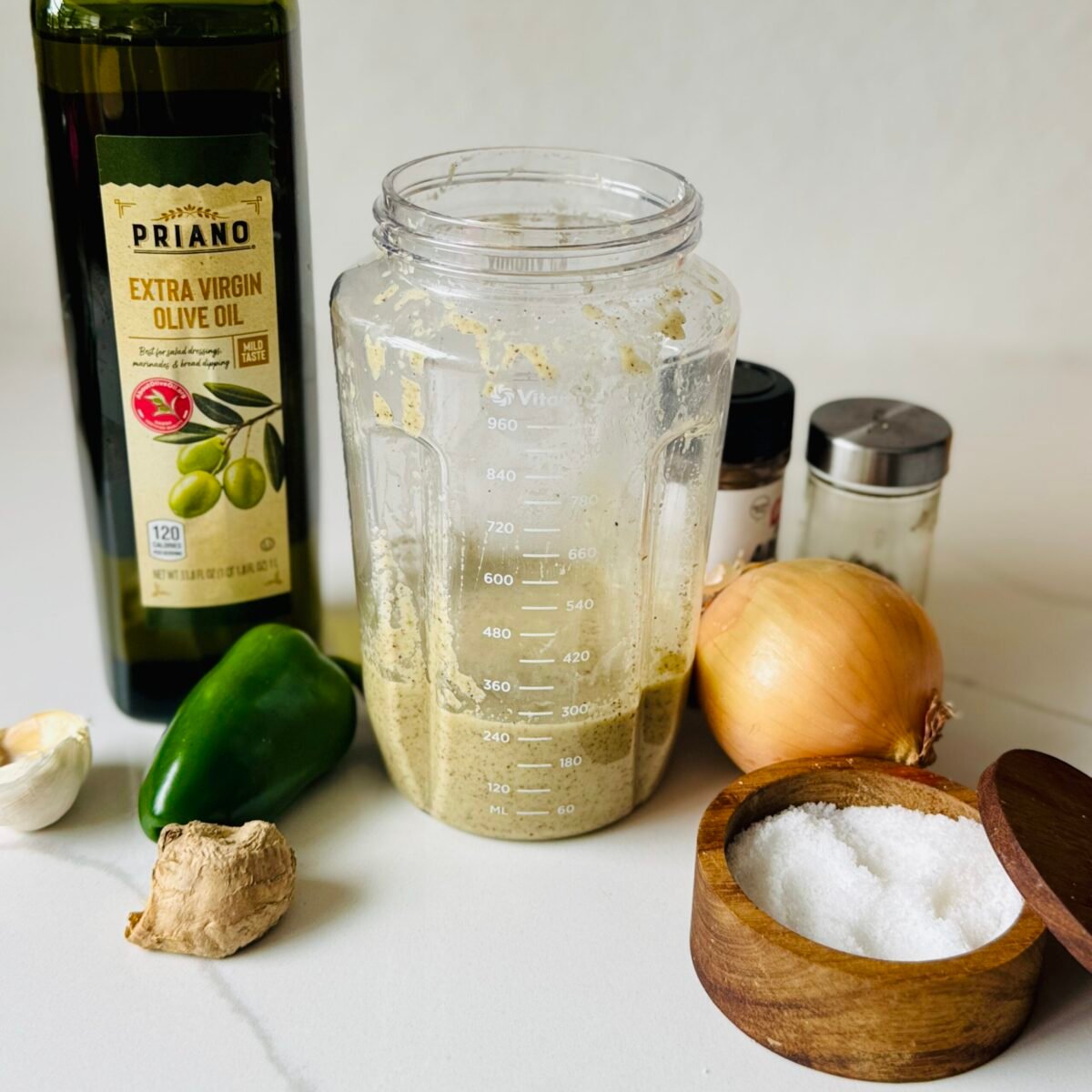
A Simpler Take on Jerk Marinade
Traditional Jamaican jerk cooking has a rich history and often includes ingredients like Scotch bonnet peppers, scallions, pimento (allspice), and a more layered seasoning blend. My version is inspired by those familiar flavors, but it is intentionally streamlined. I do not use a long spice list or ask you to hunt down specialty ingredients.
Allspice is really the backbone here. It has that unmistakable warm, almost clove-like flavor that gives the mixture character. Thyme adds a savory herbal note. Then the fresh ginger, garlic, onion, lime, and chilies do the rest of the work.
This is a marinade that makes sense for the way most of us cook at home: you can find the ingredients at a normal grocery store, throw them into a blender, and still get a big payoff in flavor.
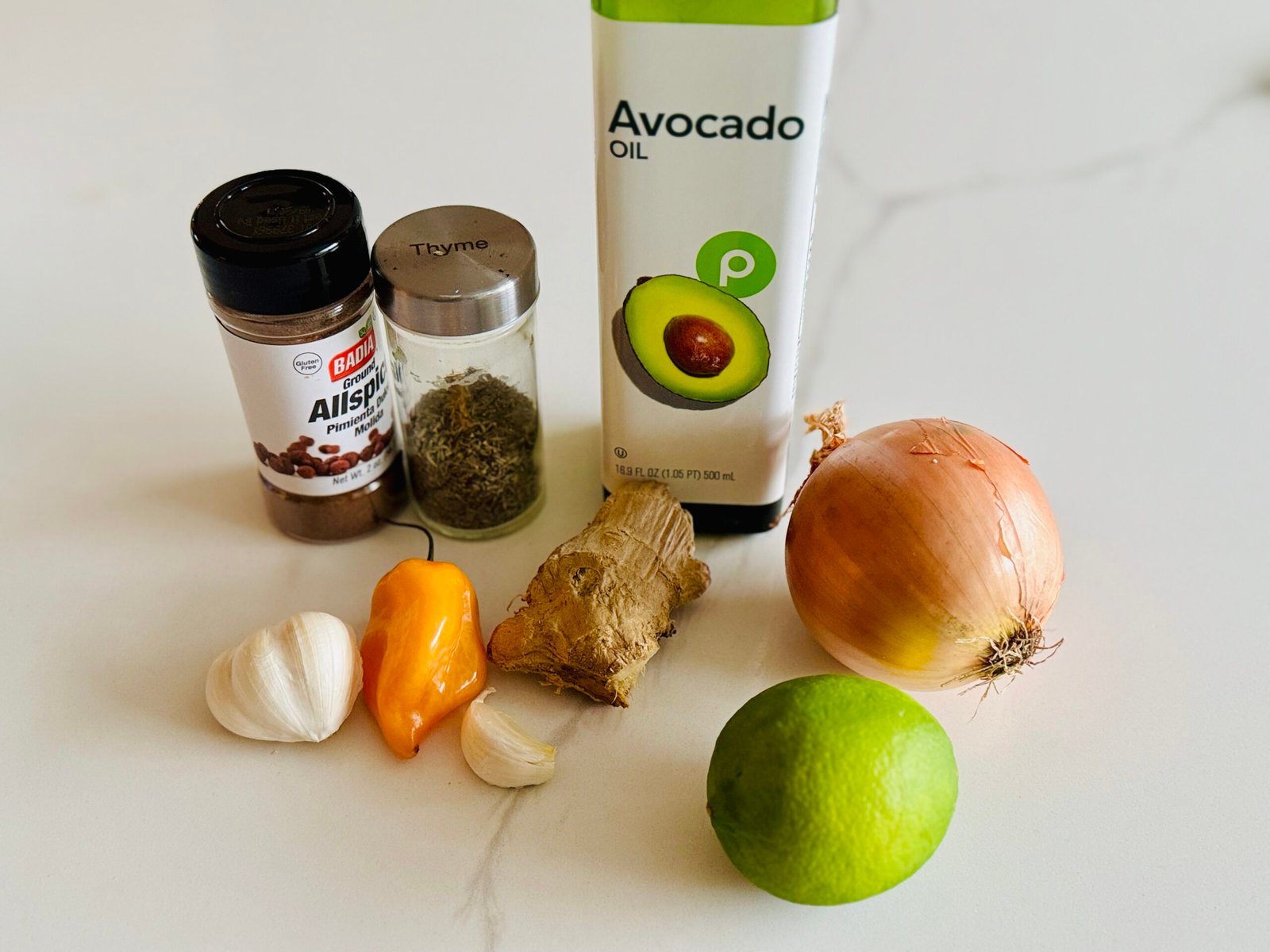
What Goes Into My Easy Jerk Marinade?
Onion and garlic
One small onion and four garlic cloves create the savory base. The onion also gives the blended marinade body, so it clings to the meat instead of running straight off.
Fresh ginger
About a one-inch piece of ginger gives the marinade a fresh, slightly peppery edge. It balances the warmer allspice and keeps the overall flavor lively.
Green chilies
I use two green finger chilies. If those are hard to find, a jalapeño works just fine. For more heat, leave more of the white ribs and seeds in; for a milder marinade, remove them. The ribs hold much of the pepper's heat, so taking out the seeds alone may not make as much difference as you expect. Taste carefully and adjust for your preference.
Ground allspice and dried thyme
You do not need an entire spice cabinet for this recipe. I use one and a half teaspoons of ground allspice and one and a half teaspoons of dried thyme. They bring that warm, herbal flavor that makes the marinade recognizable.
Fresh lime juice and olive oil
The juice of one lime brightens the mixture and adds a little acidity. A quarter cup of olive oil helps everything blend and coats the food more evenly. Avocado oil also works when that is what I have on hand.
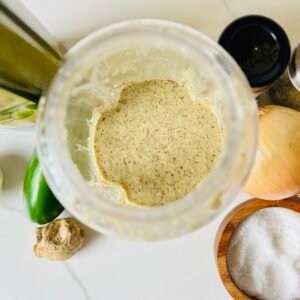
One note on salt: This is my basic eight-ingredient blend, without a salty bottled sauce mixed in. Season the protein itself with salt to taste before cooking. It is an important finishing detail, especially when grilling or roasting.
How to Make It: Everything Goes Into the Blender
There is almost no technique to making the actual marinade, and that is part of what I love about it. Peel and quarter the onion, peel the garlic, roughly chop the ginger, and prepare the chilies. You do not need to mince anything finely because the blender will do that for you.
Put the onion, garlic, chilies, ginger, allspice, thyme, lime juice, and oil in a tall blending container. I usually reach for my immersion blender because it is quick and easy to clean. If you are shopping for one, a Vitamix immersion blender (affiliate link) is an option, but you do not need special equipment: a small food processor or a regular blender works just as well.
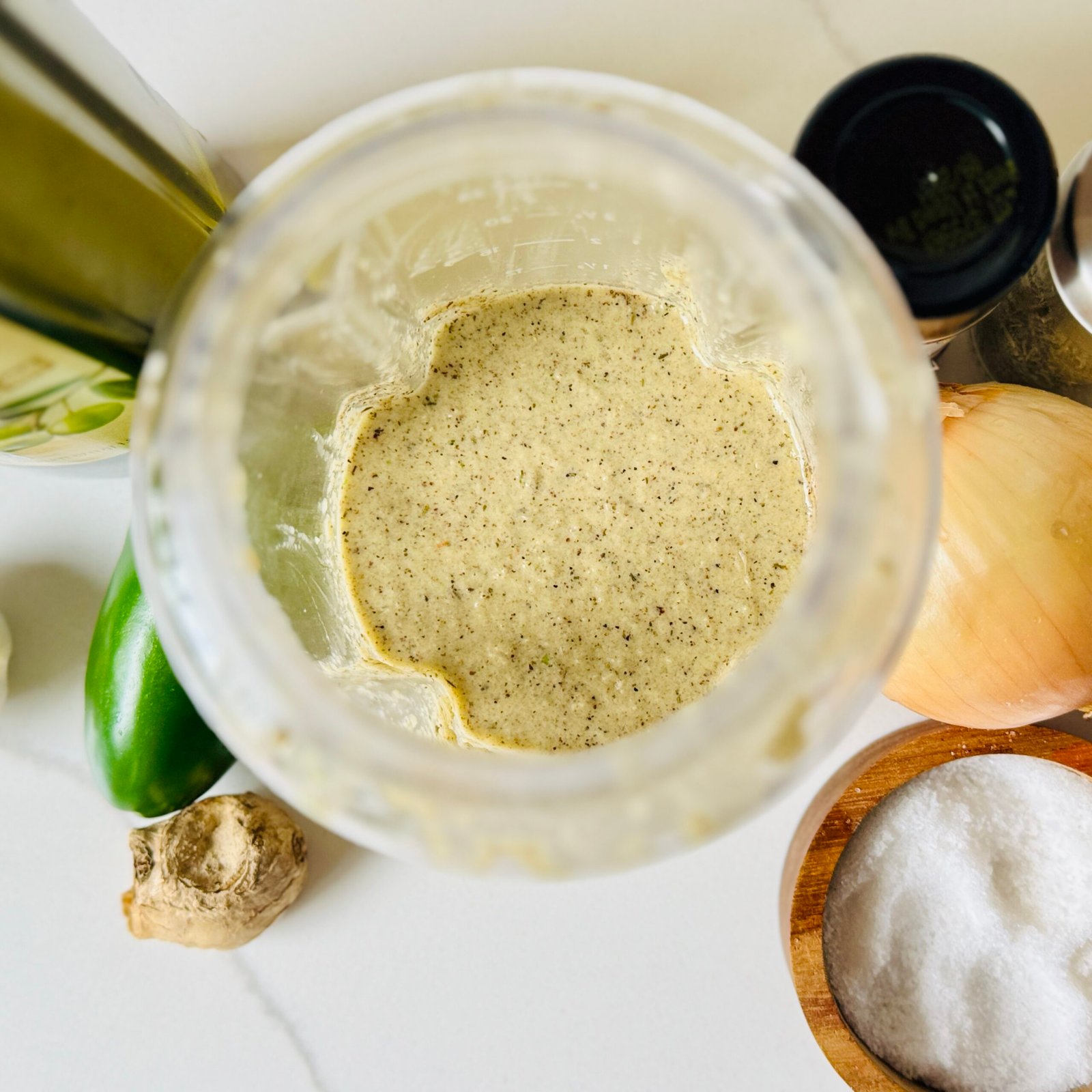
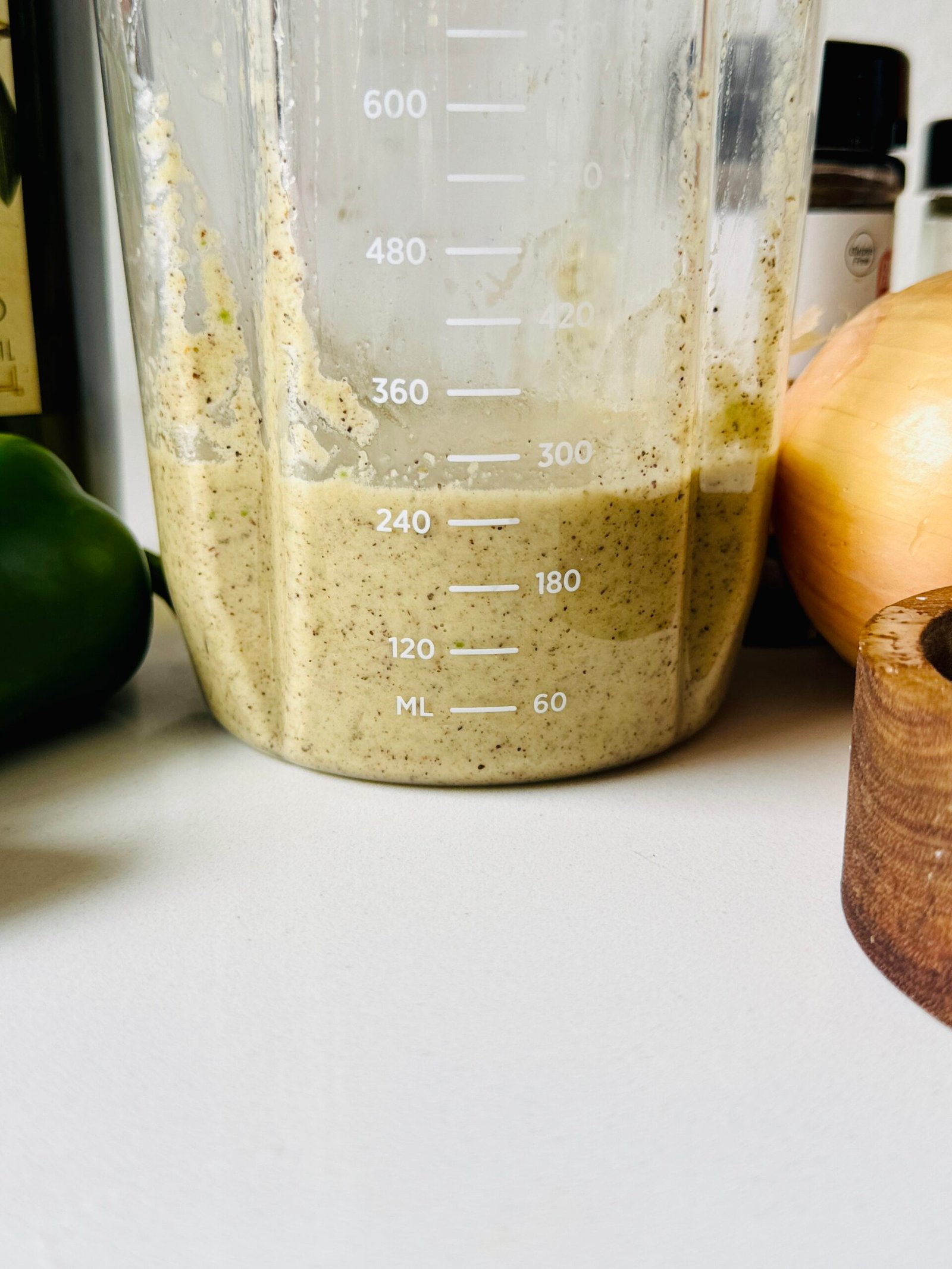
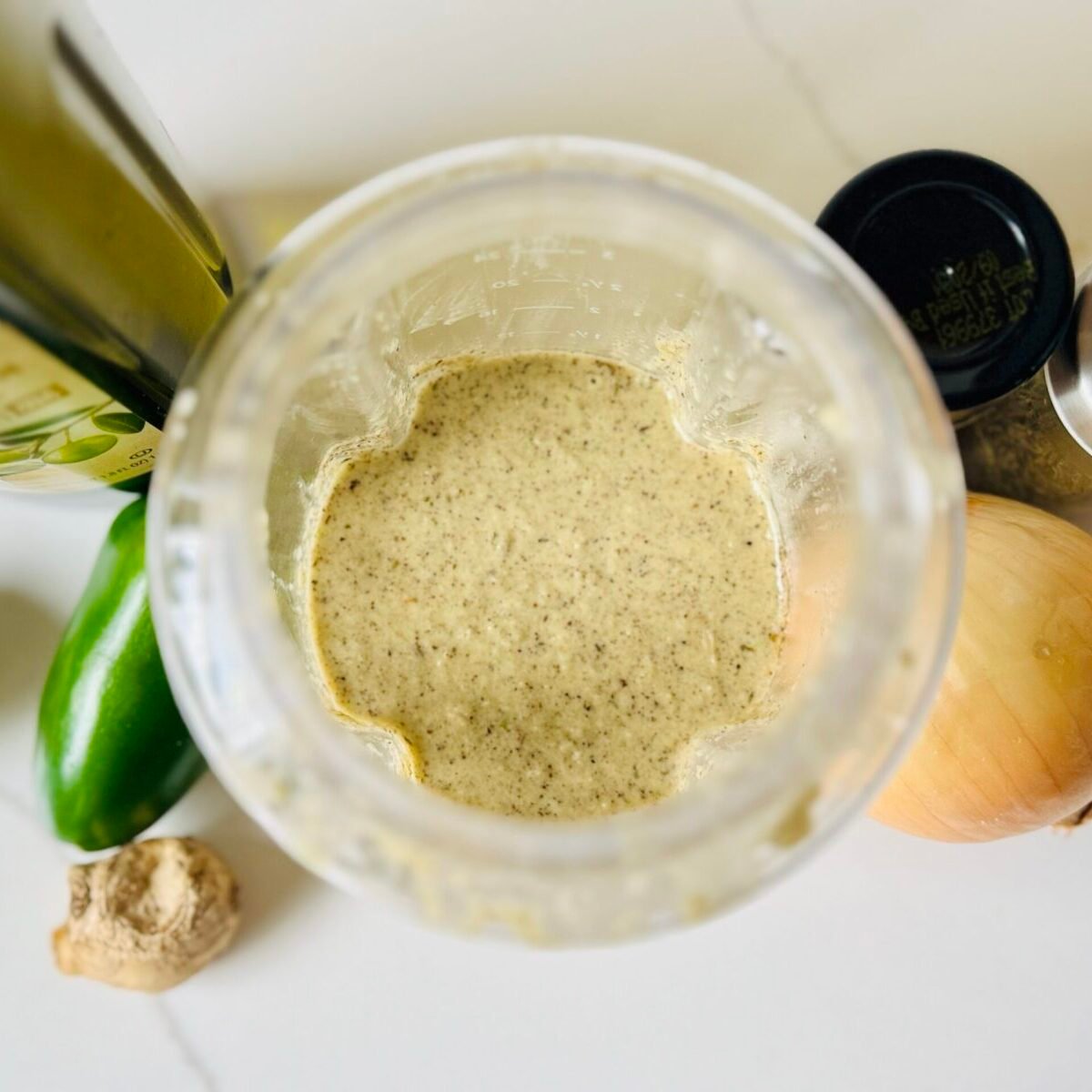
Blend until the mixture comes together. You can make it completely smooth, or leave it just a little chunky for some texture. I tend to keep a little texture, especially when I am using it on chicken that is going on the grill or into the oven.
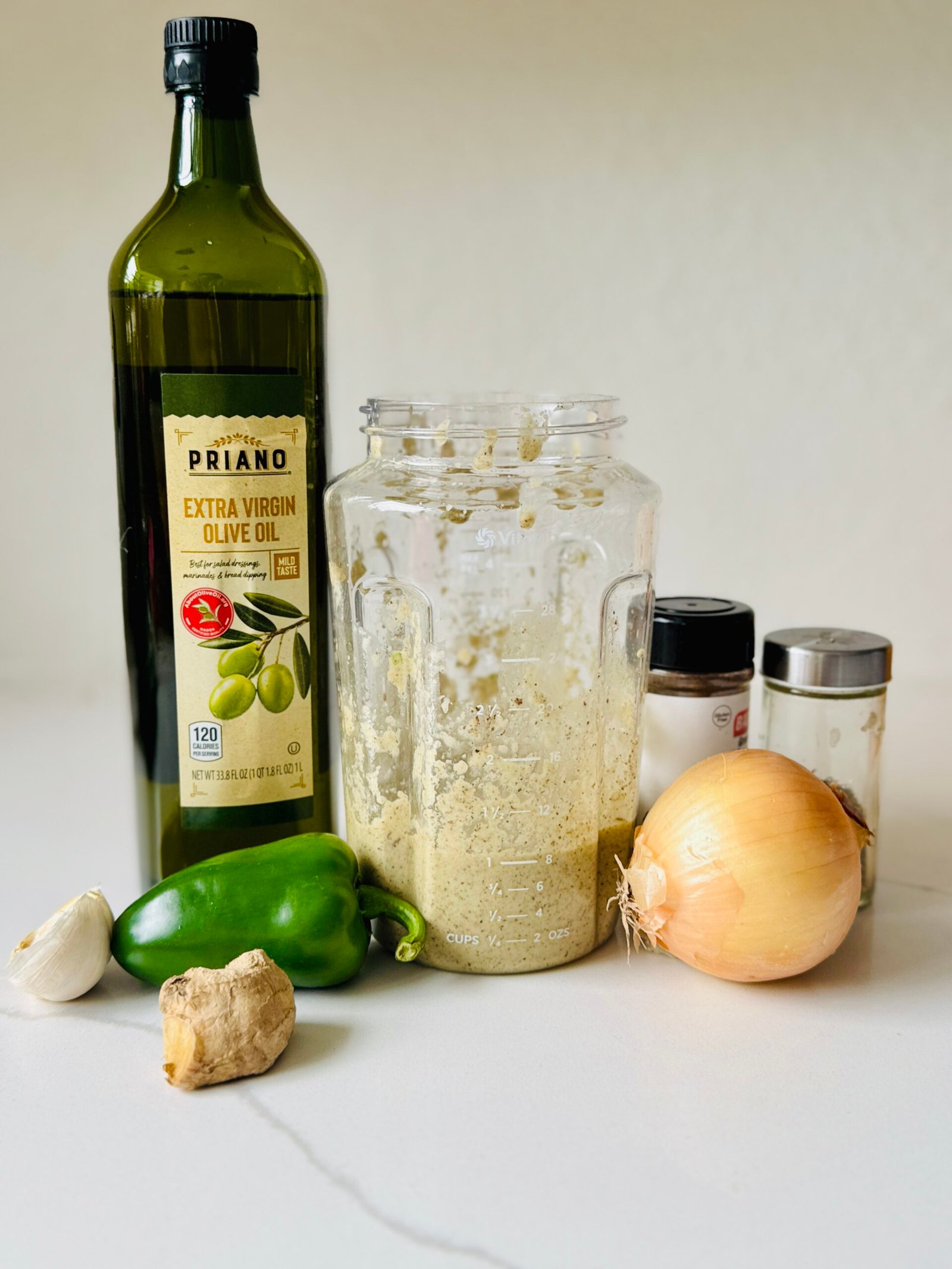
Now comes the part I really want you to remember: before you add the marinade to any raw chicken, meat, or fish, set aside a clean portion for another use.
The Best Marinade Habit I've Learned: Reserve Some
Whenever I make a marinade, I try to think beyond the piece of meat I am seasoning. I almost always reserve some of the mixture first. It is a small habit that has made a huge difference in how complete my meals taste.
A marinade does a great job building flavor on the surface of food, but cooking changes those fresh aromatics. Some of that brightness becomes softer or gets lost in the heat. So why not bring those flavors back somewhere else in the meal?
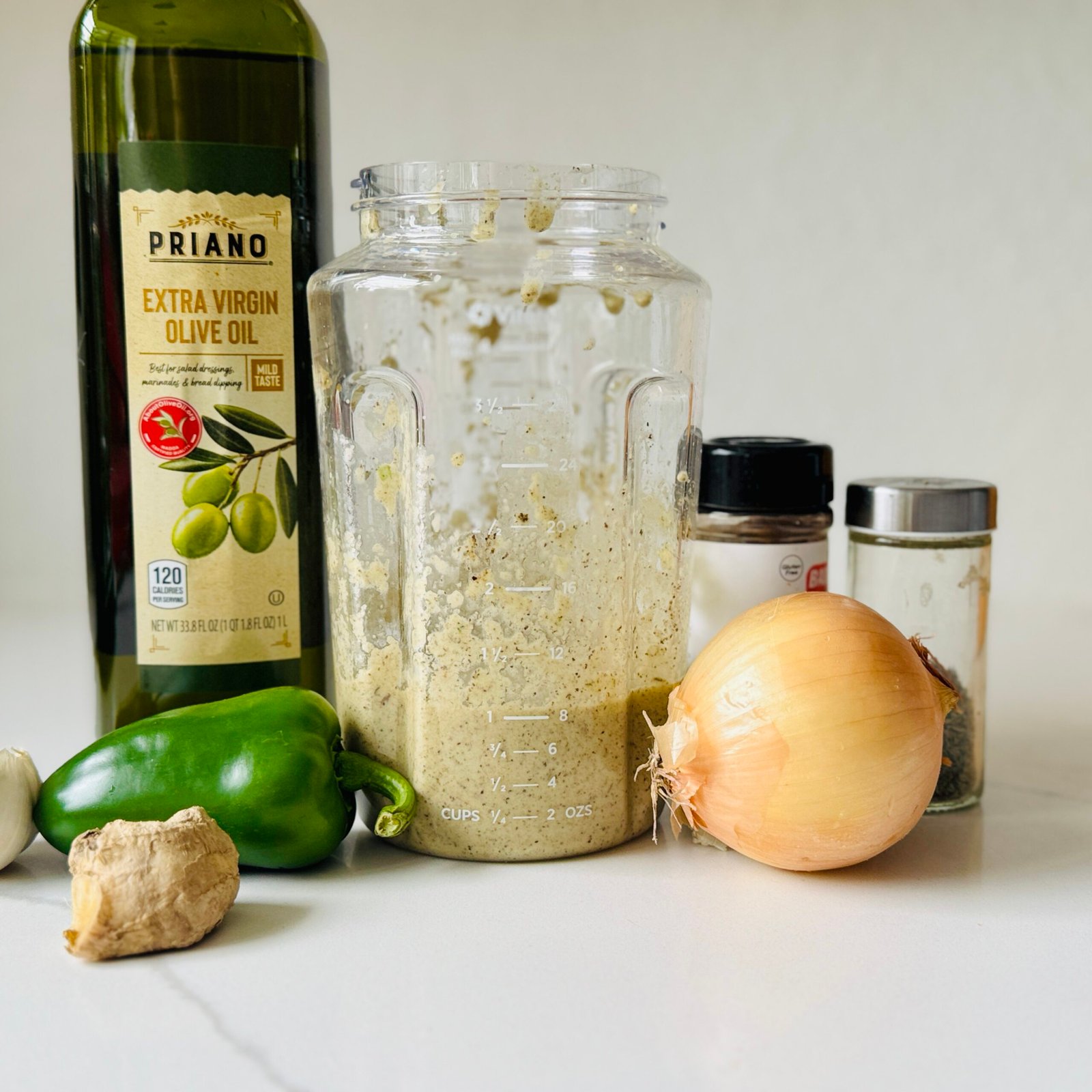
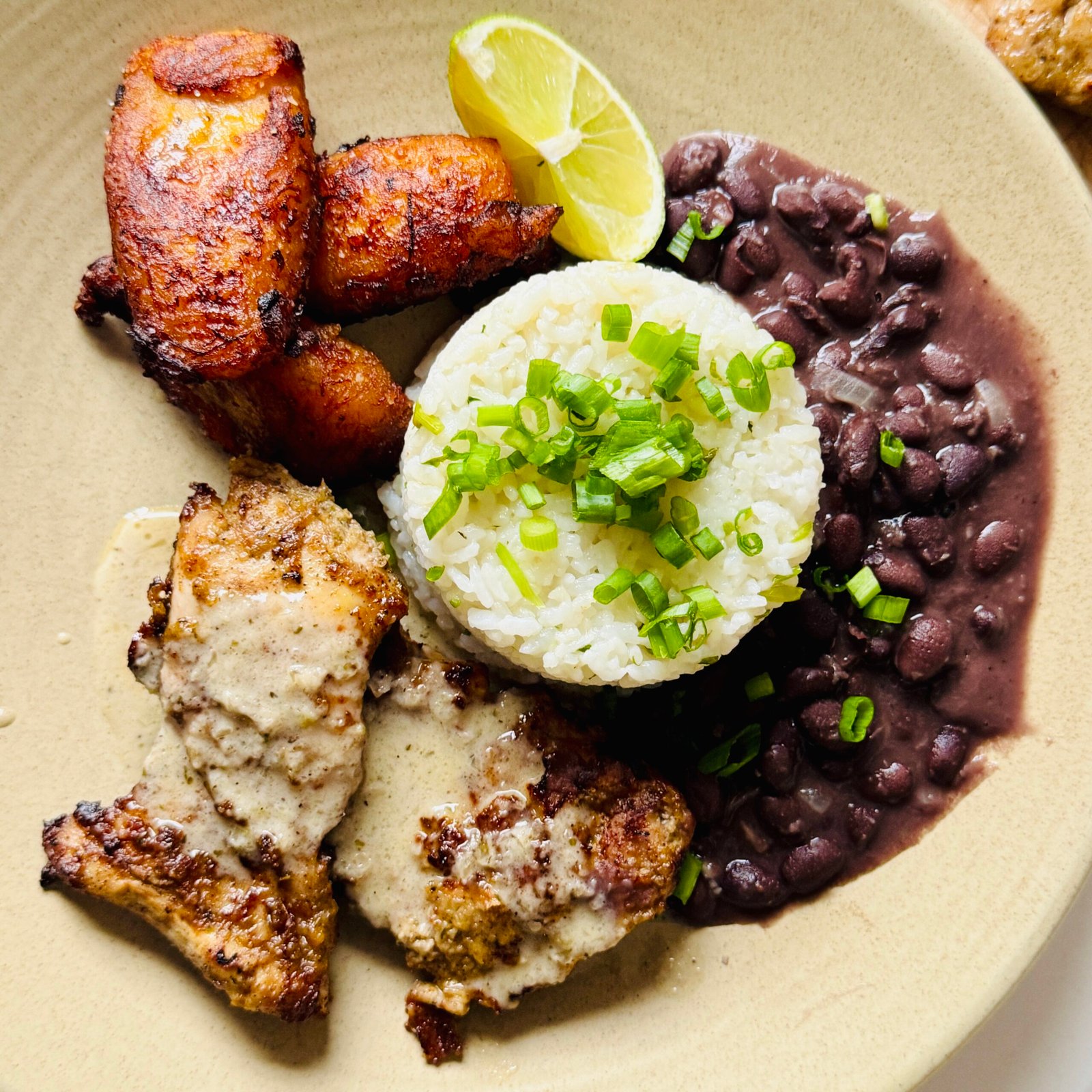
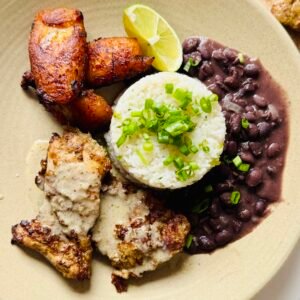
With this jerk marinade, I like setting aside about a quarter cup before it touches raw protein. That clean reserved portion can help season beans, become the base of a cooked pan sauce, or be simmered into a finishing sauce. If I am making rice, beans, chicken, and plantains, for example, I want those flavors to connect instead of the chicken tasting like it belongs to a completely different meal.
For beans: Start with a spoonful of clean reserved marinade in the pot and let it cook with the aromatics before you add the rest of your ingredients. That small amount can give an otherwise simple pot of beans so much character.
For a finishing sauce: Simmer clean reserved marinade with a splash of water or stock until the onion, garlic, and chilies have cooked through, then adjust the consistency and seasoning. The exact sauce can change depending on what you are serving. You are using the same flavor foundation without needing to start from scratch.
Just keep the food-safety distinction clear: reserve your sauce portion before the marinade contacts raw protein. Once it has touched raw meat or fish, do not use it as an uncooked sauce. A marinade that has contacted raw protein needs thorough cooking before any reuse.
If this approach sounds familiar, it is the same idea behind my Soy Ginger Marinade and Glaze and Lemon Dijon Chicken Marinade with Pan Sauce: one flavor base can do more than one job in dinner.
How Long Should You Marinate?
That depends much more on the protein than on the name of the marinade. Chicken thighs and pork can handle more time; delicate fish needs very little. Longer is not automatically better, especially with fresh lime juice in the mixture.
As a practical starting point, I like a couple of hours for chicken or pork, a shorter marinade for steak, and just 15–30 minutes for fish or shrimp. Chicken thighs can comfortably sit longer than delicate fish. Keep everything covered in the refrigerator while it marinates.
I have a more detailed breakdown for chicken breasts, thighs, pork chops, steak, fish, and other proteins in my How Long to Marinate Guide. It is worth bookmarking if you make marinades regularly.
How to Cook with This Marinade
On the grill
Grilling is a natural match because the ginger, garlic, and allspice work so well with a little char. Let excess marinade drip off before putting food over direct heat so the wet aromatics do not burn before the meat cooks through. Use a moderate heat zone when cooking thicker cuts.
In the oven
This is my easy weeknight option. Spread the marinated protein in a baking dish or on a lined sheet pan and cook according to the cut and size. Finish under the broiler briefly if you want deeper browning, watching carefully because the aromatic paste can darken quickly.
In a skillet
Use a lightly oiled, preheated pan and avoid crowding it. Remove excess wet marinade from the surface so the meat can actually brown instead of steam. If a little flavor remains in the pan, it can become part of your sauce—but be sure anything exposed to raw meat is cooked thoroughly.
What Can You Use This Jerk Marinade On?
Chicken: Boneless or bone-in thighs are especially good because they stay juicy and take on the warm spice flavors beautifully. Breasts also work when cooked carefully.
Pork: Pork chops and tenderloin pair naturally with the ginger, thyme, and allspice. The same marinade can be used for other cuts, with the cooking method and time adjusted accordingly.
Fish: Firm fish works well, but use a much shorter marinating time. The lime juice makes this one a little different from an oil-only seasoning mixture.
Steak: I particularly like this option when I want a steak dinner with a different flavor direction. You do not need to hide the flavor of the beef—just use enough marinade to coat it.
When I turn this into a full dinner, I like pairing it with coconut rice, beans, sweet plantains, and a sauce. That is the kind of meal where the reserved marinade really proves its value. The separate jerk chicken meal post will walk through those components together.
Can You Make It Ahead?
Absolutely. This marinade actually makes a lot of sense to prepare before dinner day. Keep it in a clean, airtight container in the refrigerator and aim to use it within two days for the best fresh flavor. For longer storage, freeze it in small portions, ideally labeled for the protein or meal you plan to make. Thaw it in the refrigerator.
If you are making enough for several dinners, portion and store the clean marinade before it touches any raw protein. That way you can use one portion for chicken, another for pork, and still have some ready for a sauce.
Frequently Asked Questions
Is this a traditional Jamaican jerk marinade?
It is a simplified, Jamaican-inspired version. It leans on recognizable jerk flavors like allspice, thyme, chilies, and fresh aromatics without trying to recreate every element of traditional Jamaican jerk cooking.
Can I use a jalapeño instead of green finger chilies?
Yes. One medium jalapeño is a practical substitution for two green finger chilies. Adjust the ribs and seeds to control the heat, and taste as you go.
Do I need a full-sized blender?
No. My favorite tool for this is an immersion blender in a tall container. A regular blender or food processor works, too. You just want the fresh ingredients broken down enough to coat the food evenly.
Can I use dried ginger instead of fresh?
I really recommend fresh ginger here. The recipe depends on just a few ingredients, and the brightness of fresh ginger is a big part of why it works so well.
Can I use the marinade as a sauce?
Yes, as long as you set aside a clean portion before it touches raw protein. I usually cook that portion with a little liquid to make a finishing sauce or add it to the beans. Do not serve raw-meat-contact marinade without thoroughly cooking it.
Does the marinade need sugar or soy sauce?
Not in this version. There are delicious jerk recipes that use those ingredients, but I love how much flavor this simpler mixture develops without them. You can always build on the flavor later in the sauce or side dishes.
Easy Jerk Marinade Recipe
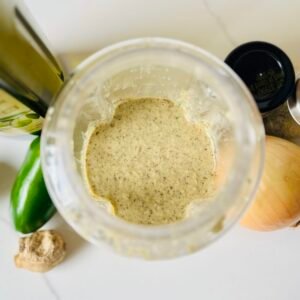
Easy Homemade Jerk Marinade (Fresh, Simple, and Versatile)

Equipment
- Immersion blender A regular blender or food processor works just as well
- Tall blending container If using an immersion blender
- Clean small jar or bowl with lid For reserving marinade before it touches raw meat
Ingredients
Simple Jerk-Inspired Marinade
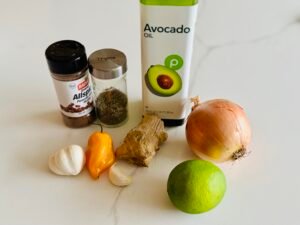
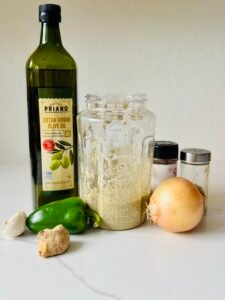
- 1 small onion peeled and quartered
- 4 garlic cloves peeled
- 2 green finger chilies or 1 jalapeño; remove the white ribs and seeds for less heat
- 1 inch fresh ginger peeled and roughly chopped
- 1 ½ teaspoons ground allspice
- 1 ½ teaspoons dried thyme
- 1 lime juiced, about 2 tablespoons
- ¼ cup olive oil or avocado oil
Instructions
- Peel and quarter the small onion. Peel the garlic cloves and the 1-inch piece of ginger. Remove the stems from the green finger chilies or jalapeño; adjust the seeds and white ribs depending on your heat preference.

- Add the onion, garlic, chilies, ginger, ground allspice, dried thyme, freshly squeezed lime juice, and olive oil to a tall jar, food processor, or blender. Blend until smooth or leave it slightly chunky if you prefer some texture.

- Before the marinade touches any raw chicken, meat, or fish, transfer about ¼ cup to a clean covered container for seasoning cooked beans or making a cooked finishing sauce. Never return a utensil used on raw protein to the reserved portion.

- Use the remaining marinade to coat approximately 1 ½–2 pounds of chicken, pork, fish, or steak. Season the protein with salt to taste, since this basic marinade does not contain a salty sauce. Cover and refrigerate while marinating.
- As a starting point, allow 2–8 hours for chicken thighs or pork, 30 minutes to 4 hours for steak, or 15–30 minutes for firm fish or shrimp. Adjust for the cut and thickness; see the full marinating-times guide linked in the blog post.
- Grill, roast, bake, or pan-cook the protein until it reaches the appropriate safe internal temperature for that food. Use the clean reserved portion to season beans or simmer it with liquid for a finishing sauce. Never serve marinade that contacted raw meat without fully cooking it.
Notes
Nutrition
The Last of My Five Foundational Marinades
This jerk-inspired marinade rounds out the five flavor foundations I reach for most often. Alongside it are my Mojo Citrus Marinade, Greek Yogurt Chicken Marinade, Soy Ginger Marinade and Glaze, and Lemon Dijon Chicken Marinade.
They are different flavor directions, but the principle is the same: a few thoughtfully chosen ingredients can make everyday cooking a lot more interesting. If there is one technique I hope you take from this series, it is to think about how a marinade can become the flavor thread through the entire meal, not just the protein.
Of all five, I keep coming back to this one. It asks very little of you, and it gives you so much in return.
Time in the kitchen is never wasted.



Comments
No Comments