
If you want a drink to taste more lemony, adding more lemon juice is not always the answer. Juice gives you acidity. The peel gives you the fragrance.
That is what makes lemon oleo-saccharum so useful. Sugar sits with fresh lemon peel and slowly pulls out the fragrant citrus oils. After a few hours, the sugar becomes glossy, intensely aromatic, and deeply lemony. Add a little hot water to dissolve it into a pourable syrup, and you have a flavor builder that can move from lemonade to spritzes to cocktails.
I used this batch in four drinks: Better Lemon Oleo Lemonade, a Grapefruit-Lemon Oleo Ginger Spritz, Lemon Oleo Rum Punch, and a Lemon Oleo French 75.
If you want to compare this method with steeping, simmering, and fruit maceration, start with my guide to making flavored syrups for drinks. Oleo-saccharum is the citrus-peel method.
Jump to: Make the syrup · Better Lemon Oleo Lemonade · Grapefruit-Lemon Oleo Ginger Spritz · Lemon Oleo Rum Punch · Lemon Oleo French 75
Quick answer: What is lemon oleo-saccharum?
Lemon oleo-saccharum is a citrus syrup made by coating lemon peels with sugar and giving the mixture time to rest. The sugar pulls aromatic oils and moisture from the peel. Once the extraction is complete, hot water is added to dissolve the sugar into a smooth syrup.
The result tastes more fragrant than ordinary lemon simple syrup because the flavor comes from the peel as well as the juice used later in the finished drink.
Why the lemon peel matters
Fresh lemon juice is bright, sharp, and acidic. Lemon peel carries a different part of the fruit: its perfume.
When sugar rests against the peel, it draws out those fragrant oils before water dilutes them. That gives you a syrup that makes lemonade, punch, and sparkling drinks smell intensely lemony without forcing you to add so much juice that the drink becomes aggressively sour.
This is also why I try to remove as little white pith as possible. The yellow peel is where the aromatic oils live; the thick white layer underneath can add bitterness.
Ingredients for lemon oleo-saccharum syrup
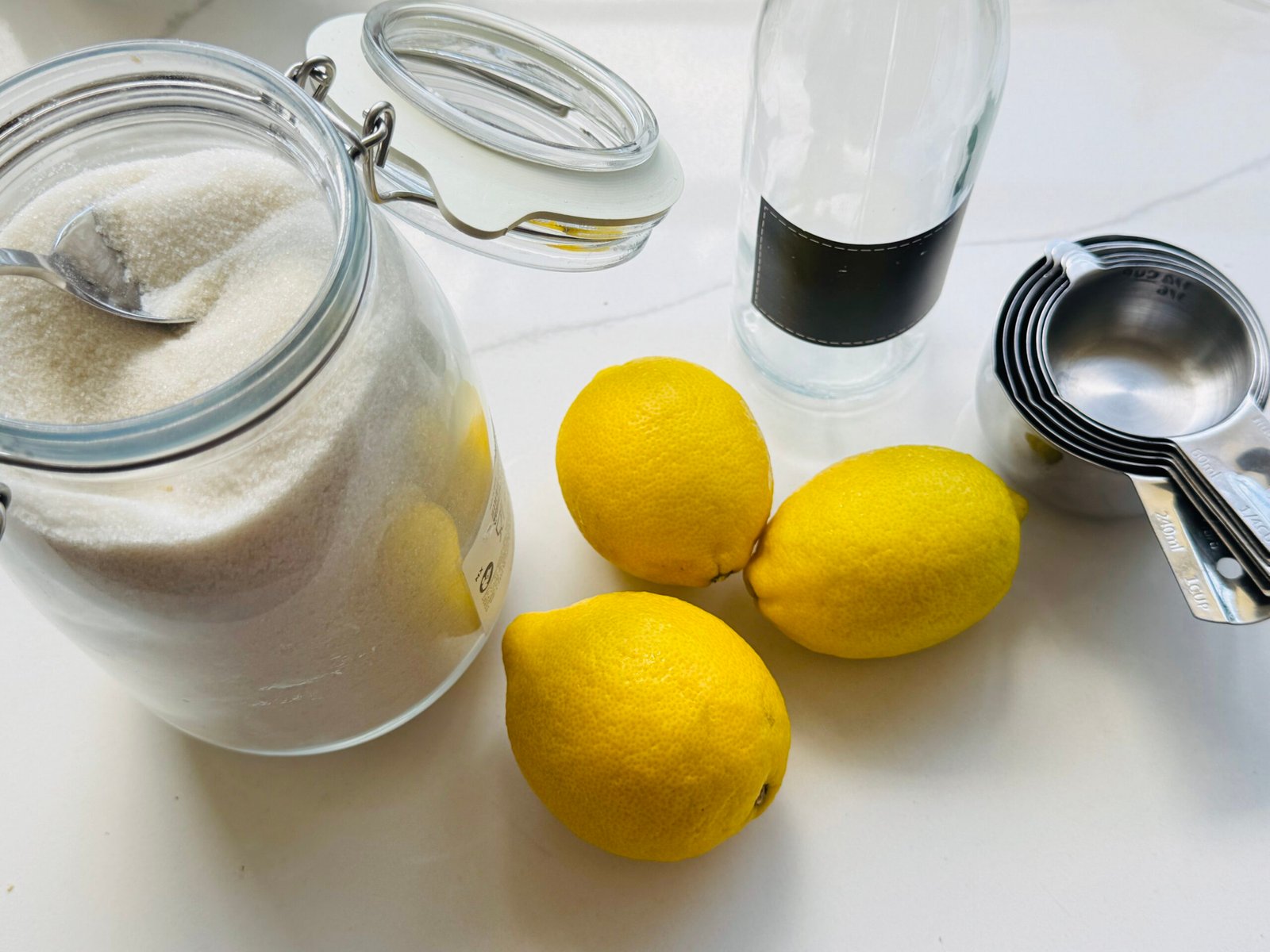
- Peels from 6 lemons: Use a vegetable peeler and take mostly the yellow outer peel.
- 1 cup granulated sugar: Sugar is both the sweetener and the extraction tool.
- ¾ to 1 cup hot water: This dissolves the lemon-scented sugar after the extraction. Start with less for a more concentrated syrup.
- Pinch of salt: A tiny amount sharpens the finished flavor.
How to make lemon oleo-saccharum step by step
1. Peel the lemons
Wash and dry the lemons, then remove wide strips of yellow peel. Avoid digging deeply into the white pith.
2. Rub the peels with sugar
Add the peels and one cup of sugar to a bowl or jar. Rub and massage them together until the sugar begins to smell strongly of lemon and looks slightly damp.
3. Let the peel and sugar rest
Cover and let the mixture sit for 3 to 24 hours. Three hours works, overnight is better, and a full day is usually plenty. As it rests, you will see a glossy citrus syrup collecting around the peels.
4. Add hot water
Add ¾ cup hot water and stir until the remaining sugar dissolves. If you want a looser syrup, add the remaining ¼ cup.
5. Strain and refrigerate
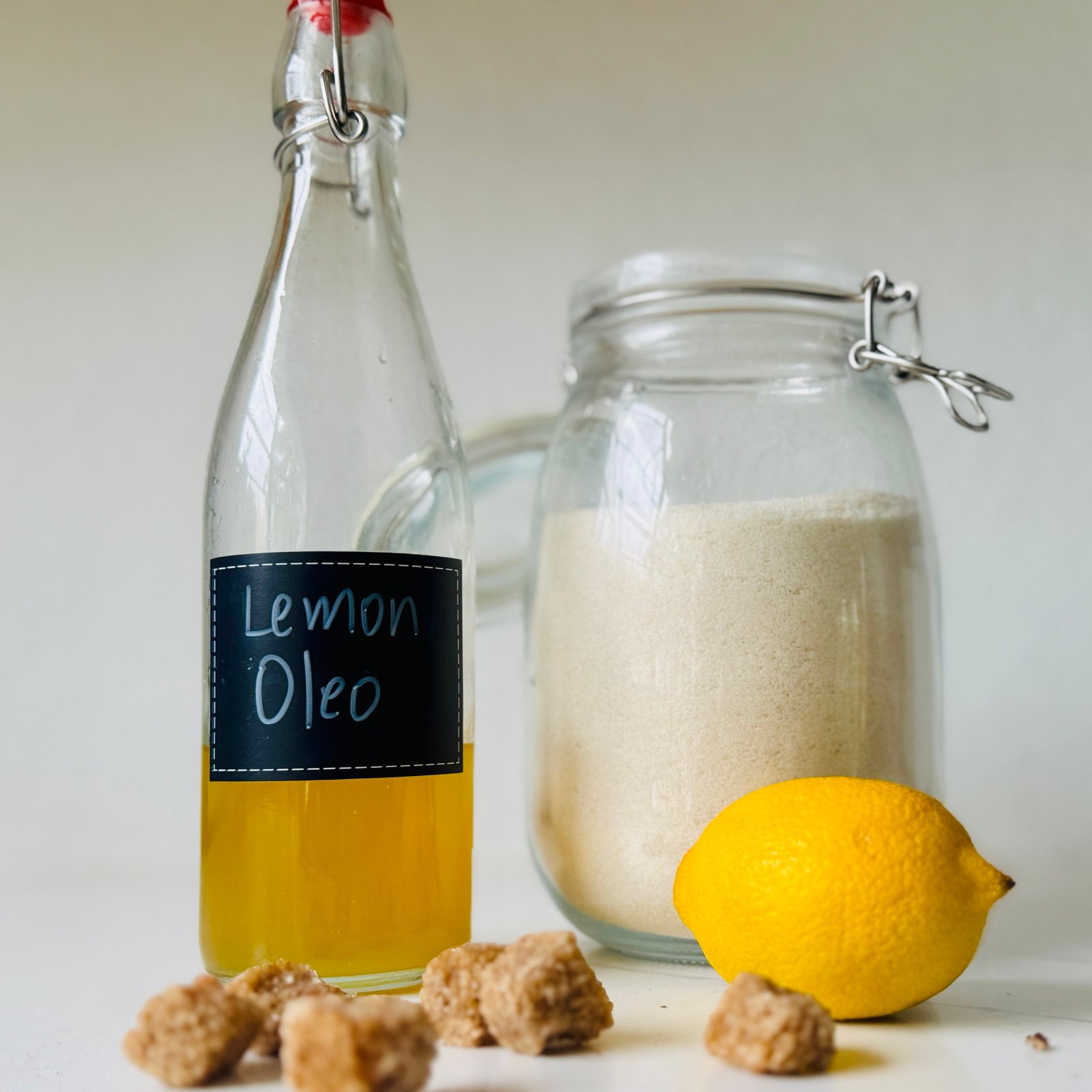
Strain out the peels, stir in a pinch of salt, cool the syrup completely, and transfer it to a clean bottle or jar.
How much lemon oleo should you use in a drink?
Because this syrup carries both sweetness and intense peel aroma, it works best when it is balanced with fresh citrus, water, bubbles, or spirits.
| Drink | Lemon oleo | Main balance |
|---|---|---|
| Better Lemon Oleo Lemonade | 2 oz | Lemon juice + cold water |
| Grapefruit-Lemon Oleo Ginger Spritz | 2 oz | Grapefruit + ginger beer + bubbles |
| Lemon Oleo Rum Punch | 2 oz | Rum + pineapple + orange + lemon |
| Lemon Oleo French 75 | 1 ½ oz | Gin + lemon + Champagne |
Better Lemon Oleo Lemonade
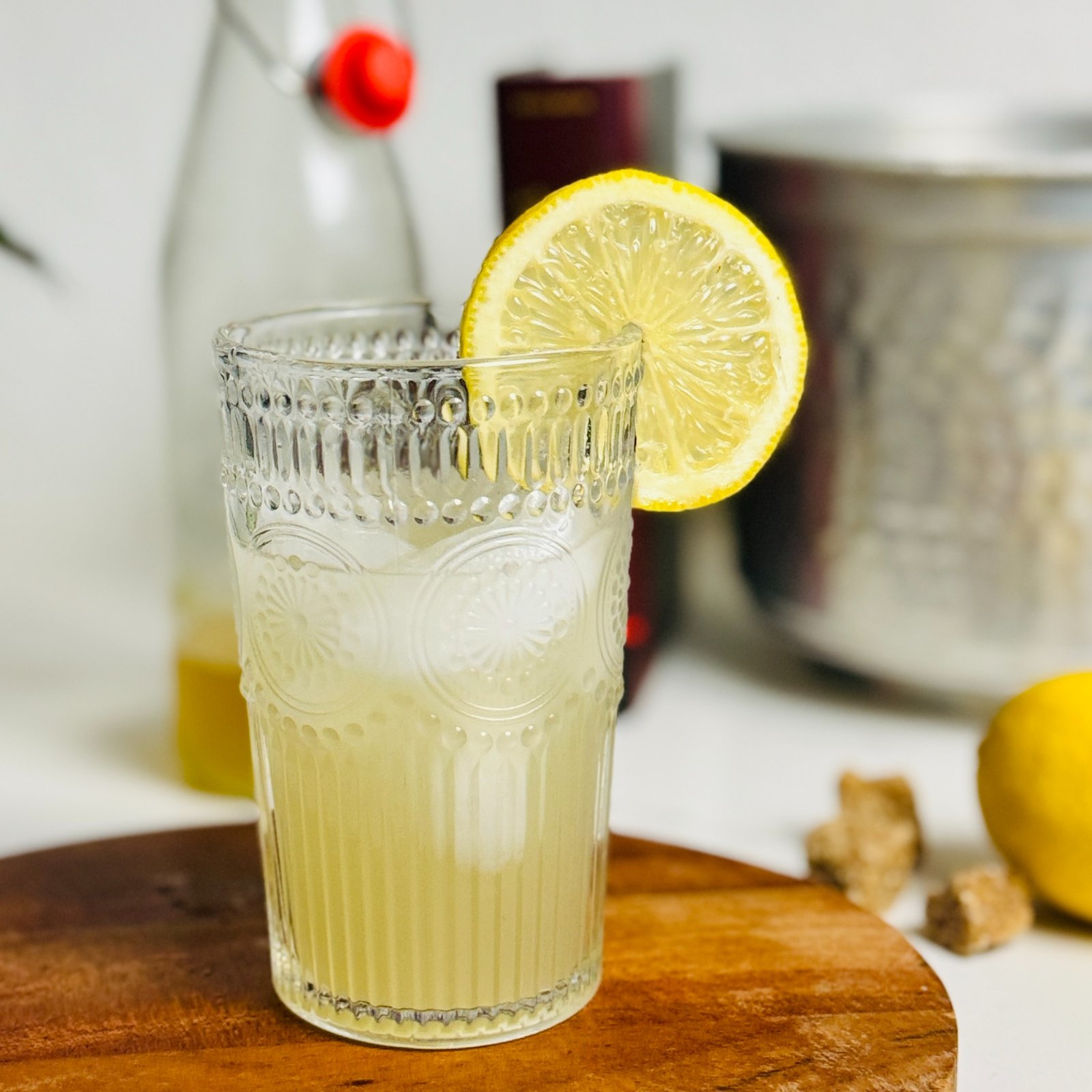
This is the drink that makes the reason for oleo-saccharum obvious. Lemon juice gives the lemonade its tartness, while the oleo gives it a fuller lemon aroma.
Ingredients
- 2 ounces lemon oleo-saccharum
- 1 ounce fresh lemon juice
- 5 ounces cold water
- Ice
- Lemon wheel or long lemon peel, for garnish
Instructions
- Add the oleo and lemon juice to a glass.
- Stir until completely incorporated.
- Add cold water and stir.
- Fill with ice.
- Garnish with a lemon wheel or long lemon peel.
Taste before serving. If your batch of oleo is especially concentrated, another ounce of cold water can bring the drink into balance without taking away the lemon flavor.
Grapefruit-Lemon Oleo Ginger Spritz
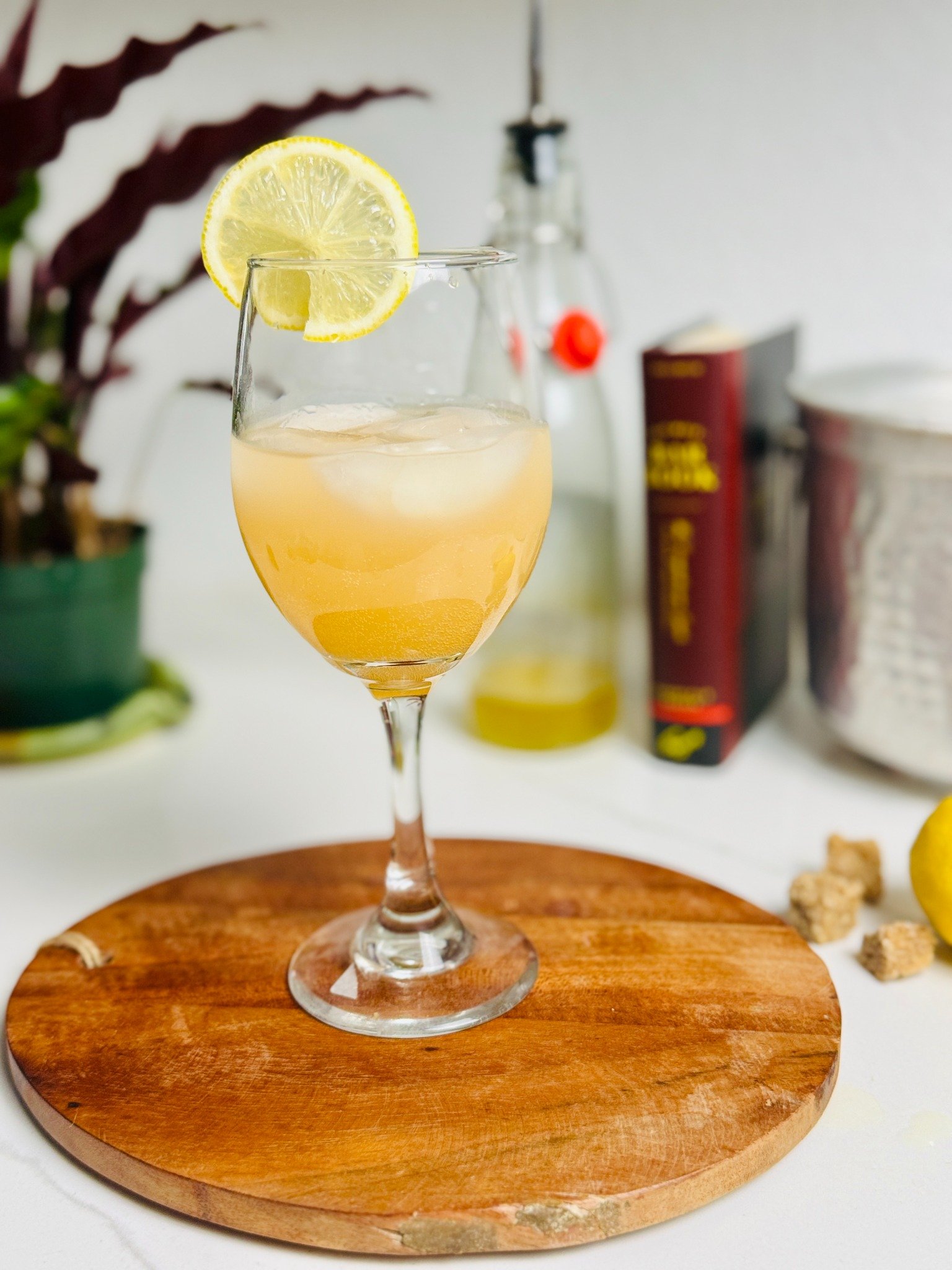
Grapefruit gives this zero-proof drink a pleasant bitterness, while ginger beer adds spice. I split the bubbles between ginger beer and sparkling water so the ginger supports the lemon instead of overwhelming it.
Ingredients
- 2 ounces lemon oleo-saccharum
- 2 ounces grapefruit juice
- 2 ounces ginger beer
- 2 ounces sparkling water
- Ice
- Grapefruit wedge or lemon twist, for garnish
Instructions
- Add the oleo and grapefruit juice to a wine glass.
- Stir well.
- Add ice.
- Slowly add the ginger beer.
- Finish with sparkling water.
- Stir once and garnish.
Lemon Oleo Rum Punch
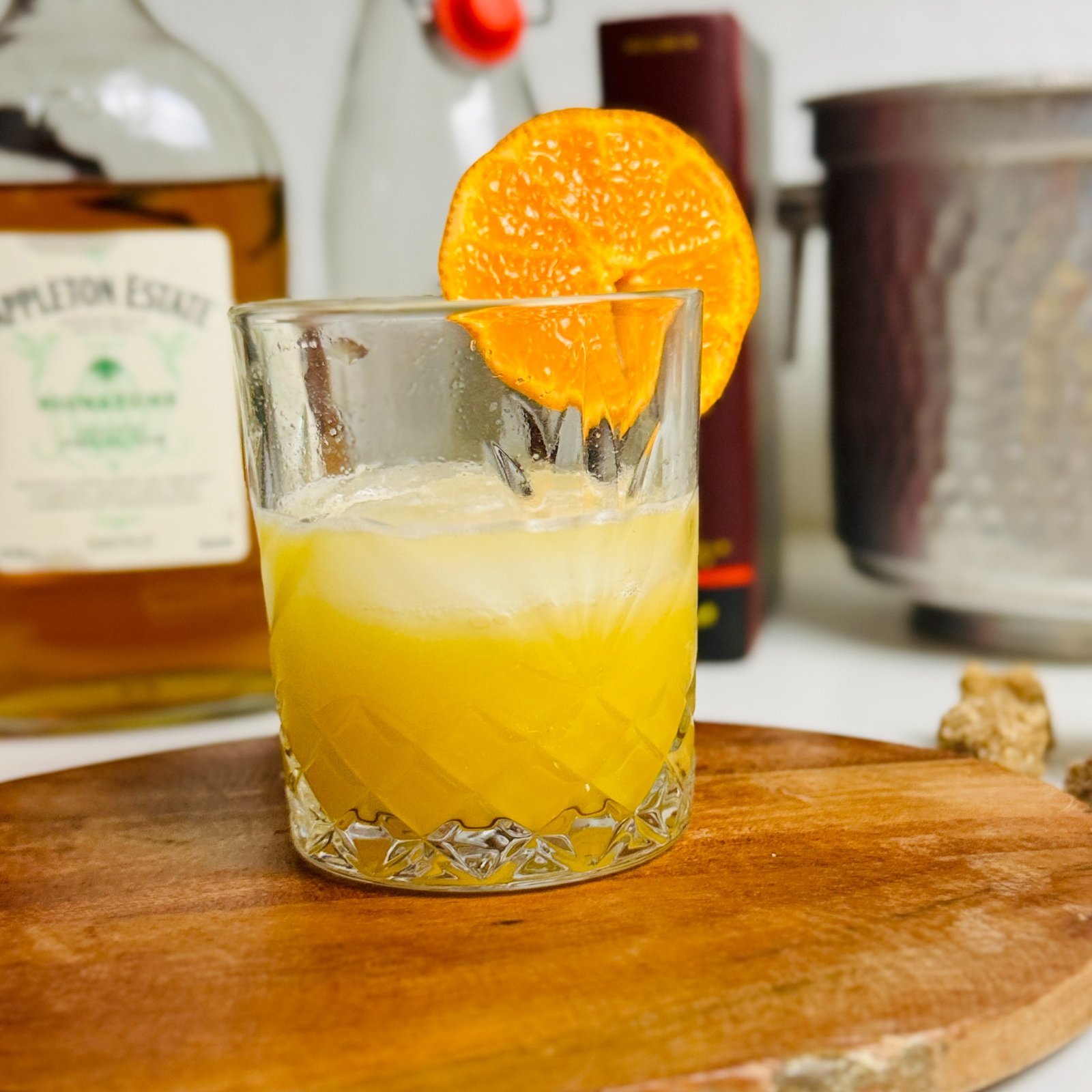
This is a small-format rum punch with pineapple, orange, lemon, and dark rum. The oleo gives all of that fruit a concentrated citrus backbone.
Ingredients
- 1 ½ ounces dark rum
- 1 ounce pineapple juice
- ¾ ounce orange juice
- ½ ounce fresh lemon juice
- 2 ounces lemon oleo-saccharum
- Ice
- Orange or lemon garnish
Instructions
- Add all ingredients to a shaker.
- Add ice and shake for about 12 seconds.
- Strain into a rocks glass over fresh ice.
- Garnish with orange, lemon, or both.
The dark rum brings enough depth to keep the punch from tasting like straight fruit juice, while the fresh lemon keeps the sweeter pineapple and orange in check.
Lemon Oleo French 75
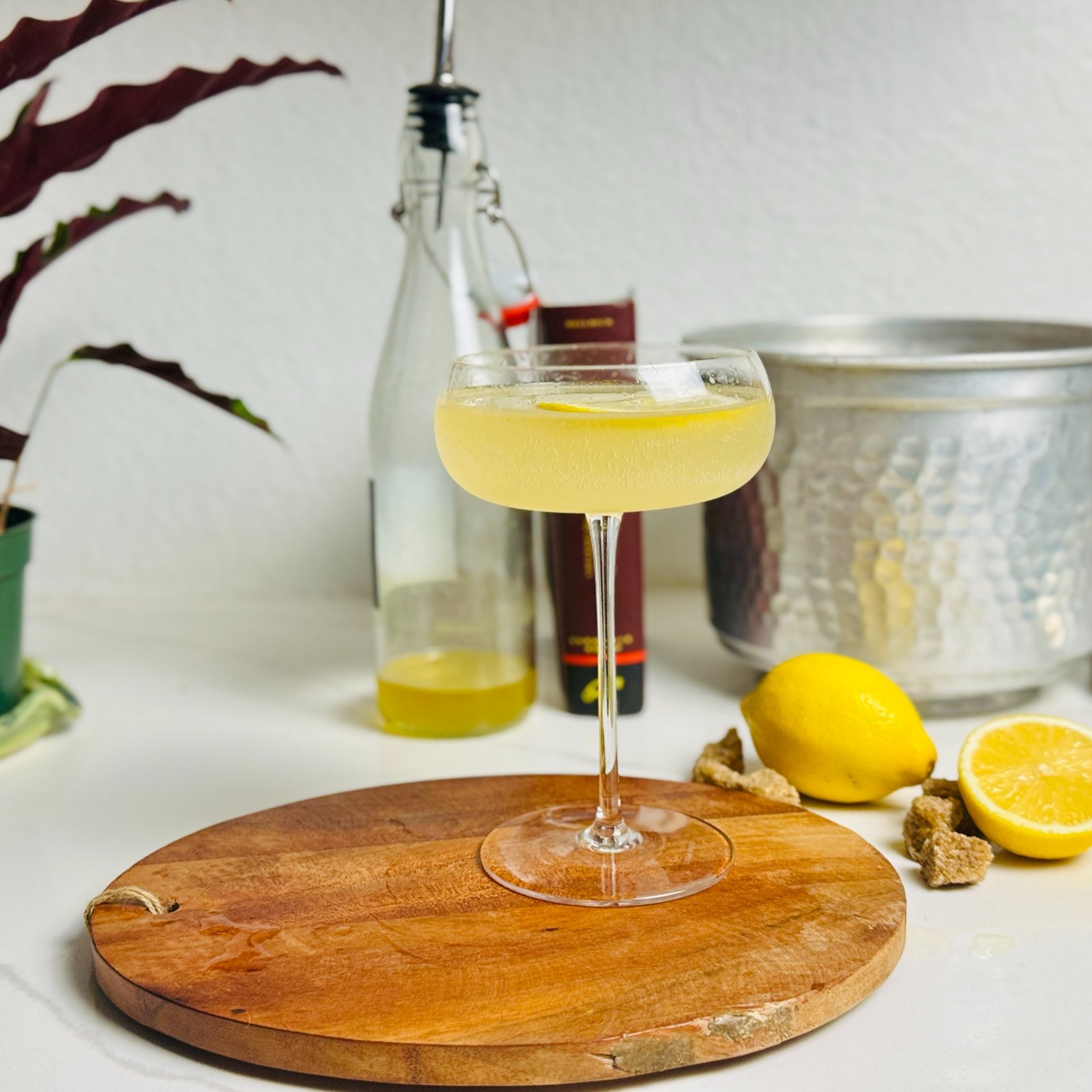
A French 75 is already built around gin, lemon, sweetness, and sparkling wine, so lemon oleo fits naturally into the structure. It gives the drink a stronger citrus aroma without adding more sourness.
Ingredients
- 1 ounce gin
- ½ ounce fresh lemon juice
- 1 ½ ounces lemon oleo-saccharum
- 3 ounces Champagne
- Lemon twist, for garnish
Instructions
- Add gin, lemon juice, and oleo to a shaker.
- Add ice and shake briefly.
- Double-strain into a flute or coupe.
- Slowly top with Champagne.
- Garnish with a lemon twist.
Use well-chilled sparkling wine and open it just before building the drink if you want the strongest bubbles.
More ways to use lemon oleo-saccharum
- Sweeten iced black tea or an Arnold Palmer.
- Add a spoonful to sparkling water.
- Use it as the sweetener in a large batch of lemonade.
- Add it to party punch with tea, citrus, and bubbles.
- Drizzle a small amount over berries, yogurt, pancakes, or cake.
- Use it anywhere a cocktail calls for simple syrup and fresh lemon.
Troubleshooting lemon oleo-saccharum
There is not much liquid after a few hours
Massage the peels and sugar again and give it more time. The exact amount of oil and moisture varies from lemon to lemon. An overnight rest usually produces a much glossier mixture.
The syrup tastes bitter
Too much white pith is usually the first thing to check. Peel shallowly and focus on the yellow outer layer.
The syrup is too thick
Add hot water a little at a time until it pours easily. The goal is a concentrated syrup, not a sticky paste.
The syrup tastes sweet but not especially lemony
Make sure the peels had time to rest with the sugar before water was added. The extraction step is where most of the aroma develops.
How long does lemon oleo-saccharum last?
Store the finished syrup in a clean, tightly closed container in the refrigerator and use it within about one to two weeks for best quality.
Discard it if you see mold, notice unexpected fermentation or pressure, or smell anything unpleasant. Homemade oleo-saccharum should stay refrigerated.
Frequently asked questions
What does oleo-saccharum mean?
The name describes the basic idea: oil and sugar. In practice, sugar is used to pull the aromatic oils from citrus peel.
Can I make oleo-saccharum with orange or grapefruit?
Yes. The same method works with other citrus peels, although each fruit gives a different balance of fragrance and bitterness.
Do I need lemon juice to make the syrup?
No. The core extraction comes from peel and sugar. I prefer adding fresh lemon juice later when building the drink so the acidity can be adjusted separately.
How long should lemon peels sit in sugar?
Three hours works, overnight is ideal, and about 24 hours is generally enough.
More lemon flavor without more sourness
That is what makes this syrup worth keeping around. You can make lemonade smell more lemony, give a spritz more depth, or make a sparkling cocktail feel more complete without simply squeezing in more juice.
It follows the same Pantry First logic as the rest of my Flavor Builders: make one concentrated component, then use it in several directions. If you want to compare methods, my fresh mint syrup uses an off-heat steep instead.
Time in the kitchen is never wasted.

Lemon Oleo-Saccharum Syrup

Equipment
- Vegetable peeler
- Medium bowl or jar with cover
Ingredients
- 6 lemons washed and dried; peel only
- 1 cup granulated sugar
- ¾-1 cup hot water
- 1 pinch fine salt
Instructions
- Remove wide strips of yellow peel from the lemons, avoiding as much white pith as possible.
- Add the peels and sugar to a bowl or jar. Rub and massage them together until the sugar smells strongly of lemon and looks damp.
- Cover and let the mixture rest for 3 to 24 hours, until glossy syrup collects around the peels.
- Add ¾ cup hot water and stir until the sugar dissolves. Add the remaining ¼ cup for a looser syrup.
- Strain out the peels, stir in the salt, cool completely, and transfer to a clean bottle or jar.
Comments
No Comments