
A saucy weeknight noodle dinner with chewy rice noodles
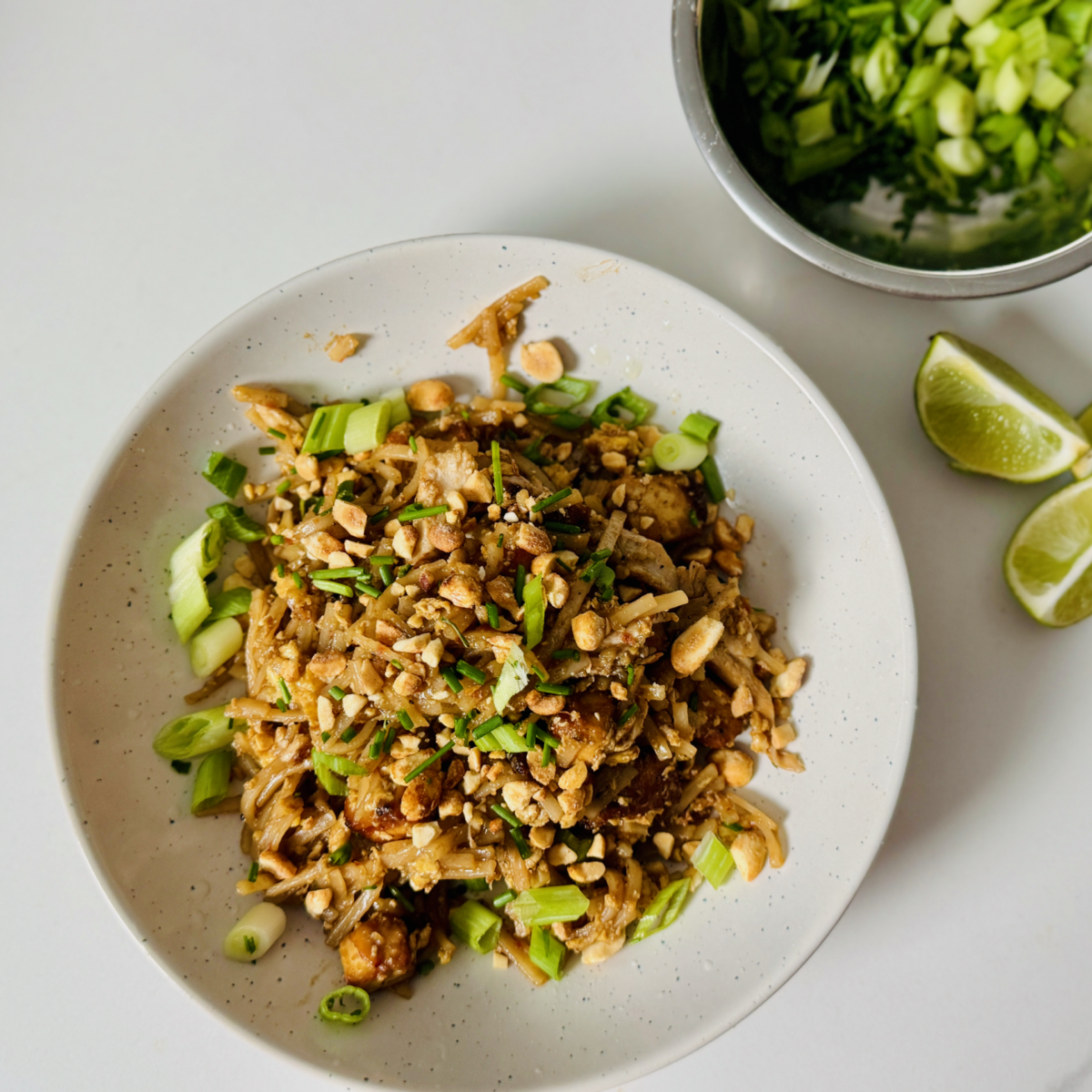
This is my Pad Thai inspired noodle recipe for the nights when I want something sweet, tangy, savory, spicy, and full of texture, but I am not trying to make a perfectly traditional version.
The sauce starts with the familiar balance of tamarind, fish sauce, and sugar, then I add a few pantry sauces to give it my own kick. Soy sauce adds depth. Oyster sauce gives the sauce more body. Sweet chili sauce brings gentle sweetness and gloss. Sriracha or chili garlic sauce adds heat. It is bold, saucy, and very much made for a real weeknight dinner.
The real trick is in the noodles.
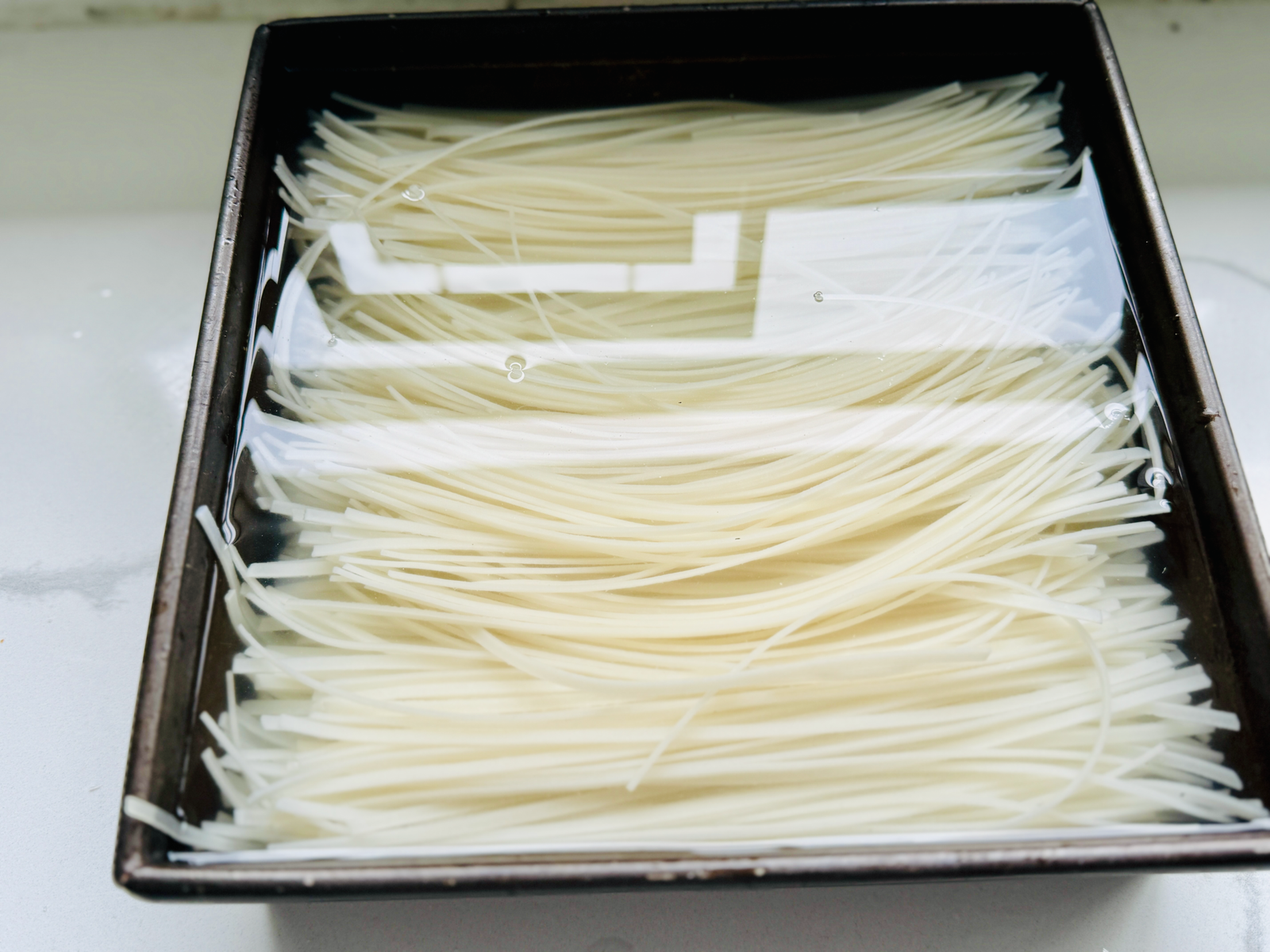
Rice noodles can go from chewy and glossy to sticky and clumpy very quickly, especially if they sit in water that is too hot for too long. I like to start them in cold water so they hydrate slowly, then finish them with a short warm water soak right before they go into the pan. It gives the noodles a better texture and makes the stir fry easier to pull together.
This is also a great example of my Pantry First Method in real life. The rice noodles are the base. The sauce gives the meal direction. The eggs and protein make it satisfying. The bean sprouts, green onions, lime, peanuts, and herbs bring crunch and freshness. Once you start seeing dinner in those building blocks, it becomes much easier to make something that feels exciting without making it complicated.
What these noodles taste like
These noodles are sweet, tangy, salty, spicy, and savory all at once.
The tamarind gives the sauce its bright sour note. Brown sugar softens that sharpness and gives the noodles a glossy finish. Fish sauce brings that deep savory flavor that makes the dish taste fuller. Lime juice adds freshness at the end. Peanuts add crunch, and bean sprouts keep everything from feeling too heavy.
This is not a traditional Pad Thai recipe. Traditional versions often include ingredients like palm sugar, dried shrimp, preserved radish, garlic chives, tofu, eggs, peanuts, and bean sprouts. This version keeps the general sweet tangy savory balance, but it leans into pantry ingredients I already keep around.
That is the point. It is not trying to replace a traditional version. It is a weeknight version that still scratches that same noodle craving.
Why this rice noodle method works
If you have ever made rice noodles at home and ended up with a sticky clump, the soaking step is usually where things went wrong.
Hot water can soften the outside of the noodles too quickly. Once the outside gets too soft, the noodles start releasing more starch and they stick together before they ever reach the pan.
Cold water is slower, but that is why it works. It hydrates the noodles more gently. They become bendable without turning soft. Then a short warm water soak right before cooking helps them relax just enough to stir fry.
The goal is not to fully cook the noodles in the bowl. The goal is to get them ready to finish in the pan, where they can absorb the sauce and stay chewy instead of mushy.
Key ingredients and why they matter
Flat rice noodles
Flat rice noodles are the foundation of this recipe. Look for noodles that are wide enough to hold sauce but not so thick that they take forever to soften. The noodles should be flexible before they go into the pan, but still firm enough to finish cooking with the sauce.
Tamarind concentrate
Tamarind concentrate gives the sauce its tang. It is sour, fruity, and a little earthy. Because concentrates vary in strength, taste the sauce before cooking and adjust as needed.
Brown sugar
Brown sugar balances the tamarind and helps the noodles become glossy. Palm sugar would also work well if you have it, but brown sugar keeps this more pantry friendly.
Fish sauce
Fish sauce brings the savory depth. It is salty, funky, and powerful, so a little goes a long way.
Soy sauce and oyster sauce
These are the pantry additions that make this version richer. Soy sauce adds salt and depth. Oyster sauce gives the sauce body and a slightly sweet savory finish.
Sweet chili sauce and sriracha
Sweet chili sauce gives the noodles a little gloss and gentle sweetness. Sriracha or chili garlic sauce gives you control over the heat.
Eggs
Scrambled eggs make the noodles feel complete. Cook them first, remove them from the pan, then add them back at the end so they stay tender.
Protein of choice
Cooked chicken, shrimp, tofu, or another protein all work here. This is a great place to use leftovers.
Peanuts, lime, and herbs
The toppings matter. Peanuts bring crunch. Lime wakes everything up. Cilantro adds freshness if you like it.
If you want even more brightness, quick pickled red chili peppers and onions would be a great topping here.
How to make these Pad Thai inspired noodles
Start with the noodles. Place them in a large bowl and cover them completely with cold water. Let them soak until they are bendable but still firm in the middle. This usually takes 45 minutes to 1 hour.
Drain the cold water, then cover the noodles with warm water for 5 to 10 minutes. You are not trying to cook them fully. You just want them flexible enough to toss in the pan.
While the noodles soak, make the sauce. Whisk together tamarind concentrate, brown sugar, fish sauce, soy sauce, oyster sauce, sweet chili sauce, sriracha, and lime juice. Taste it before it hits the pan. If it tastes too sharp, add a little more brown sugar. If it tastes flat, add lime or tamarind. If it needs more salt, add fish sauce. If you want more heat, add sriracha.
Next, cook the eggs in a large skillet or wok. Scramble them gently until just set, then transfer them to a plate.
Add more oil to the pan and cook the garlic just until fragrant. Add your cooked protein and toss it briefly to warm through.
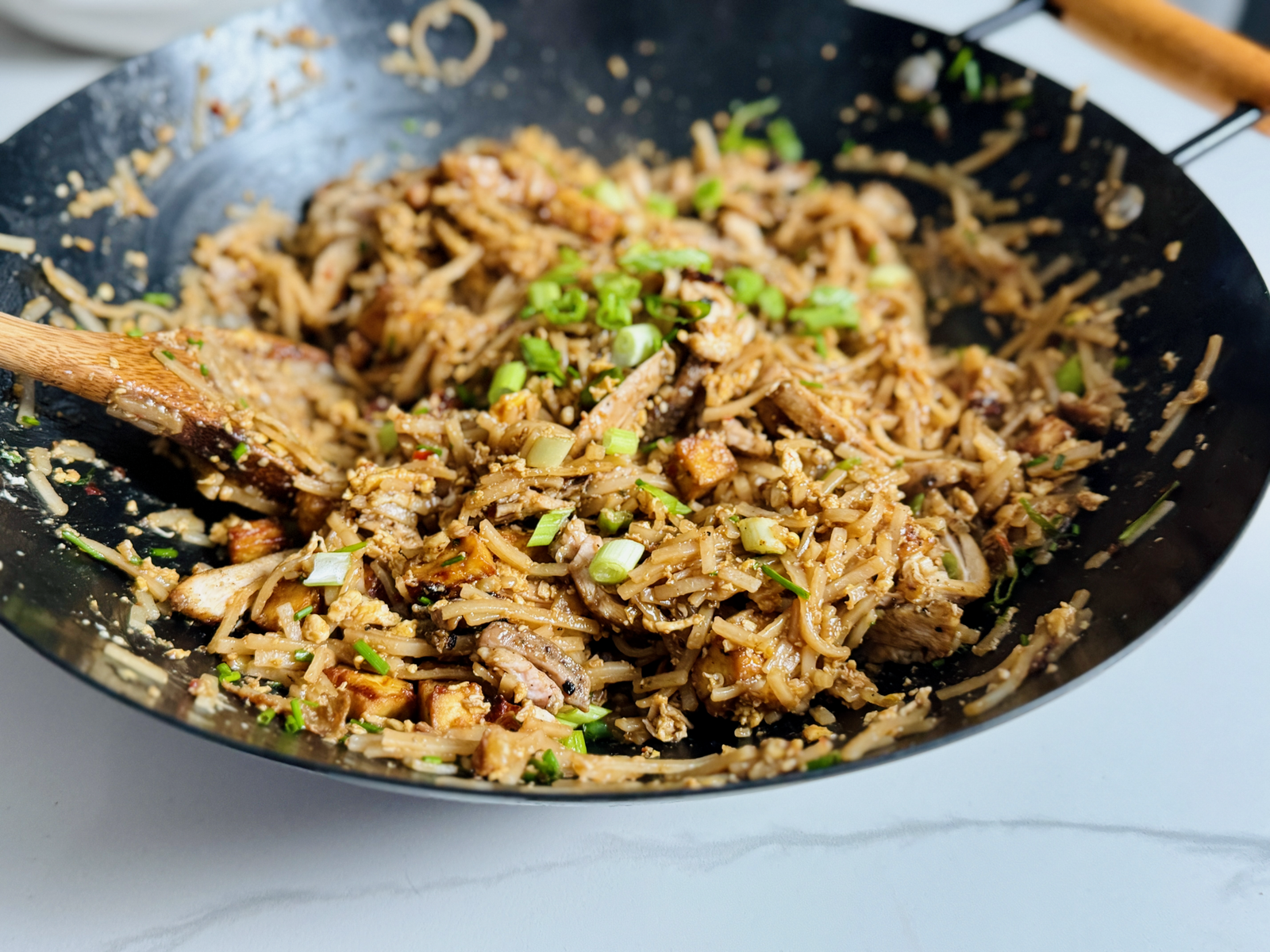
Then add the noodles and sauce. This is the moment to stay close to the pan. Toss constantly so the noodles cook evenly and absorb the sauce. If the pan gets dry before the noodles are tender, add a splash of water, one tablespoon at a time.
Once the noodles are glossy and chewy, add the eggs back along with bean sprouts and green onions. Toss briefly, just until everything comes together and the sprouts soften slightly while keeping some crunch.
Finish with peanuts, lime, cilantro, and extra chili if you want more heat.
Main cooking flow
- Soak the noodles in cold water
- Finish with a short warm water soak
- Whisk the tamarind sauce
- Scramble the eggs and set them aside
- Cook garlic and warm the protein
- Toss noodles with sauce until glossy
- Add eggs, sprouts, and green onions
- Finish with peanuts, lime, herbs, and chili
Tips for success
Do not fully soften the noodles before they go into the pan. If they feel ready to eat before cooking, they are probably too soft.
Drain the noodles well. Extra water can dilute the sauce.
Use a large skillet or wok. Crowding the pan makes tossing harder and increases the chance of clumping.
Keep the noodles moving. This is not the kind of dish where you add everything and walk away.
Taste the sauce before cooking. Tamarind concentrate can vary a lot, so you may need to adjust the sugar, lime, or fish sauce.
Add water only as needed. If the noodles are still firm but the pan looks dry, add a small splash and keep tossing.
Finish with fresh lime. The sauce is cooked in the pan, so that final squeeze brings back brightness.
A large wok or carbon steel skillet is helpful for tossing noodles without crowding the pan.
Common mistakes to avoid
The biggest mistake is oversoaking the noodles. Soft noodles going into a hot pan can quickly turn broken, gummy, or mushy.
Another mistake is using heat that is too low. You want enough heat to help the noodles absorb sauce and cook quickly, but not so much heat that the garlic burns before everything comes together.
It is also easy to skip the toppings, but the toppings are part of the balance. Without peanuts, lime, sprouts, and green onions, the noodles can taste heavy.
Substitutions and variations
This recipe is flexible.
Use chicken if you want something hearty and familiar. Use shrimp if you want it to feel a little more special. Use tofu if you want a meatless version. If you use tofu, press it first so it browns better and does not water down the pan.
You can add vegetables like carrots, snap peas, mushrooms, cabbage, or bell peppers. Keep the amount reasonable so the noodles still stay saucy.
If you want a different noodle direction, try my Sesame Ginger Gochujang Sauce on rice noodles for a deeper, creamier sauce profile. If you want something even richer, my creamy sesame peanut noodle bowl is a good next recipe.
For toppings, try extra peanuts, cilantro, chili flakes, lime wedges, bean sprouts, or pickled chili peppers and onions.
Serving suggestions
These noodles are best served right away while the sauce is glossy and the noodles are hot.
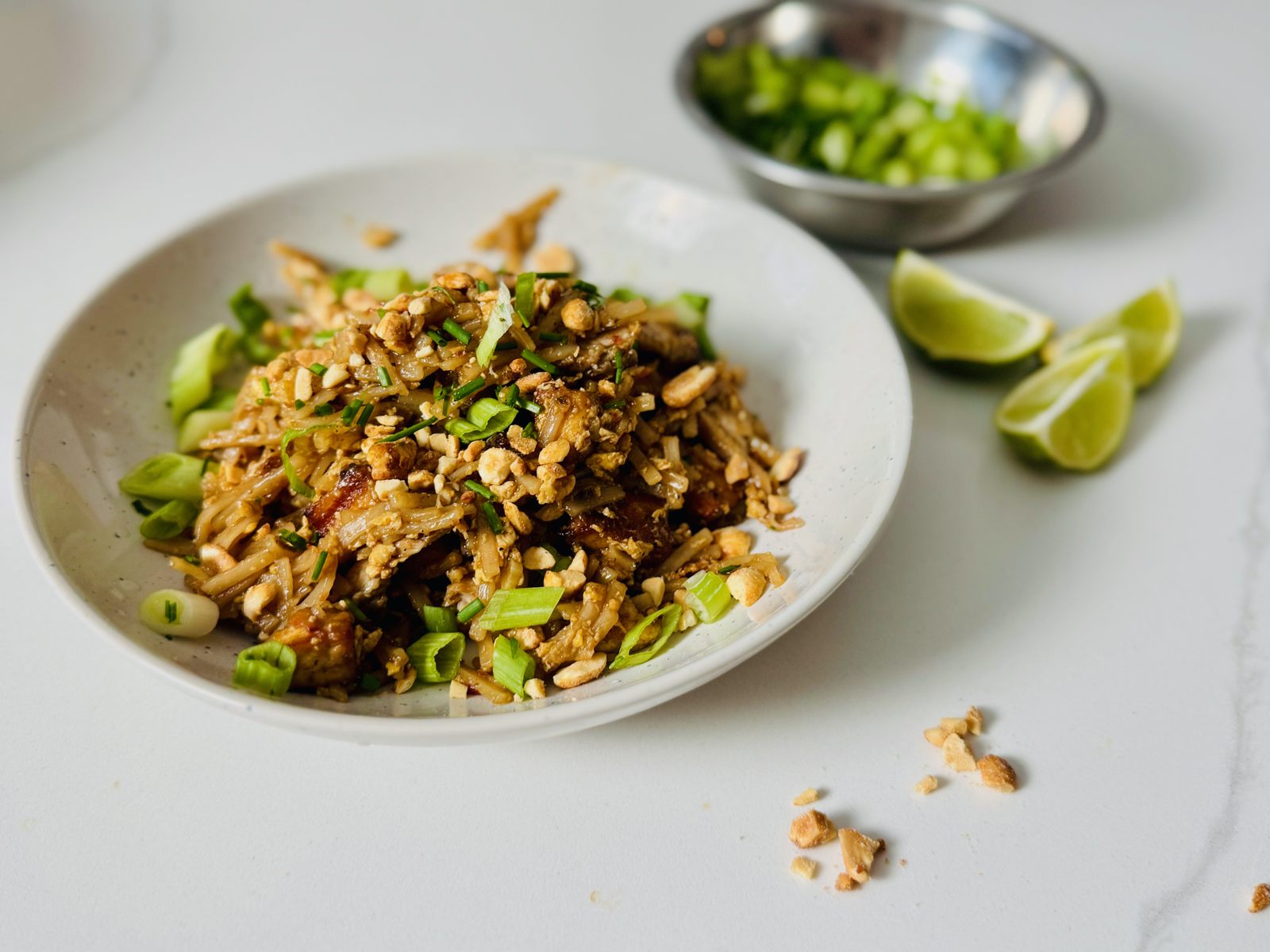
Serve them with lime wedges at the table so everyone can brighten their own bowl. Add extra peanuts for crunch and more sriracha for heat.
For a simple dinner, serve the noodles on their own. For a fuller meal, add cucumber salad, steamed greens, or a quick plate of sliced fruit.
If you are cooking for friends, this can work as a casual noodle night. Set out bowls of toppings and let people finish their own plates. It is low pressure but still fun, which is exactly the kind of hosting I love.
If you are building a bigger menu, my Asian dinner party ideas post has more inspiration for pairing bold sauces, small bites, and shared plates.
Why this works for real life dinners
This is the kind of recipe I love because it gives you structure without being rigid.
You are not locked into one protein. You are not depending on a long list of specialty ingredients. You are using pantry sauces to create the flavor direction, then building around noodles, eggs, protein, and toppings.
That is very much the heart of the Pantry First Method. Start with what you have, choose the direction, then build a meal that feels intentional.
It is also why I keep coming back to sauce based cooking. A good sauce makes dinner feel like it has a plan. If you want more of that approach, my 5 House Sauces post is a good place to start.
Storage, reheating, and make ahead tips
These noodles are best fresh, but leftovers still work.
Store leftovers in an airtight container in the refrigerator for up to 3 days. The noodles will firm up as they chill, so they need a little help when reheating.
For the best texture, reheat them in a skillet with a splash of water. Toss until the noodles loosen and become glossy again. You can also microwave them, but pause and stir so the heat distributes evenly.
The sauce can be made up to 4 days ahead. Store it in a small jar in the refrigerator and stir before using.
You can also soak the noodles in cold water earlier in the day, then drain and refrigerate them until you are ready to cook. Give them the short warm water soak right before stir frying.
Glass mixing bowls are useful for soaking the noodles and mixing the sauce without crowding (affiliate link). If you make sauces ahead often, small glass jars are great for storing the sauce in the refrigerator (affiliate link).
Frequently asked questions
Is this traditional Pad Thai
No. This is a Pad Thai inspired noodle recipe. It keeps the sweet, tangy, savory balance, but uses a few pantry sauces that are not always part of traditional versions.
Can I use tamarind concentrate for Pad Thai noodles
Yes. This recipe is designed for tamarind concentrate. Since brands can vary, taste the sauce before cooking and adjust with more sugar, lime, or fish sauce as needed.
Why are my rice noodles sticky
Rice noodles often get sticky when they are soaked in water that is too hot or soaked until fully soft before stir frying. A cold water soak gives you more control, and finishing the noodles in the pan helps them stay chewy.
Can I make this with chicken
Yes. Cooked chicken works very well here. Add it after the garlic and toss just long enough to warm it through before adding the noodles and sauce.
Can I make this with shrimp
Yes. If using raw shrimp, cook the shrimp first and remove it from the pan once it turns pink. Add it back near the end so it does not overcook.
Can I make this vegetarian
Yes, but you will need to adjust the sauces. Use tofu as the protein and choose vegetarian alternatives for fish sauce and oyster sauce.
Can I make the sauce ahead
Yes. The sauce can be mixed up to 4 days ahead and stored in the refrigerator. Stir it well before adding it to the pan.
Final thoughts
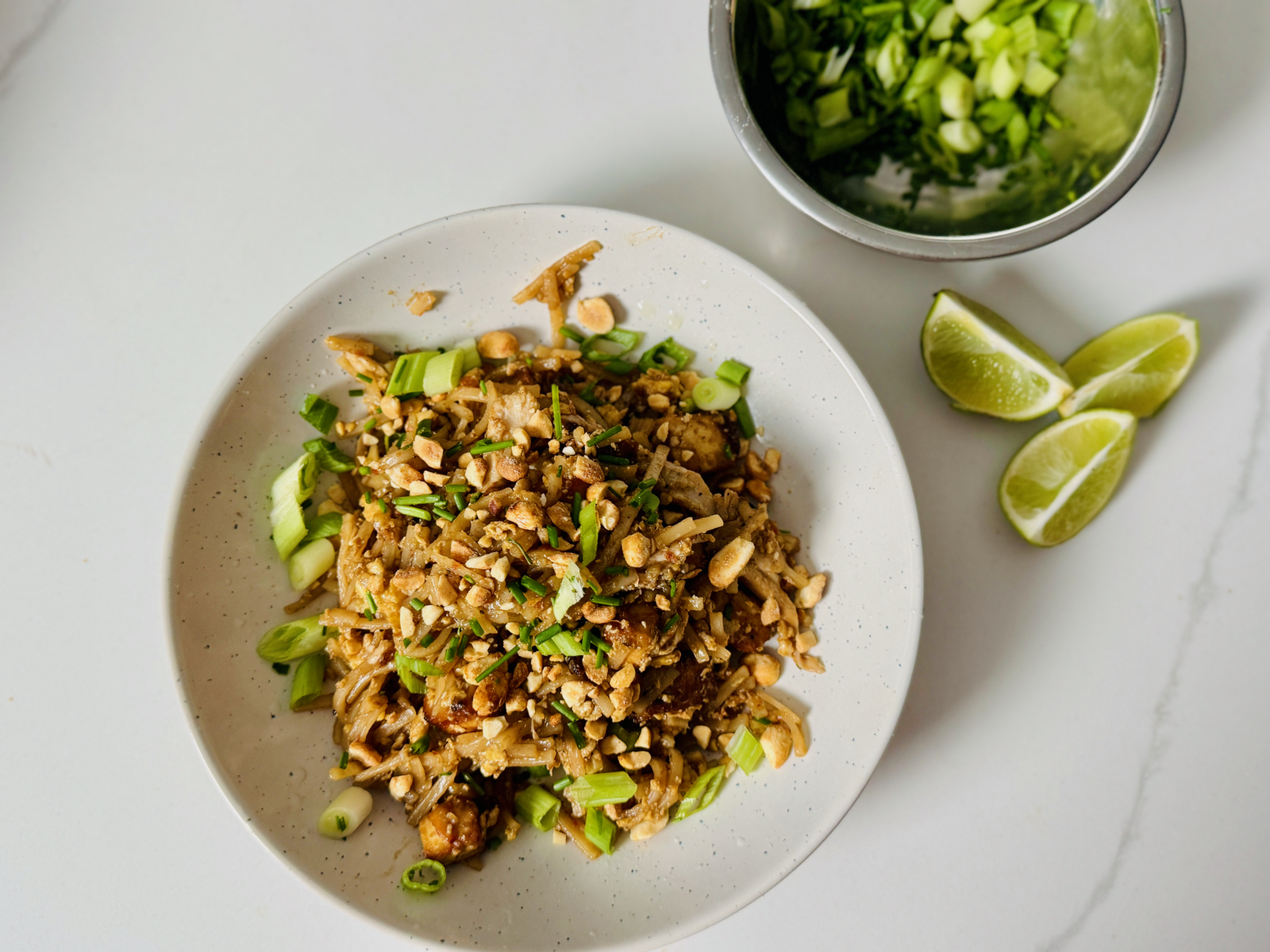
These easy Pad Thai inspired noodles are exactly the kind of dinner I want on a busy night. They are saucy, bright, savory, a little spicy, and full of texture.
The cold water noodle soak may feel like a small thing, but it makes a big difference. Once you get the noodle texture right, the whole dish becomes easier and more enjoyable.
Make it with chicken, shrimp, tofu, or whatever protein you have. Add your favorite toppings. Taste the sauce and adjust it until it feels right to you.
And if this way of cooking speaks to you, keep going with the Pantry First Method and the 5 House Sauces. They are built for this exact kind of dinner, the kind that starts with what you have and ends with something you actually want to eat.
Some of the links in this post are affiliate links, which means I may earn a small commission at no extra cost to you. Thanks for supporting the blog. As an Amazon Associate, I earn from qualifying purchases.
Easy Pad Thai Inspired Noodles

Equipment
- Large bowl for soaking noodles
- Small mixing bowl
- Large skillet or wok
- Tongs
Ingredients
For the noodles
- 8 ounces flat rice noodles about 227 g
- Cold water for soaking
- Warm water for finishing the soak
For the sauce
- 3 tablespoons tamarind concentrate about 45 g
- 3 tablespoons brown sugar about 38 g
- 2 tablespoons fish sauce about 30 ml
- 1 tablespoon soy sauce about 15 ml
- 1 tablespoon oyster sauce about 15 ml
- 1 tablespoon sweet chili sauce about 15 ml
- 1 to 2 teaspoons sriracha or chili garlic sauce about 5 to 10 ml, more to taste
- 1 tablespoon lime juice about 15 ml
For the stir fry
- 2 tablespoons neutral oil about 30 ml
- 2 cloves garlic minced, about 6 g
- 2 eggs lightly beaten
- 1 cup cooked chicken shrimp, tofu, or another protein of choice, about 140 g
- 1 cup bean sprouts about 100 g
- 3 green onions sliced, about 45 g
- ⅓ cup chopped roasted peanuts about 45 g
- Lime wedges for serving
- Fresh cilantro optional
- Extra chili flakes or sriracha optional
Instructions
Soak the rice noodles in cold water
- Place the rice noodles in a large bowl and cover them completely with cold water. Let them soak for 45 minutes to 1 hour, or until they are bendable but still firm in the center.
- They should not be fully soft at this point. You want them hydrated enough to bend, but still sturdy enough to finish cooking in the pan.
- Finish the noodles with warm water
- Drain the cold water. Cover the noodles with warm water for 5 to 10 minutes, just until they are flexible and slightly softened.
- Drain well and set aside. Do not let the noodles sit in hot water until fully tender. They will continue cooking in the pan with the sauce.
Make the sauce
- In a small bowl, whisk together the tamarind concentrate, brown sugar, fish sauce, soy sauce, oyster sauce, sweet chili sauce, sriracha, and lime juice.
- Taste and adjust as needed. Add more brown sugar if it tastes too sharp, more tamarind or lime if it needs brightness, more fish sauce if it needs saltiness, or more sriracha if you want extra heat.
Cook the eggs
- Heat a large skillet or wok over medium high heat. Add 1 tablespoon of oil.
- Pour in the beaten eggs and gently scramble until just set. Transfer the eggs to a plate and set aside.
Cook the garlic and protein
- Add the remaining tablespoon of oil to the pan. Add the garlic and cook for about 30 seconds, just until fragrant.
- Add the cooked chicken, shrimp, tofu, or protein of choice and toss briefly to warm through.
Add the noodles and sauce
- Add the drained rice noodles to the pan. Pour the sauce over the noodles and toss everything together.
- Cook for 2 to 4 minutes, tossing constantly, until the noodles are tender, glossy, and coated in sauce. If the pan gets dry before the noodles are fully tender, add a splash of water, 1 tablespoon at a time.
Finish the noodles
- Add the scrambled eggs back to the pan along with the bean sprouts and green onions. Toss for another 30 to 60 seconds, just until everything is combined and the bean sprouts are slightly softened but still crisp.
Garnish and serve
- Top with chopped peanuts, cilantro if using, extra green onions, chili flakes, and a squeeze of fresh lime.
- Serve immediately while the noodles are glossy and hot.
Notes
Soak the noodles in cold water first for better control. Hot water can soften the outside of the noodles too quickly, which can make them sticky before they ever reach the pan.
Do not fully cook the noodles during soaking. The goal is to hydrate them so they finish cooking in the sauce.
Keep the noodles moving once they hit the pan. Tossing helps them cook evenly and prevents clumping. Substitutions
Use chicken, shrimp, tofu, or a mix of leftover proteins.
Use tamari instead of soy sauce if needed.
Use chili garlic sauce instead of sriracha for a chunkier heat.
Use palm sugar instead of brown sugar if you have it. Variations
Add shredded carrots, snap peas, mushrooms, or bell peppers.
Use tofu and vegetarian sauce substitutions for a vegetarian version.
Add extra lime and chili flakes for a brighter spicier finish. Storage
Store leftovers in an airtight container in the refrigerator for up to 3 days. Reheating
Reheat in a skillet with a splash of water to loosen the sauce and help the noodles soften again. Microwave reheating works, but the skillet gives a better texture. Make ahead guidance
The sauce can be mixed up to 4 days ahead and stored in the refrigerator.
The noodles can be soaked in cold water ahead of time, drained, and refrigerated for a few hours before cooking. Finish with warm water right before stir frying. Serving ideas
Serve with lime wedges, extra peanuts, cilantro, chili flakes, and quick pickled red chili peppers and onions.
Rufus Dewanou says
The Colorful Pantry