
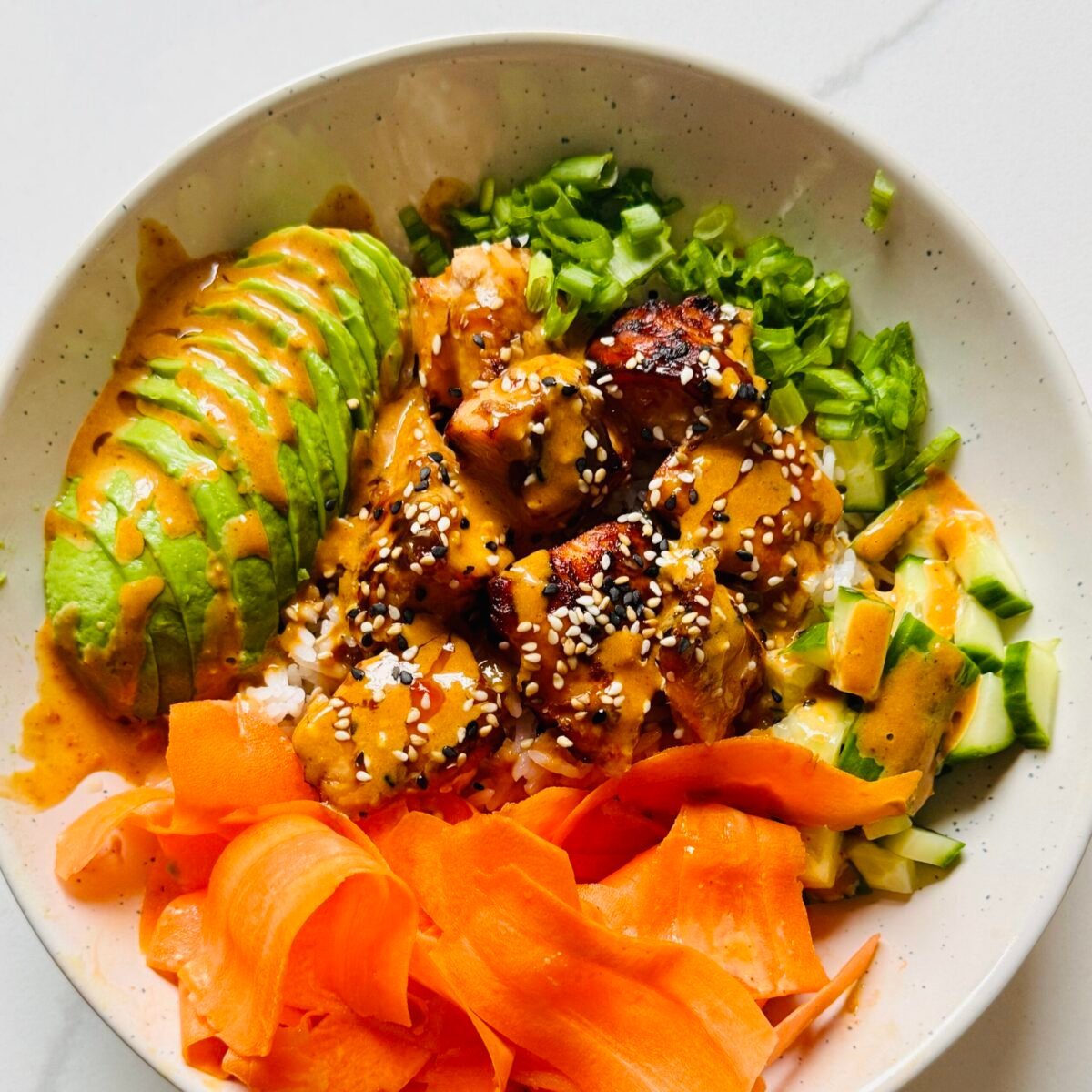
These soy ginger salmon rice bowls are built around one of my favorite ways to make dinner feel more complete without making every component complicated.
The salmon gets the most attention. It sits in a savory honey, soy, ginger, garlic, and sesame marinade for 20 to 30 minutes. A clean portion of that same mixture becomes a glossy glaze that goes directly over the cooked fish.
Everything underneath stays simple. There is warm jasmine rice, cucumber lightly seasoned with seasoned rice vinegar and salt, raw carrot ribbons, sliced avocado, scallions, and toasted sesame seeds.
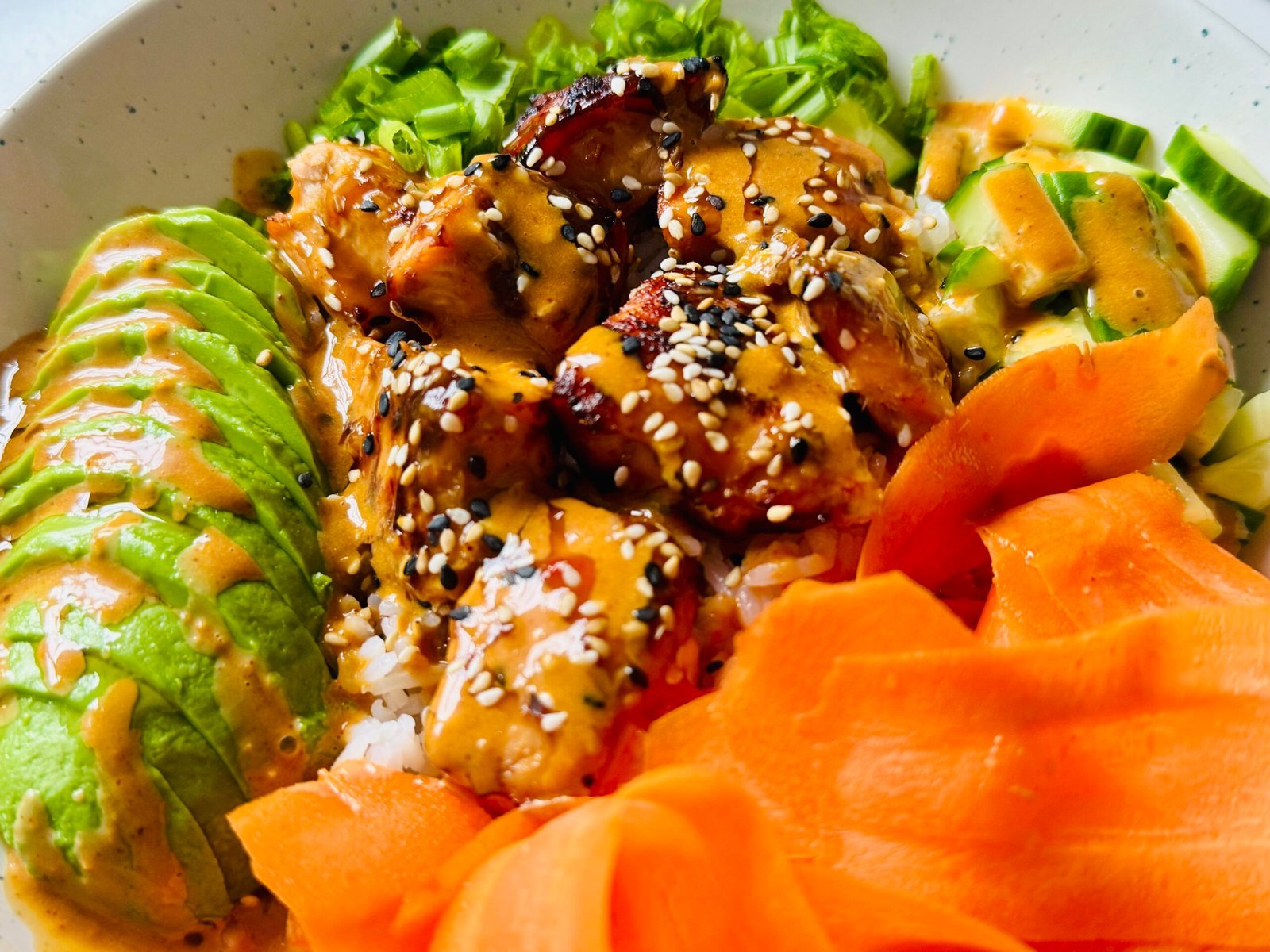
Then the final layer changes the bowl. I drizzle my Sesame Ginger Gochujang Sauce over everything.
The clean soy ginger glaze clings to the salmon, while the creamy gochujang sauce moves through the rice and vegetables.
You can cook the salmon two ways. Cut it into cubes for quick air fryer salmon bites, or leave it as fillets and sear it in a skillet. The rest of the bowl does not change, which means you can use the method that fits your kitchen that night.
Why This Salmon Bowl Works
A good bowl needs contrast. If every component is soft, heavily dressed, or the same temperature, it starts tasting like one uniform mixture.
Here, the rice is warm and neutral enough to catch both sauces. The salmon is savory, lightly sweet, and glazed. The cucumber is cool and crisp with a small hit of seasoned rice vinegar. The carrots stay raw, so they keep their snap. Avocado adds richness without requiring another cooked element.
The two sauces have separate jobs.
The Soy Ginger Marinade and Glaze seasons the fish at the beginning and gives it a shiny finish at the end. The Sesame Ginger Gochujang Sauce is creamier, spicier, and designed to pull the entire bowl together.
That start-with-a-flavor-foundation, build-the-meal, finish-with-a-sauce rhythm is one reason I like keeping flexible Flavor Builders around. It gives dinner direction when I need it without making every meal follow the same formula.
What Goes in a Soy Ginger Salmon Rice Bowl?
Soy Ginger Salmon and Clean Glaze
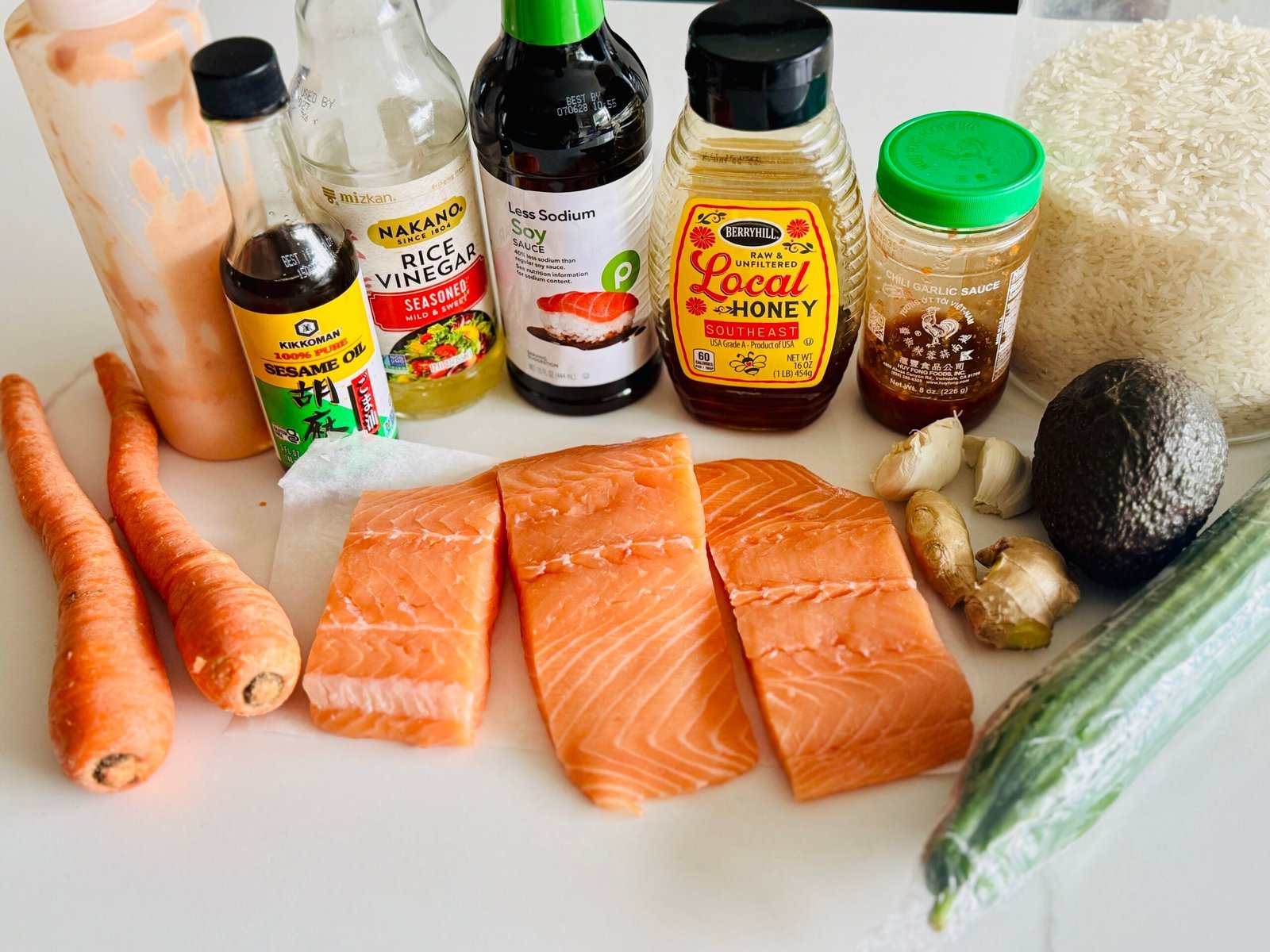
You need one batch of my Soy Ginger Marinade and Glaze and 1½ pounds of salmon.
The marinade uses low-sodium soy sauce, honey, unseasoned rice vinegar, fresh ginger, fresh garlic, toasted sesame oil, sriracha, and water.
Before the raw salmon goes in, reserve one-third cup in a clean container. That clean portion is thickened with cornstarch and cold water and then used on the cooked fish.
A Microplane fine grater (affiliate link) makes the ginger and garlic fine enough to spread evenly through the marinade.
Jasmine Rice
Jasmine rice is soft, fragrant, and neutral enough to support two bold sauces. Rinse it until the water is less cloudy, and then cook it according to the package because brands and cooking methods use slightly different water ratios.
I often use an Instant Pot (affiliate link) as my rice cooker when I want the stove clear for the skillet and glaze.
Lightly Seasoned Cucumber
These cucumbers are not quick pickles.
Toss Persian cucumber with about two tablespoons of seasoned rice vinegar and a small pinch of salt, and then let it sit while the salmon cooks.
Seasoned rice vinegar already contains sugar and salt, so taste before adding more. The goal is a lightly bright cucumber, not a sweet brine.
Raw Carrot Ribbons
Use a stainless-steel vegetable peeler (affiliate link) to shave the carrots into thin ribbons.
They bend into the rice but still keep enough texture to contrast with the avocado.
Avocado, Scallions, and Sesame Seeds
Avocado brings richness. Scallions add fresh onion flavor. Toasted sesame seeds reinforce the sesame in the marinade and finishing sauce.
Nori was not part of the bowl I made, but strips of roasted seaweed are an easy optional addition if you already have them.
How to Make Soy Ginger Salmon Rice Bowls
Start with the marinade. Whisk it together, reserve one-third cup in a clean container, and then add the salmon to the remaining mixture. Refrigerate for 20 to 30 minutes.
While the salmon marinates, rinse and cook the jasmine rice.
Toss the cucumber with seasoned rice vinegar and salt. Shave the carrots, slice the avocado, and cut the scallions.
Make the glaze while the salmon cooks. Whisk cornstarch with cold water, add it to the clean reserved marinade, and simmer for one to two minutes until glossy.
Choose the air fryer method for salmon cubes or the skillet method for fillets.
Air Fryer Soy Ginger Salmon Bites at 400°F
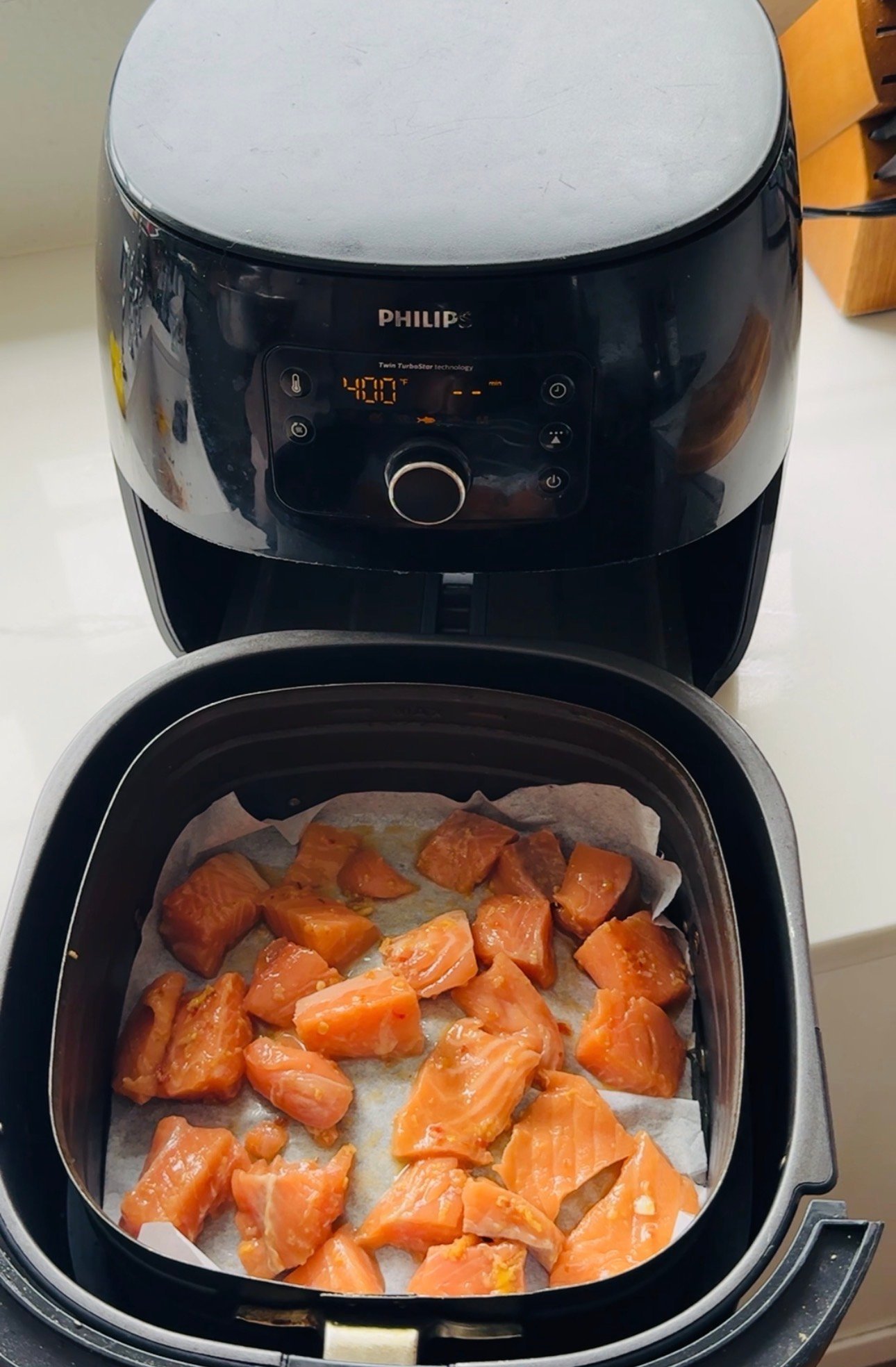
Cut the salmon into pieces about 1¼ to 1½ inches wide. Skinless salmon is easiest for cubes.
Preheat the air fryer to 400°F if your model recommends preheating. Lightly oil the basket or use perforated air fryer parchment that allows air to circulate.
Lift the salmon from the marinade and let the excess drip away. Arrange the cubes in one layer with space around them.
Crowding traps steam and slows browning, so cook the salmon in two batches if needed.
Air fry for eight to 10 minutes, turning or gently shaking the basket halfway through. Start checking at eight minutes.
Very large cubes may need 10 to 11 minutes. At 13 minutes, my test batch was more cooked than I wanted, so I would not use that as the standard cooking time.
Air fryers vary, and the size of the salmon matters more than a single exact minute.
An instant-read digital thermometer (affiliate link) is the clearest way to check. The current FoodSafety.gov temperature chart lists 145°F for fish, or cook until the flesh is no longer translucent and separates easily with a fork.
When the salmon is done, spoon or brush the warm clean glaze over it. You can also place the cooked cubes in a clean bowl and toss them gently with the glaze.
Skillet-Seared Soy Ginger Salmon Fillets
Skinless salmon works well, which is what I used. Skin-on fillets work too and can be especially easy to handle because the skin helps hold the fish together.
Remove the fillets from the marinade and let the excess run off. Pat the surface lightly with a paper towel.
You are not wiping away all the flavor. You are removing enough liquid to help the fish sear instead of steam and to keep the honey from burning in the pan.
Heat one tablespoon of neutral high-heat oil in a 12-inch cast-iron skillet (affiliate link) or a nonstick skillet over medium heat.
For skinless fillets, place the presentation side down and cook without moving for four to five minutes, until the salmon releases more easily and has a browned surface. Flip and cook for another three to four minutes, depending on thickness.
For skin-on fillets, start skin-side down and cook for five to six minutes. Flip and finish for two to four minutes.
If the garlic or honey starts getting dark too quickly, lower the heat.
Check the thickest part for doneness, and then remove the salmon and spoon the clean, warm glaze over the top.
How to Build the Salmon Rice Bowl
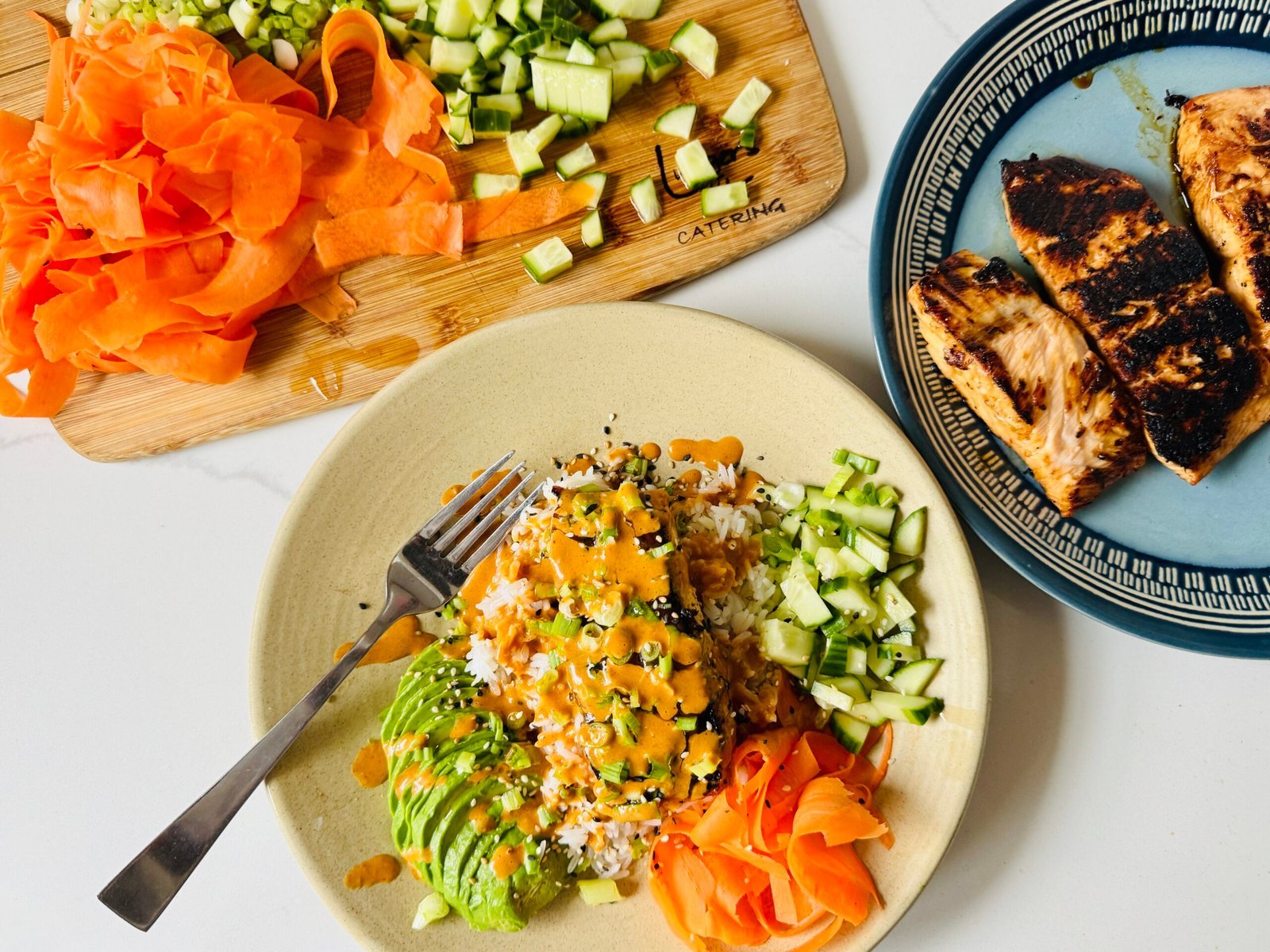
Spoon warm jasmine rice into four bowls.
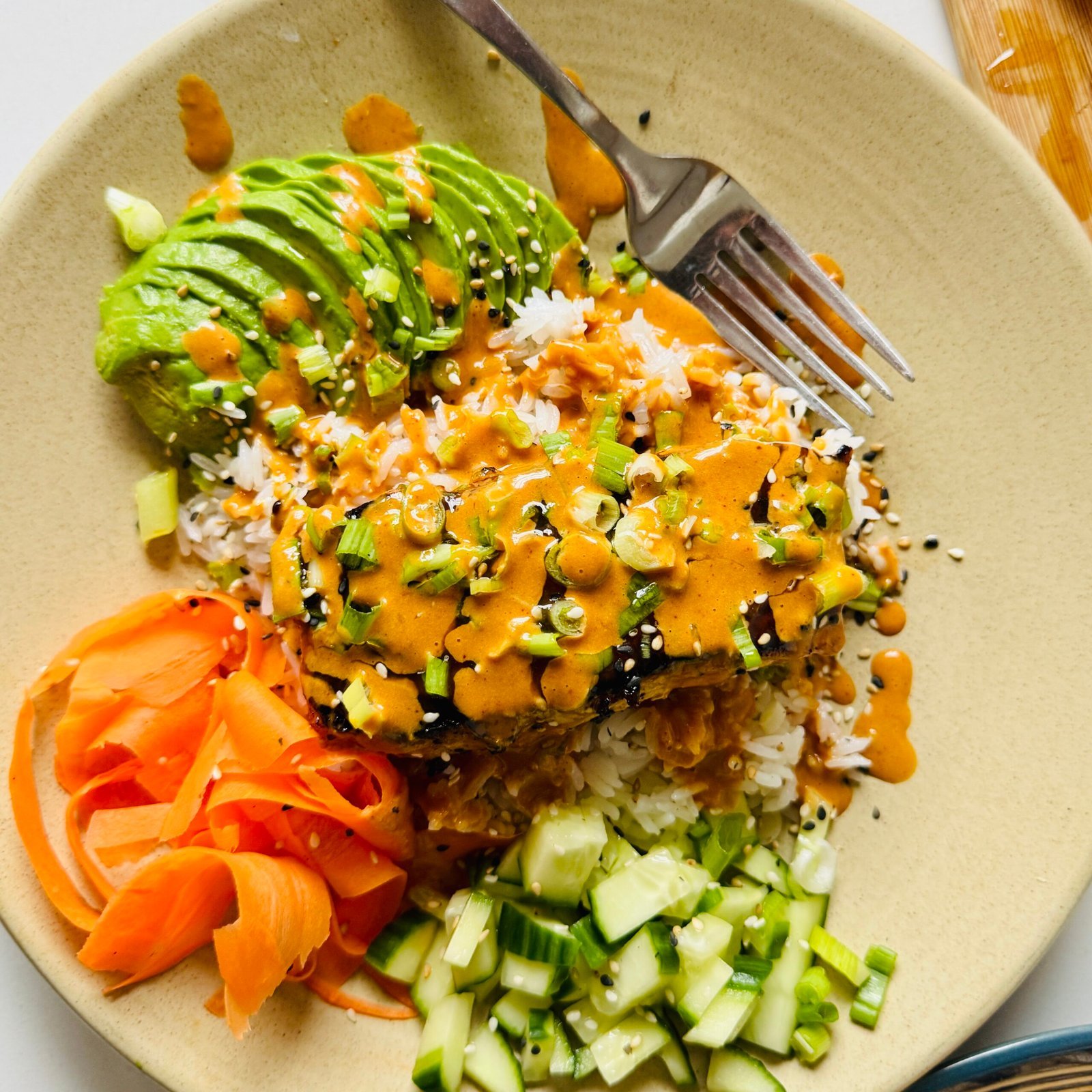
Add the lightly seasoned cucumber, carrot ribbons, and sliced avocado in separate sections so the colors and textures stay distinct. Place the glazed salmon over the rice.
Drizzle more clean soy ginger glaze directly over the salmon if you want a stronger sweet-savory finish.
Then spoon or drizzle the prepared Sesame Ginger Gochujang Sauce over the entire bowl.
I use about two tablespoons per bowl, but you can start with less and add more at the table.
Finish with scallions and toasted sesame seeds. Add optional nori only if you want it.
This sauce layering is also why I keep a small group of reliable sauces ready instead of making a completely different finishing sauce for every meal.
My guide to the five sauces that anchor my pantry explains how those sauces turn a few cooked components into a dinner that feels connected.
What Is the Difference Between the Glaze and the Finishing Sauce?
The clean reserved glaze is concentrated, glossy, and used directly on the salmon. It reinforces the soy, honey, ginger, garlic, and sesame flavors from the marinade.
The Sesame Ginger Gochujang Sauce is creamy because it contains tahini and mayonnaise. It has fermented chile depth and enough body to coat the rice and vegetables.
Do not combine the finishing sauce with more mayonnaise for this recipe. It is already the final sauce.
Use the glaze on the fish, and then use the creamy sauce across the bowl.
Tips for Salmon That Stays Juicy
Cut Even Cubes
Pieces that vary from one inch to two inches cannot finish at the same time.
Keep them close to 1¼ inches, with slightly larger pieces acceptable if the salmon is very soft and difficult to cut.
Let Excess Marinade Drip Away
A wet surface steams before it browns.
The honey and garlic can also darken before the center cooks if too much marinade clings to the fish.
Do Not Crowd the Air Fryer
Air needs to move around the cubes. Two quick batches are better than one crowded basket.
Add the Thick Glaze After Cooking
The glaze contains honey and is designed to cling. Adding it before high heat makes burning more likely.
Check the Salmon Early
Start checking air fryer cubes at eight minutes.
Start checking skillet fillets after the second side has cooked for about three minutes. A thermometer gives you a better answer than the clock.
Substitutions and Variations
Brown rice, sushi rice, quinoa, or farro can replace jasmine rice. Use the grain you already have and adjust its cooking time separately.
English cucumber works in place of Persian cucumber. If the center is very watery, scoop out some of the seeds before slicing or dicing.
Use maple syrup in the marinade if you do not have honey.
Use tamari for a gluten-free variation, and check the gochujang and mayonnaise labels in the finishing sauce as well.
For a bolder vegetable component, replace the lightly seasoned cucumber and carrot ribbons with my Smashed Cucumber Carrot Salad. It adds more seasoning and makes the bowl especially crunchy.
If you do not eat salmon, the same bowl works with tofu or chicken cooked with the soy ginger marinade. Keep the cooking times and safe temperatures appropriate for the protein you choose.
Meal Prep Without Losing the Texture
The best way to meal prep these bowls is to keep the parts separate.
Store the rice and salmon together if you plan to reheat them at the same time. Keep the cucumber, carrot ribbons, avocado, and creamy sauce cold and separate.
Add the avocado shortly before eating for the best color and texture.
Glass meal-prep containers with divided compartments (affiliate link) are useful here because the rice and salmon can stay in the section that will be reheated while the fresh vegetables stay away from the heat.
When it is time to eat, warm the rice and salmon gently, and then add the cold vegetables and sauce.
If the glaze has thickened in the refrigerator, warm it with a teaspoon of water.
Storage and Reheating
Refrigerate cooked salmon in an airtight container for up to three days.
Store cooked rice promptly and use it within four days. Keep the cucumber and carrot mixture separate and use it within about two days for the best crunch.
The Sesame Ginger Gochujang Sauce keeps for up to seven days according to its recipe, so it can be made before the salmon.
Reheat the salmon gently. Use short microwave intervals at reduced power, or warm a fillet in a covered skillet over low heat with a teaspoon of water.
Air fryer cubes can be reheated for two to three minutes at a lower temperature, but stop as soon as they are hot so they do not dry out.
Frequently Asked Questions
How Long Do Salmon Bites Take in the Air Fryer at 400°F?
For pieces about 1¼ inches wide, plan on eight to 10 minutes and begin checking at eight minutes.
Larger pieces may need 10 to 11 minutes. Air fryer strength and starting temperature vary, so check the center rather than relying only on time.
Can I Make This Soy Ginger Salmon Bowl Without an Air Fryer?
Yes. Leave the salmon as four fillets and cook them in an oiled skillet over medium heat.
Skinless fillets usually need about four to five minutes on the first side and three to four minutes on the second, depending on thickness.
Can I Use Skin-On Salmon?
Yes. For skillet cooking, start skin-side down and cook until the skin is crisp and the salmon releases more easily, about five to six minutes.
Flip and finish for two to four minutes.
Are the Cucumbers Pickled?
No. They are lightly seasoned with seasoned rice vinegar and salt.
They can sit while the salmon cooks, but they do not need a separate sugar brine or a long pickling time.
Is the Gochujang Sauce a Spicy Mayo?
No. The bowl uses my existing Sesame Ginger Gochujang Sauce, which already contains mayonnaise, tahini, gochujang, ginger, garlic, vinegar, honey, and sesame oil.
It is used as written, without adding more mayonnaise.
Can Salmon Rice Bowls Be Made Ahead?
Yes. Store the salmon and rice separately from the vegetables, avocado, and finishing sauce.
Reheat only the cooked components, and then assemble the bowl.
A Complete Dinner From Two Useful Sauces
These soy ginger salmon rice bowls show exactly why I like components that can do more than one job.
The soy ginger mixture begins as a marinade and becomes a clean glaze. The Sesame Ginger Gochujang Sauce finishes the bowl and connects the rice, crisp vegetables, avocado, and salmon.
Choose air fryer bites when you want more glazed edges. Choose a skillet fillet when you want the salmon to feel a little more composed.
Either way, the bowl stays colorful, flexible, and practical enough for a weeknight.
Some of the links in this post are affiliate links, which means I may earn a small commission at no extra cost to you. Thanks for supporting the blog.
Soy Ginger Glazed Salmon Rice Bowls

Equipment
- Medium mixing bowl or shallow container with lid
- Rice cooker or medium saucepan with lid
- Vegetable peeler
- Air fryer for salmon bites
- 12 inch skillet for salmon fillets
Ingredients
Soy Ginger Salmon
- 1 batch Soy Ginger Marinade and Glaze prepared through the clean reserve step
- 1 ½ pounds center cut salmon skinless for cubes, or skinless or skin on for 4 fillets
- 1 tablespoon neutral high heat oil only for the skillet method
- nonstick spray or neutral oil optional for the air fryer basket
Jasmine Rice
- 1 ½ cups jasmine rice rinsed
- water and kosher salt according to the rice package
Fresh Bowl Components
- 2 Persian cucumbers thinly sliced or diced
- 2 tablespoons seasoned rice vinegar
- ¼ teaspoon kosher salt plus more to taste
- 2 medium carrots peeled into ribbons
- 1 ripe avocado sliced
- 4 scallions thinly sliced
- 2 tablespoons toasted sesame seeds
- ½ cup prepared Sesame Ginger Gochujang Sauce plus more to taste
- nori strips or crumbled roasted seaweed optional
Instructions
Prepare the Salmon and Bowl Components
- Make one batch of Soy Ginger Marinade and Glaze. Reserve ⅓ cup in a clean container before raw salmon is added.
- For the air fryer method, cut skinless salmon into 1 ¼ to 1 ½ inch cubes. For the skillet method, leave the salmon as 4 fillets. Add the salmon to the remaining marinade, cover, and refrigerate for 20 to 30 minutes.
- Cook the jasmine rice with water and salt according to the package. Keep covered and warm.
- Toss the cucumber with seasoned rice vinegar and ¼ teaspoon kosher salt. Let it sit while the salmon cooks.
- Shave the carrots into ribbons. Slice the avocado and scallions. Set out the sesame seeds and Sesame Ginger Gochujang Sauce.
- Whisk 1 teaspoon cornstarch with 1 tablespoon cold water. Add it to the clean reserved marinade and simmer for 1 to 2 minutes, whisking, until glossy and lightly thickened. Keep warm.
Air Fryer Salmon Bites at 400°F
- Preheat the air fryer to 400°F if recommended by the manufacturer. Lightly oil the basket or use perforated air fryer parchment.
- Lift the salmon cubes from the marinade and let the excess drip away. Discard the used marinade.
- Arrange the salmon in one layer with space around the pieces. Cook in batches if needed.
- Air fry for 8 to 10 minutes, turning or gently shaking the basket halfway through. Begin checking at 8 minutes. Very large cubes may need 10 to 11 minutes. Cook to 145°F or until the flesh is no longer translucent and separates easily with a fork.
- Transfer the cooked cubes to a clean bowl. Spoon or brush with the warm prepared glaze, or toss very gently to coat.
Skillet Seared Salmon Fillets
- Lift the fillets from the marinade, let the excess drip away, and pat the surface lightly. Discard the used marinade.
- Heat 1 tablespoon neutral oil in a 12 inch skillet over medium heat.
- For skinless fillets, place the presentation side down and cook without moving for 4 to 5 minutes. Flip and cook for 3 to 4 minutes more, depending on thickness.
- For skin on fillets, place the skin side down and cook for 5 to 6 minutes. Flip and cook for 2 to 4 minutes more.
- Cook until the thickest portion reaches 145°F or the flesh is no longer translucent and separates easily with a fork. Lower the heat if the honey or garlic darkens too quickly.
- Remove from the skillet and spoon or brush with the warm prepared glaze.
Build the Bowls
- Divide the jasmine rice among 4 bowls.
- Add cucumber, carrot ribbons, avocado, and glazed salmon.
- Drizzle about 2 tablespoons Sesame Ginger Gochujang Sauce over each bowl.
- Finish with scallions, toasted sesame seeds, and optional nori. Serve with extra clean glaze and finishing sauce at the table.


Comments
No Comments